
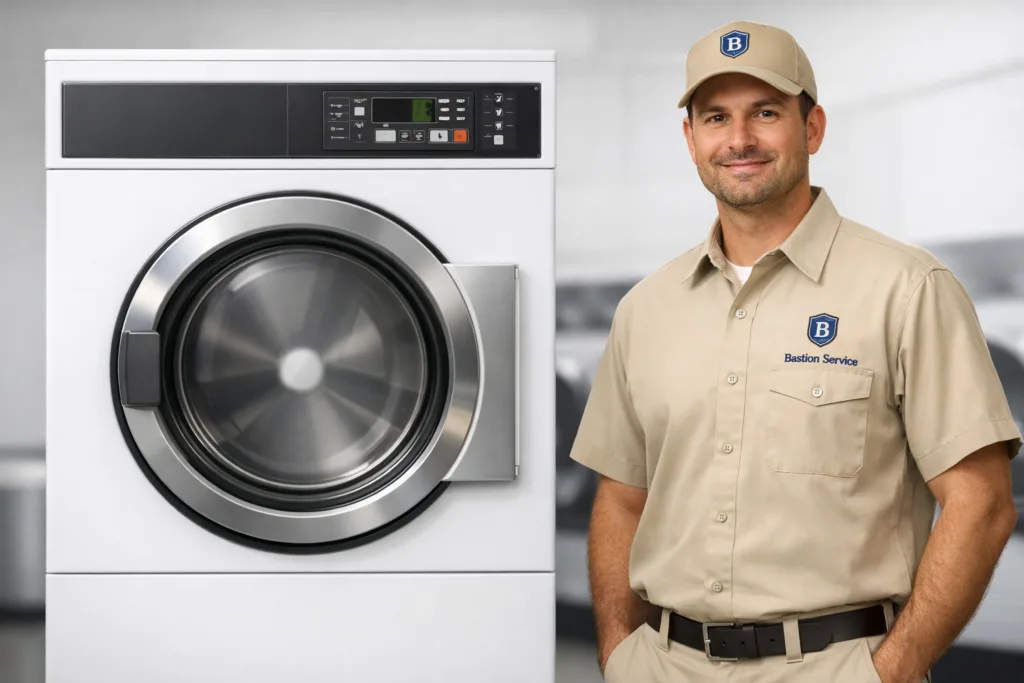




Dryer problems can disrupt linen turnover, guest-room operations, uniforms, towels, and other daily laundry demands. When a Speed Queen unit starts underperforming, the best next step is service built around the exact symptom pattern so the fault can be identified before downtime spreads to the rest of the workflow. For businesses in Venice, that usually means scheduling repair once the machine shows repeat issues with heat, airflow, drum movement, controls, or cycle completion.
Related commercial service paths in Venice include Speed Queen Commercial Repair in Venice, Commercial Dryer Repair in Venice, and Speed Queen Washer Repair in Venice.
Common Speed Queen Dryer Problems and What They May Mean
No heat or weak heat
If the dryer tumbles but clothes, towels, or linens still come out damp, the problem may involve the heating system, power supply, high-limit safety components, airflow restrictions, or the control system that manages temperature. Weak heat can be just as disruptive as no heat because loads appear to be processing normally while drying performance steadily falls behind.
In a business setting, this often leads to repeated cycles, machines tied up longer than expected, and staff spending extra time checking loads that should already be finished. A proper repair visit helps determine whether the issue starts with heat generation, heat regulation, or poor exhaust movement.
Long dry times
Long dry times are often caused by restricted airflow, lint accumulation, poor vent performance, cycling issues, weak heating output, or moisture-sensing problems. Even when the dryer eventually finishes the load, extended run time raises utility use and reduces available machine capacity during busy periods.
This is one of the most important symptoms to address early. A dryer that still runs but takes much longer than normal is often warning that a larger failure is developing, especially if temperature, airflow, or blower performance has started to decline.
Dryer stops mid-cycle or shuts down unexpectedly
Unexpected shutdowns can point to overheating, motor stress, door switch faults, failing controls, or safety components opening under load. Some machines will restart after cooling down, which can make the problem seem inconsistent at first, but repeated shutdowns usually indicate a condition that should be tested before the unit is put back into regular rotation.
For laundromats, hotels, restaurants, and other Venice businesses, this kind of stoppage affects more than one load. It creates uncertainty for staff, interrupts scheduling, and makes it harder to predict turnaround times.
Drum not turning or turning inconsistently
If the dryer starts but the drum does not rotate correctly, the cause may involve the belt, idler, motor, rollers, or other drive-related components. In some cases the machine may hum, attempt to start, or rotate with unusual resistance before stopping.
Drum issues should be addressed quickly because continued attempts to run the machine can increase strain on the motor and surrounding parts. What begins as a wearable-part repair can become more expensive if operation continues after the drum system has already become unstable.
Noise, vibration, or burning smell
Squealing, scraping, thumping, or grinding usually points to wear in support components, blower parts, bearings, or drum-related hardware. Excess vibration can also suggest alignment or support issues. A burning smell may come from lint buildup, slipping parts, overheating, or electrical stress.
These symptoms matter because they often signal active wear rather than a one-time performance dip. If noise is getting louder, if the cabinet feels unusually hot, or if odor appears during every cycle, the unit should be inspected before additional damage occurs.
Why a Symptom-Based Diagnosis Matters
Different failures can create similar dryer complaints. A machine that is not finishing loads may have a heating fault, airflow problem, sensor issue, or a combination of multiple conditions at once. Approving parts before testing can lead to repeat visits, unnecessary expense, and a dryer that returns to service without the root cause being corrected.
That is why many businesses in Venice benefit from repair that begins with operating checks, temperature and airflow evaluation, and inspection of the systems most closely tied to the complaint. Bastion Service approaches Speed Queen dryer repair this way so the repair decision is based on the actual failure path, not just the most visible symptom.
Signs the Dryer Should Be Serviced Soon
- Loads are still damp at the end of the cycle
- Drying times have increased compared with normal operation
- The dryer starts and then stops before the cycle is complete
- The drum is noisy, slow, or not turning properly
- The cabinet becomes unusually hot during operation
- There is a burning odor, repeated overheating, or airflow concerns
- Controls respond inconsistently or cycle behavior has changed
These symptoms are especially important when the dryer is part of a daily production routine. Even if the unit is still technically running, reduced performance usually means uptime is already being lost through slower load completion and extra staff intervention.
When Continued Use Can Increase Downtime
Some dryer issues get more expensive the longer they are ignored. Poor airflow can overheat internal components. Worn rollers or belts can put extra strain on the motor and drum system. Repeated overheating can affect controls and safety devices. A machine that needs multiple restarts or repeated cycles can also create unnecessary wear across the rest of the laundry setup.
If the dryer is producing strong odor, severe noise, repeated shutoffs, or obvious overheating, it is usually better to stop using it until the cause is identified. That helps reduce the risk of a manageable repair turning into a larger equipment outage.
Repair or Replace?
Many Speed Queen dryer problems are repairable, especially when the issue is limited to heating components, switches, rollers, belts, sensors, controls, or airflow-related faults. Repair is often the better option when the machine is otherwise in solid condition and still fits the volume needs of the business.
Replacement becomes a more serious consideration when the dryer has a pattern of breakdowns, multiple failing systems, major structural wear, or repair costs that no longer make sense for the age and condition of the unit. The most useful service visit is one that explains whether the current problem is isolated or part of broader equipment decline.
What Businesses in Venice Should Have Ready Before Service
To speed up diagnosis, it helps to note what the dryer is doing and when the problem started. Useful details include whether the drum turns, whether heat is present at any point in the cycle, whether the unit shuts off on its own, what kind of noise is heard, and whether drying time changed suddenly or gradually.
If staff can identify whether the problem affects every load or only certain cycles, that can also help narrow down likely causes. A good service call is more efficient when the symptom pattern is clear from the start.
Scheduling Speed Queen Dryer Repair in Venice
When a dryer begins causing delays, incomplete drying, shutdowns, or mechanical noise, scheduling repair early is often the best way to protect workflow and avoid more disruptive failure. For businesses in Venice, the goal is not just getting the machine running again, but restoring stable performance with a repair decision that fits daily operations, equipment condition, and the urgency of the downtime.


