
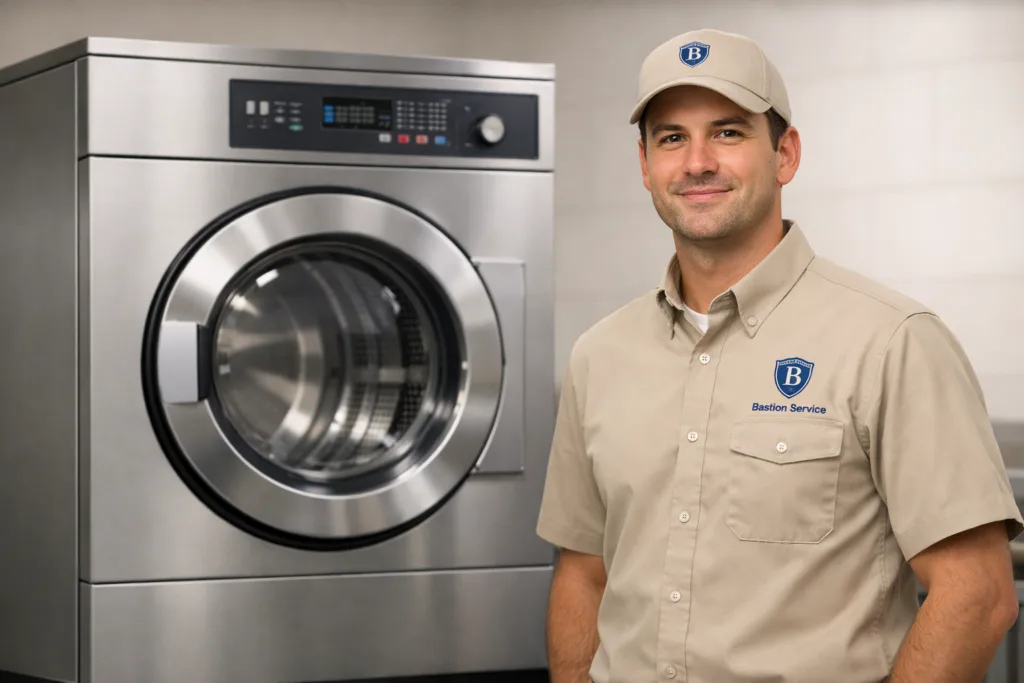






Dryer problems can disrupt output long before a unit fully stops. When a Wascomat dryer begins leaving loads damp, overheating, shutting down, or making unusual noise, the most useful next step is service that identifies the exact failure pattern and helps you schedule repairs around daily operations. For businesses in Palms, that means looking beyond the symptom on the surface and confirming whether the issue starts with heat, airflow, drum movement, controls, or a safety-related shutdown condition.
Related commercial service paths in Palms include Wascomat Commercial Repair in Palms, Commercial Dryer Repair in Palms, and Wascomat Washer Repair in Palms.
What service should focus on first
A Wascomat dryer can show similar symptoms for very different reasons. A machine that seems to have a heat problem may actually be struggling with airflow. A unit that stops mid-cycle may be reacting to overheating, a control fault, or a failing component under load. Effective repair starts with testing the machine in context, including how it starts, tumbles, heats, exhausts air, and completes the cycle.
Bastion Service helps Palms businesses sort out those symptom patterns so repair decisions are based on actual machine behavior, not assumptions. That matters when downtime affects staff workflow, load turnaround, and the availability of other machines.
Why is my Wascomat dryer not heating or finishing the cycle?
This is one of the most common service calls because several different faults can produce the same result. If the dryer runs but clothing or linens remain damp, the problem may involve restricted exhaust flow, reduced heat production, unstable temperature regulation, moisture-sensing problems, or a shutdown that interrupts the cycle before drying is complete.
In day-to-day operation, this symptom often shows up as:
- Loads that need multiple cycles to finish
- Hot drum air without normal drying results
- Cycles that end too early or stop unexpectedly
- Inconsistent results from one load to the next
- A machine that appears to run normally but falls behind on output
Because poor drying can come from more than one source at the same time, testing is important before any part is replaced.
Common Wascomat dryer symptoms and what they often indicate
Long dry times
When dry times gradually increase, airflow should be considered early. Restricted venting, lint buildup, weak heat, or cycling issues can all reduce drying performance. In a busy laundry setting, this can quietly lower throughput for days or weeks before anyone realizes the machine is becoming a bottleneck.
No heat or weak heat
If the dryer starts and tumbles but does not produce enough heat, the issue may involve heating components, temperature controls, electrical supply problems, or safety cutoffs. Weak heat can be just as disruptive as no heat because staff may keep re-running loads, increasing wear and utility use without solving the root problem.
Drum not turning correctly
A Wascomat dryer that hums, struggles, or fails to tumble properly may have belt, motor, roller, support, or obstruction-related issues. Uneven drum movement can also increase stress on nearby components, especially if the machine continues to be used while slipping or dragging.
Stops during operation
Mid-cycle shutdowns often point to overheating, control failures, door-switch issues, intermittent power problems, or components that fail once they reach operating temperature. A dryer that restarts later does not mean the issue has resolved. It usually means the fault is intermittent and should be caught before the outage becomes complete.
Noise, vibration, or burning odor
Scraping, squealing, thumping, and strong vibration usually indicate mechanical wear that is getting worse with each cycle. A burning smell can signal friction, overheating lint, electrical stress, or a failing part. These symptoms are worth addressing quickly because they can lead to larger damage if ignored.
How airflow problems affect drying performance
Airflow issues are often underestimated because the dryer may still appear to be heating and running. But if hot, moist air is not moving through the machine and out as intended, drying times increase, temperatures can become unstable, and thermal safety devices may begin shutting the unit down. In practice, airflow-related problems can look like heat failure, moisture-sensor trouble, or random cycle interruption.
Signs that airflow may be part of the problem include:
- Hot loads that are still damp
- Repeated overheating or high-limit shutdowns
- Longer cycles during normal use
- Performance that briefly improves and then gets worse again
- Excess heat around the dryer area
When a control or sensor issue is more likely
Not every dryer problem is mechanical. If settings do not respond properly, cycle lengths seem erratic, or the machine starts and stops inconsistently, the problem may involve controls, sensors, switches, or related electrical components. These issues can be frustrating because the dryer may work normally for part of the day and fail later under heavier use.
A symptom-based inspection helps separate true component failure from operating conditions that trigger the controls to behave abnormally. That distinction matters when deciding whether the repair is isolated or part of a broader wear pattern.
When to stop using the dryer until it is checked
Some symptoms should be treated as more than a minor inconvenience. Continued operation is more likely to worsen the repair when the dryer shows:
- A recurring burning smell
- Severe scraping, banging, or metal-on-metal noise
- Frequent shutdowns during normal cycles
- Noticeable overheating
- Drum movement that is jerky, stalled, or inconsistent
Taking the unit out of regular use in these situations can help limit secondary damage and reduce the chance of a broader outage affecting your workflow.
Repair decisions for Palms businesses
For businesses in Palms, the right repair decision is usually the one that restores steady output with the least disruption to operations. That means evaluating whether the problem is isolated, whether the machine has developed multiple wear-related issues, and whether the expected repair will return the dryer to reliable daily use.
Useful service recommendations typically consider:
- The exact symptom pattern
- Whether the issue is heat, airflow, controls, or drum-drive related
- How long the machine has been showing the problem
- Whether performance has been drifting over time
- The impact of downtime on staffing and load turnaround
Scheduling service before a full outage
Many dryer failures give early warning signs. Longer dry times, occasional shutdowns, intermittent heat, and new noises often appear before the machine becomes unusable. Scheduling service at that stage can be more manageable than waiting for a complete breakdown during peak demand.
If your Wascomat dryer is no longer heating consistently, finishing cycles, tumbling smoothly, or operating without unusual odor or vibration, a service visit is the practical next step. For Palms businesses, timely diagnosis and repair planning can help reduce downtime, protect the machine from added damage, and return the unit to dependable operation as quickly as possible.


