





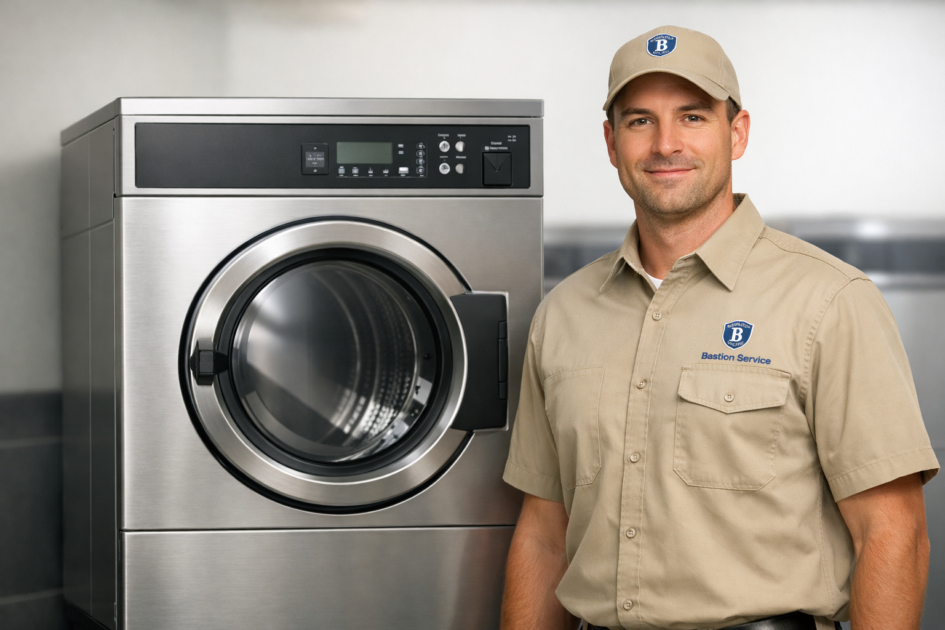
Dryer problems can interrupt laundry flow fast, especially when loads begin backing up, staff starts rerunning cycles, or one machine has to carry more of the workload. For businesses in Palms, service is most effective when the symptom is matched to testing on the heat system, airflow path, drum drive, controls, and electrical supply before repair decisions are made. Bastion Service handles Speed Queen dryer issues with that service-first focus so managers can understand what failed, what needs attention now, and whether the unit should stay in use or be taken offline.
Related commercial service paths in Palms include Speed Queen Commercial Repair in Palms, Commercial Dryer Repair in Palms, and Speed Queen Washer Repair in Palms.
Why symptom-based dryer service matters
A Speed Queen dryer can show the same outward problem for very different reasons. Long dry times may come from vent restriction, weak heat output, cycling problems, blower issues, or moisture sensing faults. A no-start complaint may point to power supply trouble, a door switch issue, a failed motor circuit, or a control problem. Without testing, it is easy to replace the wrong part and still have the original problem affecting operations.
That is why a service visit should look at the full pattern: whether the drum turns, whether heat appears and stays consistent, whether the unit shuts down under load, whether the controls respond normally, and whether the complaint is isolated to one dryer or affecting multiple units. Those details help determine urgency and the most practical next step for businesses in Palms.
Common Speed Queen dryer problems and what they often indicate
No heat or poor heat output
If the dryer runs but clothes or linens remain damp, the problem may involve the heating element, gas ignition components, thermostats, thermal protection devices, wiring, or restricted airflow. In day-to-day business use, this usually appears as repeat loads, longer cycle times, and inconsistent drying results.
Low heat is not always a heater failure. A blocked vent path or weak airflow can cause heat-related complaints even when the heating system itself is still functioning. That is one reason proper diagnosis matters before parts are approved.
Long dry times and incomplete cycles
When a machine seems to run normally but takes too long to finish, airflow should be evaluated along with heat performance and cycle control. A dryer that cannot move air efficiently may struggle to remove moisture even though the drum is turning and some heat is present. Sensor-related issues can also cause loads to stop too soon or continue longer than they should.
For busy laundry rooms, this kind of problem can quietly raise labor time and reduce throughput before the machine stops completely.
Dryer will not start
A no-start condition can stem from incoming power issues, door latch or switch failure, control board faults, a failed start circuit, or motor problems. If the panel appears normal but nothing happens when the cycle is started, the fault may be very different from a unit that has no response at all.
Because several safety and control components can interrupt operation, a no-start complaint should be tested systematically rather than guessed at from one visible symptom.
Shuts off during the cycle
If the dryer starts and then stops mid-cycle, possible causes include overheating protection, restricted venting, an overworked motor, intermittent wiring faults, or a failing control. This type of issue often gets worse under heavier loads or after the machine has been running for a while.
Repeated shutdowns are worth addressing quickly because continued use can increase wear on the motor and related components while still leaving staff unable to finish loads reliably.
Drum noise, scraping, or vibration
Squealing, grinding, thumping, or scraping can point to worn rollers, belt wear, idler pulley problems, drum support issues, loose hardware, or an object caught where it should not be. Noise complaints are not just nuisance issues. They often mean a moving component is wearing unevenly or beginning to fail.
Using the dryer in that condition can turn a smaller repair into damage affecting the drum, cabinet, or drive system.
Overheating or burning smells
If the dryer seems hotter than normal, produces unusually hot loads, or gives off a burning odor, service should not be delayed. Common causes include poor airflow, thermostat failure, lint accumulation in the wrong area, wiring trouble, or control faults that affect temperature regulation.
These conditions can create a larger repair if the unit keeps running without inspection, especially in high-use environments.
Control and cycle problems
Buttons that do not respond, displays that act inconsistently, cycles that will not advance, or erratic start behavior may indicate interface faults, board issues, harness problems, or unstable electrical input. These problems can be especially disruptive because the dryer may appear usable one cycle and unavailable the next.
Signs it is time to schedule repair
Waiting for a full breakdown is rarely the most efficient choice when a dryer is already affecting output. Service is usually worth scheduling when the machine is still running but showing changes that point to a developing fault.
- Drying times have increased noticeably
- Loads come out damp even after a full cycle
- The dryer starts only intermittently
- The unit shuts off before the load is finished
- There is new squealing, thumping, or scraping
- Staff members are restarting cycles to get usable results
- One dryer is performing differently from similar units on site
For Palms businesses, these are often early signs that downtime, energy waste, or secondary damage is already beginning to build.
When the dryer should stay out of service
Some minor performance issues can be evaluated with less urgency, but certain symptoms call for stopping use until the machine is inspected. That is especially true when the dryer overheats, smells like something is burning, makes metal-on-metal noise, or repeatedly cuts out during operation.
Keeping the dryer in service under those conditions can worsen the original fault and damage surrounding parts. If the issue involves heat control, strong vibration, or obvious airflow trouble, it is usually safer and more cost-effective to pause operation and schedule repair.
What happens during diagnosis
A useful dryer diagnosis should do more than confirm that the unit is malfunctioning. It should identify whether the problem is rooted in heat production, airflow, controls, drum movement, or power delivery, and whether any related wear is likely to affect reliability after the immediate repair is completed.
That process may include verifying the complaint under operation, checking temperature behavior, reviewing airflow conditions, testing safety and control components, inspecting drum support and drive parts, and comparing the machine’s performance with normal cycle expectations. For managers and staff, that creates a more informed repair decision instead of a trial-and-error parts swap.
Repair or replace?
Many Speed Queen dryer failures are repairable when the machine is otherwise in solid working condition. If the problem is isolated to a heating component, drive part, control issue, or airflow-related fault, repair often makes sense and can return the unit to stable use.
Replacement becomes a more serious consideration when the dryer has repeated failures across major systems, visible structural wear, a deteriorating cabinet or drum assembly, or a pattern of downtime that keeps disrupting operations. The goal of diagnosis is to separate a single repair event from a broader reliability problem.
How businesses can prepare for service
Before the appointment, it helps to note exactly what the dryer is doing. Useful details include whether it starts at all, whether the drum turns, whether heat is present, whether shutdown happens at a predictable point, what type of noise is heard, and whether the issue occurs on every load or only under certain conditions.
If staff can identify when the symptom began and whether productivity dropped gradually or all at once, that can also help narrow the cause faster. For busy sites, it is helpful to know whether the unit can be isolated during service or whether scheduling needs to be coordinated around peak laundry demand.
Speed Queen dryer service focused on uptime in Palms
When a dryer is slowing production, failing to heat, stopping mid-cycle, or making abnormal noise, the right next step is service that connects the symptom to a repair decision quickly and clearly. For businesses in Palms, that means evaluating the machine’s actual failure pattern, identifying whether continued use risks more damage, and scheduling repair based on operational impact rather than guesswork.


