
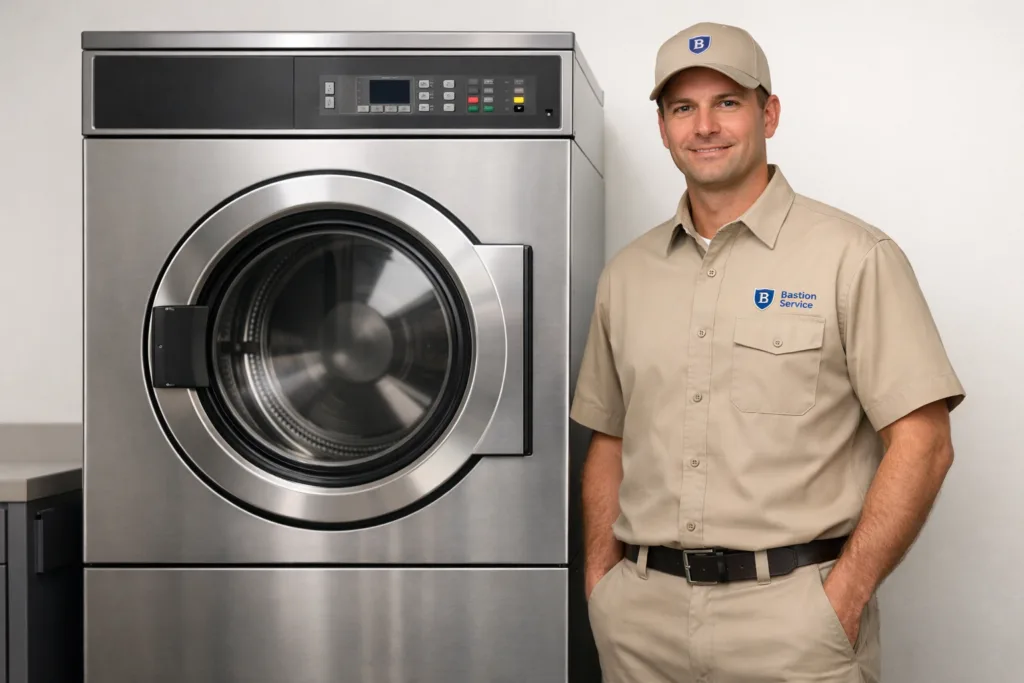




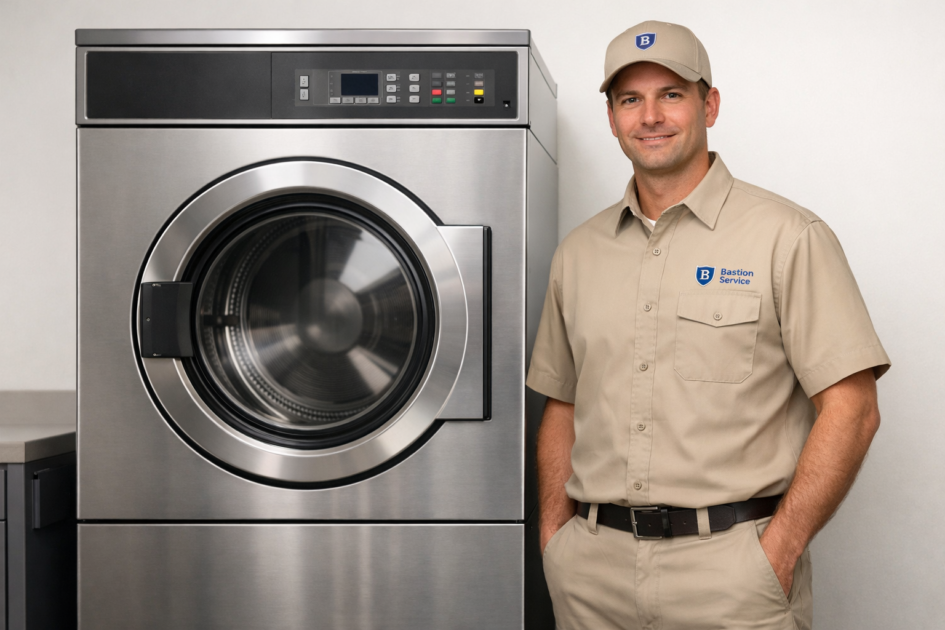
Dryer problems can interrupt load turnover, staffing flow, and customer service long before a unit stops completely. For businesses in Inglewood, service is most effective when repair starts with the actual symptom pattern on the Wascomat dryer rather than a guess at parts. Bastion Service evaluates heat, airflow, drum movement, controls, and shutdown behavior to identify the fault and help you plan the next step with less downtime.
Related commercial service paths in Inglewood include Wascomat Commercial Repair in Inglewood, Commercial Dryer Repair in Inglewood, and Wascomat Washer Repair in Inglewood.
How Wascomat dryer problems usually show up in daily operation
Many dryer failures begin as performance complaints instead of a full outage. A machine may still start and tumble, but loads come out damp, cycles take longer than normal, or the unit becomes unreliable during busy periods. In laundromats, hotels, shared laundry rooms, and other high-use settings, those symptoms can slow production just as much as a no-start condition.
Common service calls involve:
- No heat or weak heat
- Long dry times
- Unit starts, then shuts down before the cycle finishes
- Drum noise, scraping, squealing, or thumping
- Airflow restrictions or overheating concerns
- Controls that respond inconsistently
- Temperature problems that affect fabric drying results
Because more than one fault can create similar symptoms, testing matters. Poor airflow, a failing heating component, a thermostat issue, a control problem, or wear in drum support parts can all change how the dryer behaves under load.
Why a Wascomat dryer may not heat or finish the cycle
If a dryer runs but does not produce enough heat, the cause may be in the heating circuit, temperature regulation system, safety cutoffs, airflow path, or control sequence. In some cases, the dryer heats at first and then loses temperature later in the cycle. In others, it never reaches proper operating heat at all.
When a cycle fails to finish, the issue may involve overheating protection, sensor feedback problems, restricted ventilation, motor stress, or an intermittent electrical fault. A dryer that stops early is often reacting to an unsafe or unstable condition rather than simply “timing out.”
Signs that usually point to a repair need include:
- Loads stay damp after a normal cycle
- The cabinet feels unusually hot
- The dryer runs longer than expected without improving results
- The machine stops mid-cycle and restarts later
- Heat output changes from one load to the next
Long dry times often mean more than just a heavy load
Extended drying time is one of the most common complaints on high-use dryers. While load size and textile type matter, repeated long cycles usually indicate declining efficiency somewhere in the system. Restricted exhaust flow, weak heat, sensor issues, or temperature control problems can all cause the machine to work longer without drying properly.
For businesses in Inglewood, this often shows up as reduced throughput. Staff may rerun loads, customers may wait longer for machines to open up, and operating costs can increase as the dryer runs longer to do the same job. When long dry times become consistent, it is usually time to inspect the dryer before the issue spreads to related components.
Noise, vibration, and drum movement issues
Unusual sound is rarely something to ignore on a Wascomat dryer. Squealing can suggest wear in moving support parts. Thumping may point to drum-related wear or imbalance. Scraping and rumbling can indicate that the drum is no longer moving as smoothly as it should.
These symptoms matter because a dryer can continue operating while internal wear gets worse. What begins as a noise complaint can turn into belt failure, drum tracking problems, added motor strain, or damage to nearby assemblies. If the dryer sounds different than normal, service is usually less disruptive when scheduled early.
Airflow and overheating problems
Proper airflow is critical to both drying performance and safe operation. When airflow is restricted, heat can build where it should not, cycle times can increase, and moisture removal becomes less effective. Overheating complaints may also involve temperature controls, thermostats, sensors, or safety devices reacting to abnormal conditions.
Symptoms commonly tied to airflow or heat regulation problems include:
- Hot exterior panels
- Burning or excessively hot smell
- Frequent shutdowns during operation
- Drying that is inconsistent from one load to the next
- Repeated high-temperature behavior after restart
When a dryer is overheating or shutting down hot, continued use can increase wear and create a larger repair scope. That is a strong sign to pause operation and have the unit evaluated.
No-start and intermittent shutdown complaints
A Wascomat dryer that will not start may have an issue with power supply, door-related safety switching, controls, timer functions, wiring, or another electrical interruption. If the dryer starts normally and then quits during use, the problem may be more intermittent and can involve overheating protection, motor issues, unstable control response, or connection faults that appear only under operating conditions.
Intermittent failures are especially disruptive because they make the equipment hard to trust. A machine that works for one load and fails on the next can create scheduling problems for staff and uncertainty for customers. In these cases, noting exactly when the shutdown happens can help narrow the repair path.
What to note before scheduling service
A few details can make diagnosis faster and more accurate. Before the appointment, it helps to note:
- Whether the dryer tumbles normally
- Whether heat is absent, weak, excessive, or inconsistent
- If the problem happens on every load or only sometimes
- Any unusual sounds and when they occur
- Whether the unit stops at the same point in the cycle
- Any recent performance change, even if the dryer still runs
This kind of information helps separate airflow issues from heat failures, mechanical wear from control issues, and isolated faults from broader system problems.
Repair or replace?
The right decision depends on the condition of the machine, the fault involved, and how the dryer fits into daily operations. Repair often makes sense when the problem is limited to a specific system and the rest of the unit remains in solid operating condition. Replacement becomes more worth considering when multiple systems are worn, downtime has become frequent, or the expected repair investment no longer supports reliable service life.
Diagnosis should come first. Once the source of the problem is confirmed, it becomes easier to compare the repair scope against the machine’s overall condition and your operating needs.
When service should not wait
Some symptoms deserve prompt attention because they can lead to added damage or lost operating time if ignored. Schedule service quickly if the dryer:
- Stops mid-cycle repeatedly
- Overheats or smells unusually hot
- Makes loud mechanical noise
- Runs but leaves loads wet
- Shows unstable control behavior
- Has a noticeable drop in output during busy periods
When a Wascomat dryer begins showing these warning signs in Inglewood, early repair scheduling is usually the best way to limit disruption, protect nearby components, and get the machine back into dependable operation.


