
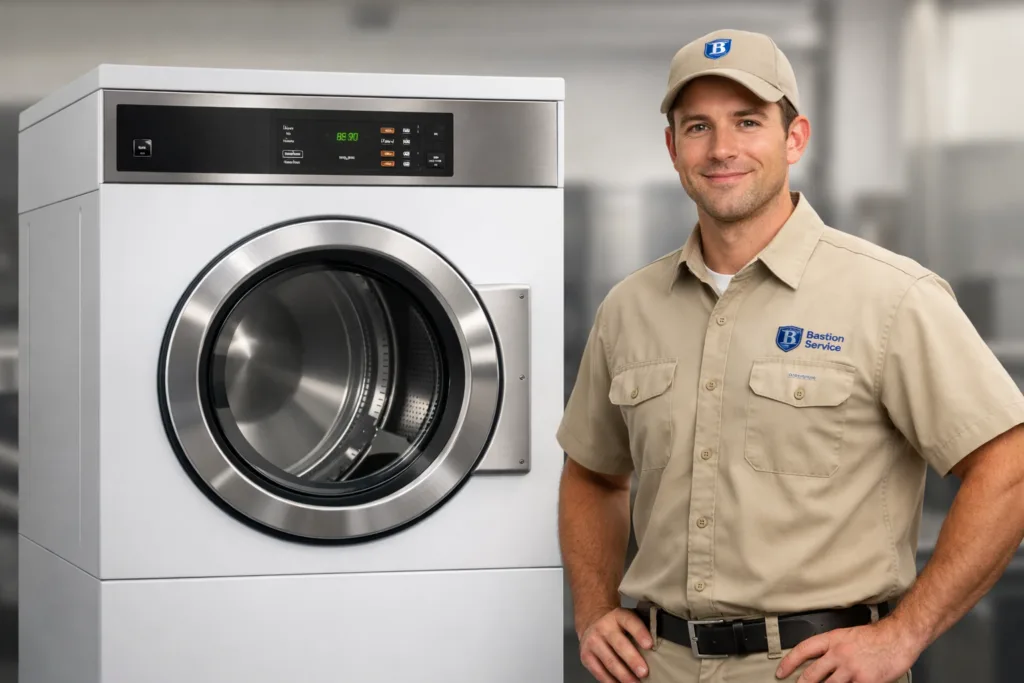




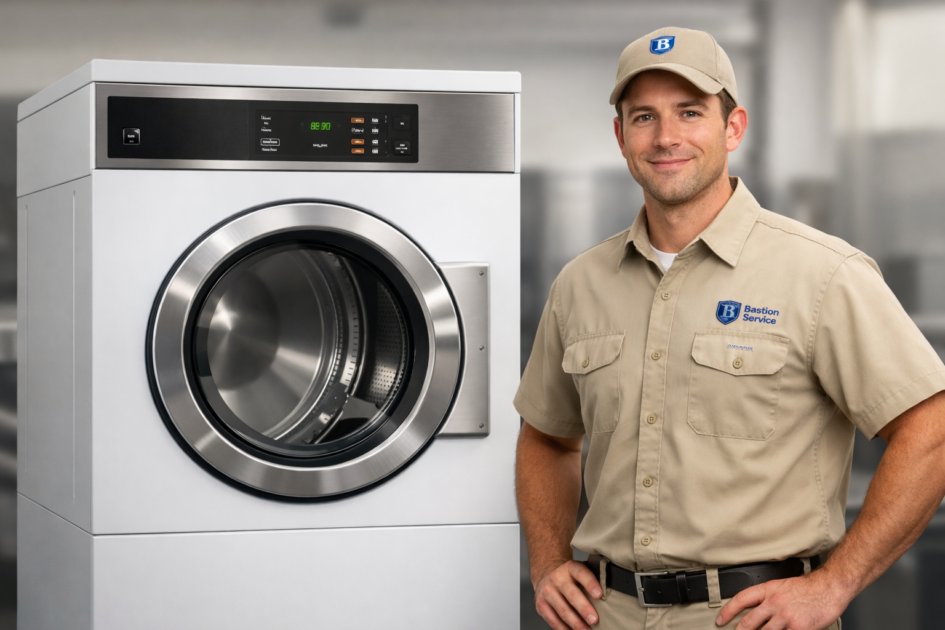
Dryer failures can disrupt laundry flow fast, especially when loads begin stacking up because one unit is not heating, is taking too long to dry, or will not complete a cycle. For businesses in Inglewood, the right next step is service based on the actual symptom pattern, not guesswork. Bastion Service works on Speed Queen dryer problems with attention to heat output, airflow, drum movement, control response, and the operating demands that make downtime costly.
Related commercial service paths in Inglewood include Speed Queen Commercial Repair in Inglewood, Commercial Dryer Repair in Inglewood, and Speed Queen Washer Repair in Inglewood.
Common Speed Queen dryer problems that need repair
Many dryer complaints sound similar at first, but the underlying cause can be very different. A unit that tumbles without heat is not diagnosed the same way as one that overheats, shuts down mid-cycle, or runs loudly. Looking at how the dryer behaves during start-up, under load, and near the end of the cycle helps narrow down whether the problem is in the heating system, airflow path, drive components, sensors, wiring, or controls.
No heat or low heat
If the drum turns but items remain damp, the fault may involve heating components, gas ignition parts where applicable, thermostats, limit devices, wiring, or the control system. Low heat can also be caused by restricted airflow. In day-to-day operation, this often shows up first as longer dry times, repeat cycles, and reduced throughput rather than a complete shutdown.
Long dry times and poor airflow
When a Speed Queen dryer is running but taking much longer than normal, airflow should be part of the diagnosis. Lint buildup, blower issues, vent restrictions, and sensor-related problems can all reduce drying efficiency. Staff may notice that loads come out warm but still damp, or that the machine seems to run normally yet productivity drops. This type of problem should be addressed early because extended cycles add wear and increase energy use.
Will not start or stops before the cycle ends
A no-start condition can point to door switch problems, control faults, power-related issues, start circuit failures, or safety interruptions. If the dryer starts and then stops partway through, overheating protection, motor trouble, airflow restriction, or an intermittent electrical fault may be involved. Repeated restarts may keep work moving for the moment, but they can also add strain to already failing parts.
Drum not turning, slow tumbling, or mechanical noise
If the dryer hums, struggles to rotate, or runs with squealing, grinding, thumping, or scraping sounds, the issue may be in the belt, motor, rollers, idler, bearings, glides, or blower assembly. Noise is usually a sign of wear, not a minor annoyance. A dryer that keeps running with worn mechanical parts can damage related components and turn a focused repair into a broader rebuild.
Burning smell, overheating, or repeated high-limit trips
Burning odors should be taken seriously. They can indicate lint accumulation, friction from failing moving parts, electrical overheating, or temperature control problems. A dryer that becomes too hot, shuts itself down, or trips protective devices should be inspected before it is returned to normal use. These symptoms affect both safety and reliability.
Why a Speed Queen dryer may not heat or finish the cycle
When a dryer does not heat properly or will not complete drying, the problem is not always the heater itself. Several conditions can produce the same complaint:
- Failed heating elements or heat-producing components
- Ignition-related faults on gas-equipped units
- Restricted exhaust airflow
- Faulty cycling or safety thermostats
- Moisture sensing or temperature sensing problems
- Control board or timer failure
- Motor overheating that interrupts the cycle
That is why symptom-based diagnosis matters. A dryer that starts cold and stays cold is a different repair situation than one that heats briefly, then loses temperature and shuts down. The repair plan should match what the machine is actually doing in service.
How symptom patterns help narrow the repair
Looking at one symptom in isolation can miss the real cause. Patterns tend to tell a more useful story:
- Heat present, but loads stay damp: often points to airflow restriction, blower performance issues, or sensor problems.
- Intermittent shutdown with hot cabinet surfaces: may suggest overheating, restricted venting, or temperature control failure.
- Noisy operation plus poor drying: can indicate both mechanical wear and reduced airflow.
- No start with inconsistent control behavior: may involve door sensing, wiring, user interface faults, or electronic control issues.
- Runs only on certain cycles or settings: can suggest timer, selector, or board-related faults.
For businesses in Inglewood, these patterns help determine whether the dryer should be taken out of rotation immediately, whether the issue is likely limited to one unit, and how urgent scheduling should be.
When to stop using the dryer and schedule service
Some dryer issues should not be monitored for several more days. Service is worth scheduling promptly when the machine shows any of the following:
- Repeated no-heat or low-heat cycles
- Drying times that keep increasing
- Mid-cycle shutdowns
- Grinding, squealing, scraping, or thumping sounds
- Burning smells or signs of overheating
- Fault codes or inconsistent control response
- Drum movement problems
Waiting can increase repair scope. What starts as airflow restriction or roller wear can lead to additional damage if the unit keeps running under strain. If staff are compensating by re-running loads, shifting excess volume to other machines, or repeatedly restarting the dryer, the operational impact is already significant enough to justify service.
Repair or replacement: what makes sense
Many Speed Queen dryer issues are repairable when the problem is isolated to heating parts, controls, sensors, drive components, or airflow correction. Replacement becomes a more serious discussion when the unit has extensive structural wear, repeated major failures, or a combination of age, condition, and repair scope that no longer supports reliable operation.
The practical question is not just whether the dryer can be made to run again, but whether the repair supports the workload the machine is expected to handle. For busy laundry rooms, hotels, laundromats, and other facilities in Inglewood, reliability after service matters just as much as restoring basic function.
What to have ready before scheduling Speed Queen dryer service
Having a few details ready can help speed up diagnosis and repair planning:
- Model number and, if available, serial number
- Whether the issue is constant or intermittent
- Any fault codes or display behavior
- Whether the drum turns, heats, or shuts off early
- Any recent noises, odors, or changes in cycle time
- Whether one dryer or multiple units are showing similar issues
That information helps connect the complaint to the likely system involved and improves scheduling efficiency, especially when downtime is already affecting workflow.
Service focused on uptime and workflow
Speed Queen dryer repair in Inglewood is most useful when it is tied to how the machine is actually being used and what symptom is interfering with daily operations. Whether the issue is no heat, long dry times, shutdowns, drum noise, or control failure, the goal is to identify the fault, determine the repair scope, and get the unit back into dependable rotation with as little disruption as possible. If your dryer is slowing production, failing to finish cycles, or showing signs of overheating or mechanical wear, scheduling service promptly is the best next move.


