
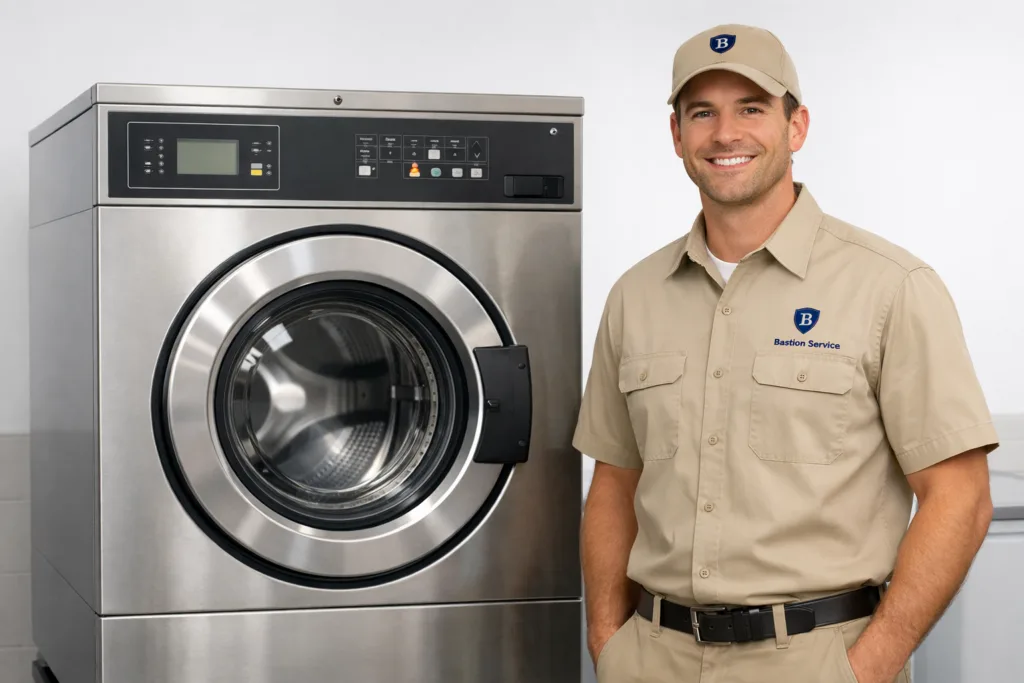




A washer failure can disrupt far more than one load. In laundromats, hotels, healthcare settings, apartment laundry rooms, and other businesses in Inglewood, a Wascomat washer problem can delay turnover, create staff workarounds, and reduce available capacity during busy hours. Bastion Service handles Wascomat washer repair with a service approach centered on symptom tracking, failure diagnosis, repair scheduling, and the practical next step needed to restore normal operation.
Related commercial service paths in Inglewood include Wascomat Commercial Repair in Inglewood, Commercial Washer Repair in Inglewood, and Wascomat Dryer Repair in Inglewood.
The most useful starting point is identifying exactly how the machine is failing. A unit that stops mid-cycle needs a different repair path than one that leaks during fill, drains slowly, or reaches spin with poor extraction. Looking at when the problem occurs, how often it repeats, and whether the issue affects one machine or multiple loads helps narrow the cause and avoid unnecessary parts replacement.
Common Wascomat Washer Symptoms and What They Can Indicate
Washer will not start or stops before the cycle finishes
If the washer does not respond when a cycle is selected, starts inconsistently, or shuts down before completion, the cause may involve the door lock system, control faults, power supply issues, water fill confirmation, or drain-related safeties. A machine that appears to start and then immediately pauses can also point to a problem with how the control is reading cycle status.
This type of failure should be checked quickly because repeated restart attempts can create longer delays for staff and leave loads unfinished in the machine.
Slow draining, standing water, or repeated drain faults
Water remaining in the drum after the cycle, extra-long drain time, or repeated drain errors often suggest a blocked drain path, pump trouble, sensor problems, or restricted flow. In some cases, the washer keeps trying to remove water but cannot clear the load well enough to advance into the next stage.
Drain issues often lead to secondary complaints such as no final spin, soaked loads, or cycle time that keeps getting longer. If the machine is forced to keep running under those conditions, pump strain and overflow risk can increase.
Poor filling or incorrect water level
When the washer under-fills, over-fills, or struggles to move from fill into wash, likely causes include inlet valve issues, pressure sensing problems, supply restrictions, or control errors. In daily operations, inconsistent water levels can affect wash quality, chemistry balance, and repeatability from load to load.
If staff report that the problem only shows up sometimes, that pattern still matters. Intermittent fill problems are common before a more complete failure appears.
Excessive vibration or movement during extraction
Strong shaking, banging, or machine movement during spin may be related to load balance, suspension wear, mounting concerns, or internal mechanical wear. A Wascomat washer that suddenly becomes rough during extraction should not be left in service without inspection.
When vibration gets worse over time, surrounding components can be affected as well. That can turn a limited repair into a more expensive mechanical problem if the condition is ignored.
Leaks around the machine
Leaks can come from several places, including hoses, the drain path, pump area, door components, fill-related overflow, or seal failure. The timing of the leak helps narrow the problem. Water that appears during fill points in a different direction than water that shows up during drain or high-speed spin.
Even a small recurring leak is worth addressing early because it can create slip hazards, affect nearby equipment, and interfere with normal laundry room use.
Noise during wash or spin
Grinding, scraping, rumbling, or squealing noises may indicate foreign objects, pulley problems, bearing wear, or motor-related stress. Whether the noise appears during wash, drain, or spin is important because each phase places different demands on the machine.
A noise complaint becomes more urgent when it is paired with vibration, slow spin-up, repeated cycle interruptions, or visible movement.
Why Symptom-Based Diagnosis Saves Time
Many washer complaints sound similar at first, but the actual causes can be very different. A machine that will not spin might have a drain problem preventing cycle advance, while another may have a door lock issue or a control fault blocking extraction. Replacing parts based only on the visible symptom can add cost and keep the machine down longer than necessary.
Symptom-based diagnosis helps separate water system issues from control issues, and mechanical wear from safety-lockout problems. That is especially important on equipment used heavily throughout the day, where recurring faults tend to appear under load, during peak use, or after repeated cycles rather than during a quick visual check.
When Washer Problems Start Affecting Operations
Washer problems do not need to become total failures before service is warranted. In many business settings, the first warning signs are smaller but still disruptive: cycles taking longer than normal, occasional drain faults, inconsistent extraction, intermittent starting, or staff having to rerun loads.
Scheduling service makes sense when a machine is no longer completing cycles reliably, is leaking, is producing unusual sound or movement, or is triggering repeated resets to stay in use. These signs usually indicate a developing fault rather than a one-time interruption.
Use should stop sooner if the washer is:
- Leaking heavily onto the floor
- Moving aggressively during spin
- Tripping power repeatedly
- Making sharp grinding or impact noise
- Leaving loads consistently saturated after extraction
Under those conditions, continued use can worsen damage and create broader workflow problems across the laundry area.
Repair or Replacement: How the Decision Usually Gets Made
Not every Wascomat washer problem leads to replacement. Many failures are repairable when the machine is otherwise in solid condition and the issue is confined to a serviceable component or system. In other cases, replacement becomes a more realistic discussion when breakdowns are frequent, major wear is present, or repeated downtime is affecting staffing and throughput.
The decision typically comes down to machine age, the severity of the current fault, service history, and the cost of lost operation while the washer remains unreliable. A targeted repair may be the right choice for one site, while another may be dealing with recurring interruptions that make long-term planning more important.
What to Note Before Scheduling Service
Good information from the site can shorten diagnosis time. Before the visit, it helps to note:
- Whether the problem happens during fill, wash, drain, spin, or cycle end
- Any error code shown on the display
- Whether the issue affects every load or only certain load types
- Whether the machine leaks, vibrates, stops, fails to unlock, or leaves water behind
- Whether the problem started suddenly or worsened gradually
Feedback from staff is often useful as well. Details such as “only on heavier loads” or “mostly after back-to-back cycles” can help isolate the failure pattern more quickly.
Service Planning for Wascomat Washer Repair in Inglewood
Effective service is about more than getting the machine to restart once. The goal is to identify the actual source of the failure, confirm whether related components have been affected, and make the repair decision that best supports daily operations. For businesses in Inglewood, that means addressing drainage problems, spin issues, leaks, controls, and mechanical symptoms before they create more downtime than the original fault. When a Wascomat washer begins showing repeat problems, scheduling diagnosis early is usually the best way to protect workflow and return the machine to dependable use.


