
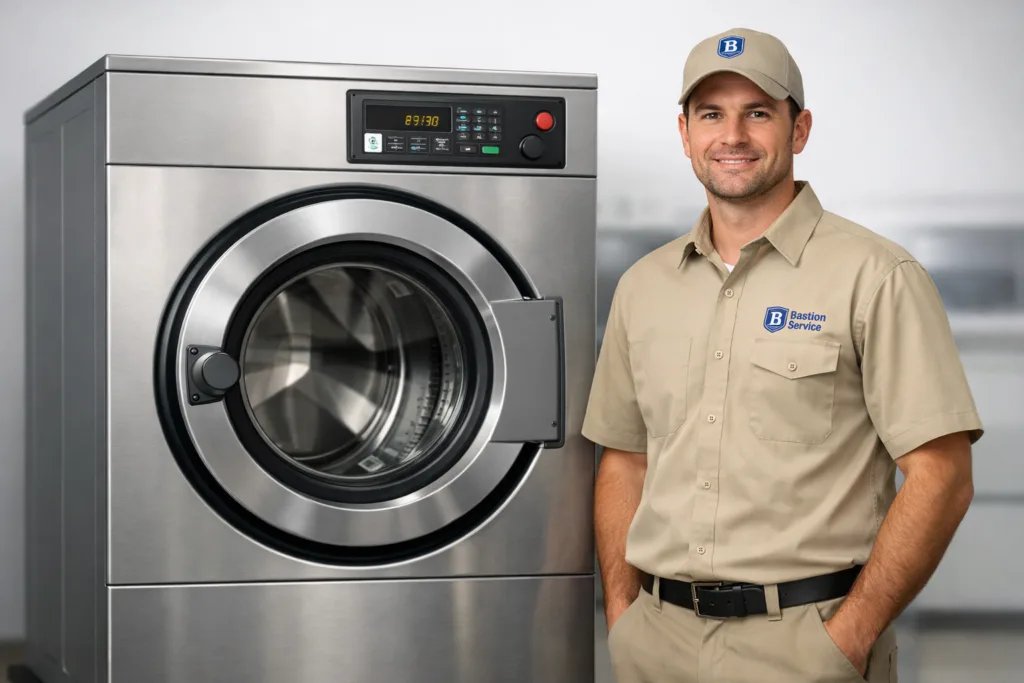




When Wascomat laundry equipment starts interrupting wash flow or drying capacity, the most important next step is service that matches the actual symptom pattern. For businesses in Inglewood, that usually means identifying whether the problem is isolated to one machine, tied to wear inside a key system, or serious enough to take the unit out of rotation before it causes longer downtime. Bastion Service provides repair support for washer and dryer issues with attention to scheduling, operating impact, and the fastest sensible path back to reliable use.
For specific equipment paths in Inglewood, review Wascomat Washer Repair in Inglewood, Wascomat Dryer Repair in Inglewood, and Commercial Appliance Repair in Inglewood.
Wascomat Laundry Equipment Problems That Commonly Need Repair
Business-use laundry equipment often shows warning signs before a complete failure. A washer may begin draining slowly, leaving loads wetter than usual, or stopping before the cycle finishes. A dryer may still run but take much longer to dry, produce inconsistent heat, or shut down during operation. These partial failures can be easy to work around for a short time, but they usually reduce throughput and put more strain on the rest of the laundry room.
Typical repair calls involve symptoms such as:
- Washers that will not fill, drain, spin, or complete a cycle
- Dryers with no heat, weak heat, overheating, or long dry times
- Leaks, vibration, banging, scraping, or unusual operating noise
- Units that stop unexpectedly or show intermittent performance
- Door, latch, control, or startup problems that prevent normal use
Because several different faults can produce similar symptoms, a repair decision should be based on inspection rather than assumptions. That is especially true when the machine still works sometimes but becomes unreliable under normal demand.
Washer Symptoms and What They Often Point To
Failure to fill, drain, or spin
If a Wascomat washer will not move through basic cycle steps, the problem may involve inlet components, drain-related parts, door-lock systems, controls, or drive components. In a busy laundry setting, this kind of failure creates an immediate bottleneck because loads have to be reassigned and staff may not know whether the machine is safe to use again for the next cycle.
Water left in the drum or overly wet loads
When a cycle ends with standing water or linens come out heavier than expected, the issue may be tied to drainage performance or spin-related faults. This affects more than just the washer itself. It also increases drying time, crowds available dryers, and slows the overall turnover of the room.
Leaks and visible water around the machine
Water on the floor should not be treated as a minor nuisance. Leaks can come from hoses, seals, drain paths, or other failing components, and continued operation may increase the repair scope or create surrounding cleanup and safety concerns. If the leak is more than occasional drips, service should be scheduled promptly.
Excessive shaking, banging, or off-balance operation
A washer that slams during spin or vibrates unusually hard should be checked before it stays in regular use. Balance issues, suspension wear, load-distribution problems, and mechanical faults can all contribute. Running a unit in that condition can cause additional wear and lead to a larger interruption later.
Dryer Symptoms That Reduce Throughput
No heat, low heat, or inconsistent drying
Dryers that run without proper heat can appear operational while quietly slowing the entire laundry process. A single low-performing dryer often leads to repeat cycles, backed-up carts, and pressure on other machines. Heating faults can involve multiple possible causes, so testing is important before deciding what repair is needed.
Long dry times and airflow-related performance loss
Longer-than-normal dry times may be caused by airflow restriction, sensor issues, heating problems, or other mechanical or control-related faults. From an operations standpoint, the main issue is lost capacity. Loads take longer to clear, staff may start combining or re-running cycles, and equipment scheduling becomes less predictable.
Overheating, burning odors, or shutdowns
If a dryer overheats, smells abnormal, or stops unexpectedly during use, it should be evaluated before being returned to normal rotation. These symptoms can indicate conditions that affect both machine reliability and safe operation. In business settings where the equipment is used continuously, early service can prevent a much more disruptive outage.
Noise, drum movement problems, or intermittent stopping
Grinding, squealing, scraping, or drum-related problems usually mean the unit needs more than routine observation. Mechanical wear in a dryer often worsens with continued use, and intermittent stoppage can make the machine difficult for staff to trust during peak operating periods.
Why Symptom-Based Diagnosis Matters
Two machines with the same visible complaint may need very different repairs. For example, a washer that stops mid-cycle could have a door-lock issue, a drain problem, a control fault, or a drive-related failure. A dryer with long dry times could be dealing with heat loss, weak airflow, or sensor problems. Guessing wrong leads to delays, unnecessary parts, and additional downtime.
Symptom-based diagnosis helps clarify:
- Whether the unit should remain in limited use or be removed from service
- Whether the problem is likely isolated or connected to broader wear
- How the fault affects scheduling and room capacity
- Whether repair is likely to restore stable performance
When to Schedule Service Quickly
Some equipment problems can wait for the next available opening. Others should be addressed as soon as possible because they can spread into a larger disruption. Faster scheduling is usually the better choice when a machine is leaking, overheating, failing repeatedly, stopping unpredictably, or making aggressive mechanical noise.
Prompt service is also important when one failing machine is forcing the rest of the equipment to absorb extra demand. In laundromats, shared laundry rooms, hotels, and other businesses in Inglewood, that overflow can reduce output across the entire operation even if only one washer or dryer is acting up.
Repair Planning for Wascomat Washers and Dryers
When repair makes sense
Repair is often the right next step when the failure is tied to a defined system and the rest of the machine remains serviceable. That can include drainage faults, door-related problems, heating issues, sensor failures, mechanical wear, or control interruptions that are limited in scope. In these cases, the goal is to restore dependable operation without extending the outage through unnecessary trial and error.
When replacement may enter the conversation
Replacement becomes more relevant when the unit has recurring failures across multiple systems, shows extensive wear, or no longer returns to stable performance after prior repairs. For most operators, that decision comes down to reliability, downtime frequency, and whether the machine can realistically support daily use again. A proper evaluation helps separate a repairable issue from a machine that has become difficult to keep in service.
Signs a Washer or Dryer Should Be Taken Out of Rotation
It is usually best to stop using the equipment until it is checked if you notice any of the following:
- Significant leaking or water escaping during normal operation
- Violent vibration, slamming, or repeated off-balance behavior
- Standing water after the cycle ends
- Burning smells, overheating, or repeated dryer shutdowns
- Harsh mechanical noises that were not present before
- Units that fail unpredictably and disrupt load planning
These conditions do not just affect one machine. They can change staffing flow, delay customer or tenant turnaround, and increase wear on the rest of the equipment being used to compensate.
Wascomat Repair Support for Businesses in Inglewood
Businesses in Inglewood usually need more than a basic explanation of symptoms. They need repair service that helps determine fault severity, decide whether the machine can stay in use, and schedule the right next step with minimal disruption to operations. If a Wascomat washer or dryer is leaking, failing to finish cycles, drying slowly, overheating, or showing unusual noise or vibration, scheduling service is the most practical way to protect uptime and return the laundry room to predictable performance.


