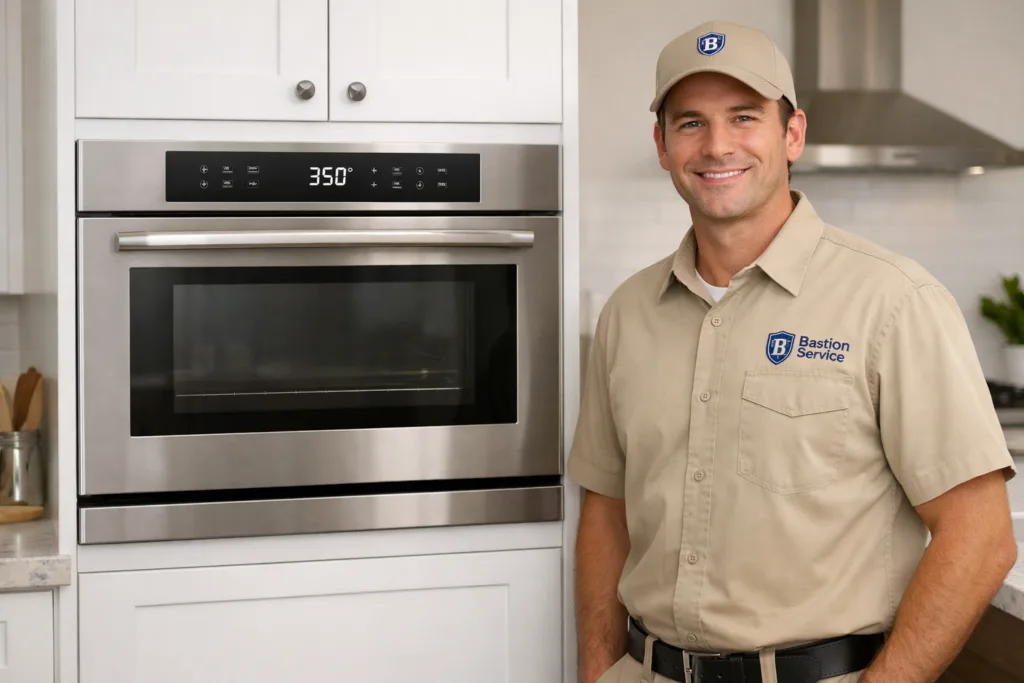
Wall ovens tend to show a small pattern before they fail completely. A longer preheat than usual, uneven browning, a display that resets, or a door that no longer seals tightly can all point to a repairable issue. Paying attention to when the symptom happens—during preheat, halfway through baking, or only on certain settings—often helps narrow down whether the problem is in the heating circuit, sensor, controls, or door assembly.
Common wall oven problems homeowners notice
Uneven baking is one of the most frequent complaints. If cookies brown more on one side, casseroles stay cold in the center, or roasting times suddenly change, the oven may not be distributing heat correctly. A weakened bake element, a drifting temperature sensor, or a control that is not cycling heat properly can all create similar results.
Some wall ovens heat, but not enough. Others preheat very slowly, then struggle to recover temperature after the door is opened. In those cases, the issue may involve a failing element, sensor misreadings, wiring trouble, or an electronic control problem that prevents the unit from delivering steady heat.
A unit that is completely dead can indicate a power supply issue, failed fuse, damaged wiring, or control failure. If the display is on but there is no heat, that usually points away from a total power loss and more toward a problem inside the oven’s heating system. Door hinge wear, broken glass, interior light failure, and self-clean lock problems can also affect daily use and should be checked before they lead to added strain on surrounding parts.
What different symptoms can indicate
Slow preheat or no heat at all
When preheat times get longer and longer, the oven may be trying to operate with a weakened bake or broil element. If there is no heat at all, the cause may be a failed sensor, relay, thermal cutoff, wiring fault, or electronic control issue. If the problem is with a standard built-in cooking unit rather than a dedicated wall oven, Oven Repair in Santa Monica may be the better fit for the symptoms you are seeing.
Temperature swings during cooking
If recipes that usually work now come out undercooked one day and overdone the next, the oven may be cycling outside the temperature you selected. A sensor that has drifted out of range, a control board problem, or an intermittent connection can all produce noticeable temperature swings. This is especially frustrating for baking, where small changes in heat can affect texture, browning, and cook time.
Display, controls, or error codes
Flashing displays, stuck touchpads, beeping, and repeated fault codes often need testing before any part is chosen. Replacing electronic parts based on guesswork can get expensive quickly, especially on a built-in appliance where access takes more time. If the oven shuts off mid-cycle, loses settings, or locks the door unexpectedly, the safest approach is to stop using self-clean and have the control system evaluated.
Door and seal problems
A wall oven door that does not close fully can let heat escape and make the appliance seem weak even when the heating components are still working. Worn hinges, a damaged gasket, or alignment issues may lead to longer cook times and inconsistent browning. These problems are easy to overlook because the oven still turns on, but they can have a real effect on performance.
When a wall oven issue may relate to another cooking appliance
Homeowners sometimes describe a “burner problem” when the actual issue is on a separate cooking surface nearby. If the trouble is limited to top-surface heating, ignition, or burner control rather than the built-in oven cavity, Cooktop Repair in Santa Monica may be the more relevant service path.
Symptom overlap also happens in kitchens with combination cooking setups. If both oven performance and surface burners are acting up on the same freestanding appliance, Range Repair in Santa Monica may make more sense because the diagnosis may involve shared controls, power supply, or gas-related components.
In other homes, the language used to describe the appliance can cause confusion more than the failure itself. If the problem involves traditional burner operation and overall cooking performance on a household unit referred to as a stove, Stove Repair in Santa Monica may be the better match.
When to schedule service
It makes sense to schedule service when the oven will not reach temperature, overheats, shuts off during use, trips the breaker, shows repeat error codes, or has visible element damage. If you notice a burning smell, signs of scorched wiring, or a door that will not unlock normally after a cycle, stop using the appliance until it has been inspected. Continued operation with an electrical fault can increase damage to controls and wiring.
Repair is often worthwhile when the issue is isolated to a serviceable part and the rest of the oven is in solid condition. Replacement becomes more likely when several major components have failed, parts are no longer practical to source, or the unit has a broader pattern of electrical and control trouble. A proper diagnosis helps separate a straightforward repair from a case where replacement is the smarter long-term decision.
What to expect from a service visit in Santa Monica
For homeowners in Santa Monica, the most useful appointment usually starts with the exact symptom pattern: whether the oven is dead, partially heating, overheating, losing power, or showing a code. From there, testing may focus on incoming power, element continuity, sensor readings, control response, door function, and visible wiring condition. That process helps reduce guesswork and gives a clearer picture of what failed and whether the oven is safe to use before repair is completed.
The goal is not just to make the unit turn on again, but to restore reliable cooking performance for normal household use. Whether the problem shows up as slow preheat, uneven baking, or an intermittent shutdown, a focused repair approach helps bring the oven back to steady day-to-day operation.