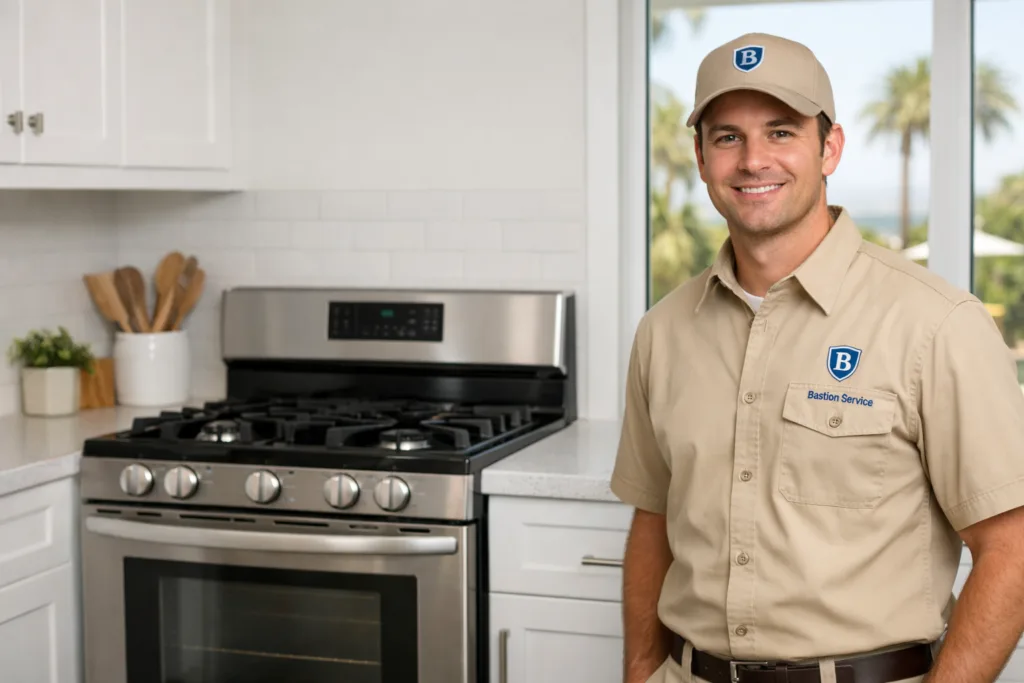
Uneven heating, unreliable ignition, and burners that stop working mid-meal usually point to a specific failed part rather than a vague “stove problem.” The challenge is that similar symptoms can come from different causes, so a useful service visit starts by narrowing down whether the fault is in the burner assembly, switch, ignition system, wiring, or control components.
Common stove symptoms and what they often mean
Electric stoves with a burner that will not heat at all may have a failed surface element, a damaged receptacle, a bad infinite switch, or a wiring issue behind the control. If a burner heats but will not adjust properly, the switch is often a leading suspect. When a burner stays too hot even on a low setting, that can indicate a control problem that should not be ignored.
On gas stoves, repeated clicking, delayed ignition, weak flame, or uneven burner performance often comes down to clogged burner ports, misaligned caps, moisture around the igniter, or a worn ignition component. If the problem is limited to the surface burners on a separate top unit, Cooktop Repair in Santa Monica may be the better service path.
Some households also notice intermittent power loss, a breaker that trips during use, or a smell that seems unusual once the stove is on. Those symptoms can indicate electrical stress, overheated wiring, or a failing component drawing power incorrectly. Continuing to use the appliance in that condition can turn a smaller repair into a more involved one.
Signs the stove should not keep being used
Certain symptoms call for more caution than others. Stop using the stove if it sparks, heats when turned off, repeatedly trips the breaker, or produces heavy burning smells from the control area. On gas models, persistent ignition failure or a strong gas odor should be treated as a safety issue first, not as a routine scheduling matter.
Even when the appliance still works part of the time, unreliable temperature control can be a warning sign. A burner that suddenly runs hotter than normal, takes much longer to boil water, or only works on one setting often reflects a component that is already failing. That kind of issue usually gets worse with continued use.
How stove problems affect cooking performance
Many homeowners first notice trouble through cooking results rather than obvious mechanical failure. Sauces scorch unexpectedly, pans take too long to heat, or one burner behaves differently every time it is used. These are not just annoyances; they are often the practical signs of a switch, ignition, or heating circuit problem that is no longer performing consistently.
If poor cooking results are coming from the baking cavity rather than the top burners, Oven Repair in Santa Monica may be more relevant. When both the burners and the oven are acting up on the same appliance, Range Repair in Santa Monica is often the more accurate fit.
Repair or replacement: what usually makes sense
Many stove repairs are worthwhile when the issue is isolated. A failed igniter, burner element, switch, receptacle, or control knob system can often be addressed without replacing the appliance. Repair becomes less attractive when there are multiple electrical faults, recurring control failures, or widespread wiring damage that suggests the stove is nearing the end of its useful life.
Age matters, but condition matters more. A newer stove with one failed component is often a straightforward repair. An older unit with repeated service history, inconsistent heating across multiple burners, and visible wear around controls may deserve a closer cost-benefit discussion before more money is put into it.
What a useful diagnosis should include
A proper diagnosis should confirm more than the symptom you can see. It should identify the failed part or circuit, check whether related components were affected, and explain whether the stove can be used safely before repair is completed. That is especially important with intermittent faults, because “sometimes it works” often still leaves a clear pattern to a trained technician.
It should also clarify whether the appliance is truly a stove issue or whether it belongs in a different service category. For example, a built-in baking unit with no surface burners is a different appliance layout, and Wall Oven Repair in Santa Monica may be the better match in that situation.
What homeowners in Santa Monica can expect from service
For residential stove problems in Santa Monica, the most helpful service approach is simple and practical: inspect the symptom, test the likely failure points, and explain the repair in plain language. That gives homeowners a clearer idea of whether the problem is limited to one burner, tied to the controls, or part of a broader appliance condition issue.
The goal is not only to make a burner work again for the moment. It is to restore predictable cooking performance, consistent heat control, and confidence that the appliance can be used normally without guessing what it will do next.