Will not heat or ignite
Power or gas supply, ignition, heating components, safety devices, or controls may be involved.

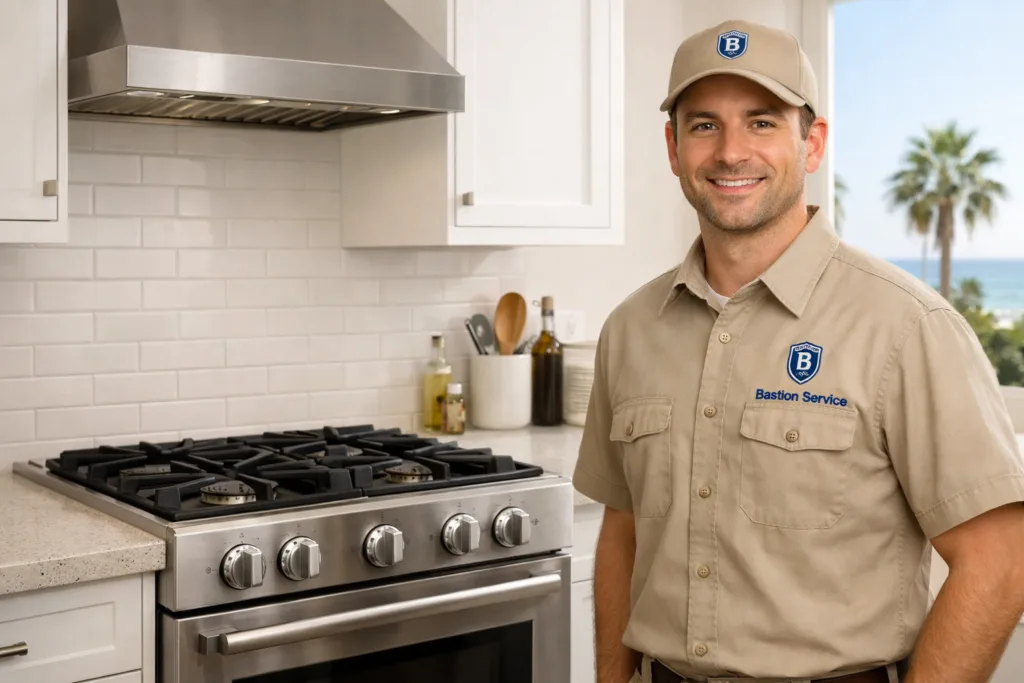
Cooktop service
Diagnosis and repair for cooktops in homes and businesses across Santa Monica. Same-day service is available.
Common problems
The same symptom can have several causes. A technician tests the operating system before recommending a repair.
Power or gas supply, ignition, heating components, safety devices, or controls may be involved.
Sensors, calibration, airflow, burners, elements, or controls can cause inconsistent results.
Switches, hinges, latches, wiring, or control components may need diagnosis.
Maintenance
Maintenance intervals come from the instructions for the exact model and its operating conditions. Heavy use, heat, dust, grease, hard water, and poor ventilation can shorten the interval.
Clean accessible filters and keep vents, coils, and surrounding space free of dust, grease, boxes, and fabric.
Longer cycles, unstable temperature, new sounds, leaks, and repeated error messages are reasons to schedule service before a shutdown.
Cleaning products, procedures, filters, and intervals vary by model. Follow the manufacturer instructions for the exact equipment.
Customer reviews

Frigidaire Ice Maker Repair @ my Dads house. Very professional experience! I received a confirming text that Andrew was on his way and would arrive with in 20 minutes. Andrew arrived earlier than expected. He quickly pulled out a new pair of shoe covers and immediately went to work. He quickly diagnosed the refrigerator ice maker problem and got it fixed. Very impressed with honesty and integrity. I would absolutely recommend as well use this company again. Thank you!!

Andy himself did the work. He was punctual and polite. Answerd all my concerns and was guick and fair. He is now my go to for all future repairs. Found their diagnostic fee to be about $20 cheaper than everyone else's.

Andy was awesome! He fixed my freezer in no time! He is very knowledgeable about appliances and a great technician! Thank you Andy for a job well done👍🏽🙋♂️
Questions
Clear answers before you schedule.
Same-day service is available based on the schedule. Call (323) 433-6360 for the quickest confirmation.
The diagnostic service call is $85 for residential appliances and $120 for commercial equipment. If you approve the repair, this fee is applied toward the total cost.
Yes. Bastion Service schedules on-site diagnosis and repair in Santa Monica for supported equipment and brands.
It helps, especially when a part or manual must be matched. A clear photo of the model and serial label is enough.
Yes. The technician diagnoses the problem and provides an estimate before approved repair work begins.
Completed repairs include a 90-day repair warranty.
Ready to schedule?
Call for the quickest confirmation or book a service visit online.