
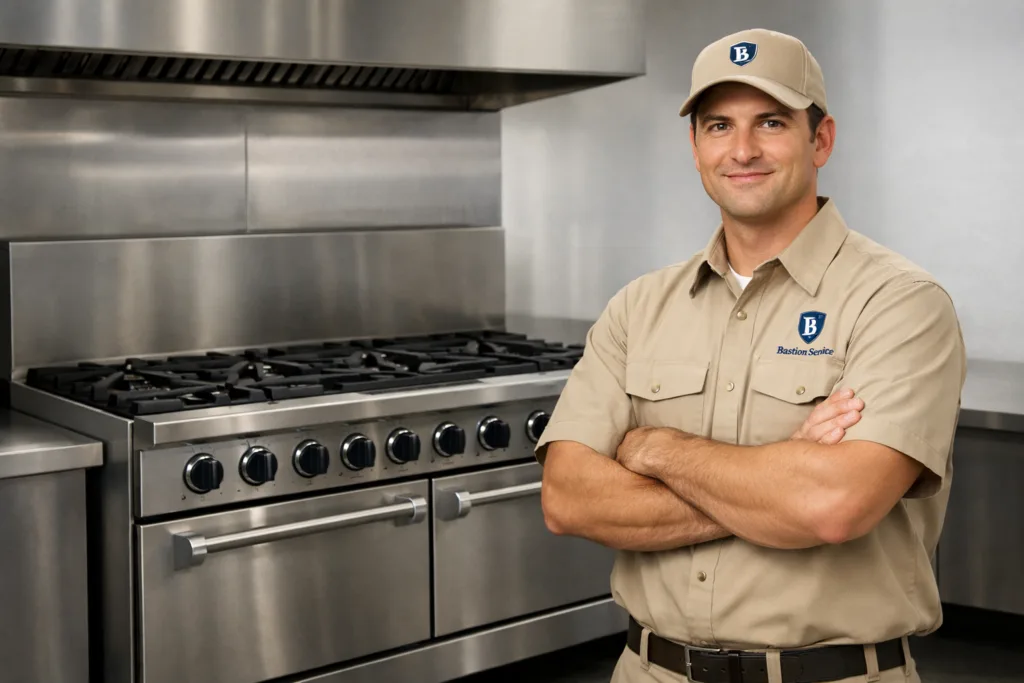




Range trouble can interrupt prep, slow ticket times, and make output inconsistent across an entire shift. When a Vulcan unit starts showing burner, ignition, or oven performance problems, the most useful next step is service that identifies the actual fault, explains the likely impact on daily operation, and helps your team schedule repair before downtime spreads to other stations. Bastion Service works with businesses in El Segundo to diagnose Vulcan range issues and move from symptom review to the right repair plan.
Related commercial service paths in El Segundo include Vulcan Commercial Repair in El Segundo, Vulcan Oven Repair in El Segundo, and Vulcan Fryer Repair in El Segundo.
Why a Vulcan range may stop lighting, heating, or holding temperature
These symptoms often appear together, but they do not always come from the same cause. A burner that will not light may involve ignition parts, clogged ports, gas delivery issues, or wear in the control system. Weak heating can come from restricted flame output, burner assembly problems, or components that are no longer regulating properly. Temperature swings in the oven section may point to sensing, control, or heat-distribution faults rather than one obvious failed part.
That is why a symptom-based diagnosis matters. If staff are seeing delayed ignition, slow recovery, uneven flame, and inconsistent oven results at the same time, the goal is to determine whether one failing component is driving several complaints or whether the range has multiple wear-related issues that should be addressed in stages.
Common Vulcan range symptoms that call for service
Burners click but do not ignite
Repeated clicking without reliable ignition usually means the range is not lighting as intended, even if it occasionally starts after several tries. In a busy kitchen, that can delay setup, slow production, and create uncertainty from one use to the next. Possible causes include ignition failure, burner blockage, moisture or debris affecting ignition, or related gas-flow problems.
Burners light unevenly or produce a weak flame
If one section heats more slowly than the others, pans may take longer to recover and cooking results can become inconsistent. Operators often notice this as a burner that looks smaller than normal, heats unevenly around the grate, or struggles under routine workload. These symptoms can indicate restricted burner ports, airflow issues, pressure-related problems, or component wear that needs inspection.
Oven section runs hot, cold, or inconsistent
On ranges with an oven base, temperature complaints may show up as long preheat times, undercooked product, overbrowning, or batches that behave differently from one cycle to the next. A thermostat issue is one possibility, but not the only one. Sensor faults, ignition problems, burner performance issues, and circulation or distribution problems can all affect oven consistency.
Controls feel loose, sticky, or unreliable
If a knob no longer adjusts smoothly, a valve feels difficult to turn, or the response at the controls does not match the setting, the unit should be checked before the problem gets worse. What starts as an occasional control issue can turn into unreliable burner behavior or a section that no longer responds predictably during service.
How these problems affect kitchen workflow
A range issue rarely stays isolated to one task. Weak flame can slow sauté and stock work. Unstable oven temperature can throw off timing for batches that need repeatable results. Ignition trouble can force staff to stop and retry instead of moving through prep efficiently. When teams begin adjusting cook times, rotating pans to avoid cold spots, or avoiding certain burners, the equipment is already affecting labor, quality, and consistency.
That is usually the point where repair becomes more urgent than optional. The longer a business works around a failing range, the harder it becomes to maintain predictable output during normal operation.
What a service visit should help determine
A productive repair appointment should do more than confirm that the unit is malfunctioning. It should help answer practical questions that matter to the business:
- Which component or system is causing the immediate symptom
- Whether the issue is isolated or part of broader wear
- How the fault affects safe and reliable operation
- Whether repair is likely to restore stable day-to-day performance
- What should be handled now versus monitored for future service
This is especially important with Vulcan ranges that are used heavily and expected to recover quickly during meal periods. A targeted diagnosis helps avoid unnecessary parts replacement and reduces the chance of repeat downtime from a misidentified issue.
When to stop using the range and schedule repair promptly
Some symptoms are a sign that the unit should be serviced sooner rather than later. Schedule repair if you notice burners that fail repeatedly, sections that no longer maintain usable heat, oven temperatures that drift enough to affect product quality, or controls that do not respond normally. Waiting can allow a small performance problem to become a broader failure that interrupts service entirely.
If there is a persistent or strong gas smell, stop using the range immediately and follow appropriate safety steps before arranging appliance repair. A gas odor is not a routine performance complaint and should be handled as a priority.
Repair or replacement: how businesses usually decide
Repair often makes sense when the problem is limited to one system, the frame and major structure of the unit remain sound, and the expected result is dependable operation after service. Replacement becomes a more serious conversation when failures are recurring across multiple functions, reliability has become unpredictable, or repair needs are starting to stack up faster than the unit can justify.
For businesses in El Segundo, that decision usually comes down to operational impact. If a repair can restore stable burner performance, reliable ignition, and usable temperature control, it may be the most cost-effective move. If the range can no longer support the kitchen without frequent interruptions, replacement planning may be more practical.
How to prepare for a Vulcan range repair appointment
Before service, it helps to note exactly what the range is doing and when the issue appears. Useful details include whether the problem affects all burners or only one section, whether ignition failure is constant or intermittent, whether the oven overshoots or runs cool, and whether the symptoms change after the unit has been on for a while.
- Identify which burners or sections are affected
- Note whether the issue happens at startup, during heavy use, or all day
- Record any unusual sounds, clicking, delayed ignition, or visible flame changes
- Track whether oven results are consistently under or over target
- Be ready to describe any recent changes in performance
That information helps speed diagnosis and gives the technician a clearer starting point for evaluating what is failing.
Service-focused support for Vulcan range problems in El Segundo
When a range starts affecting throughput, consistency, or safe operation, the priority is getting from symptoms to a workable repair decision without unnecessary delay. Whether the issue involves ignition trouble, burner faults, oven heating problems, clicking, or control failure, service should be centered on restoring reliable performance and helping your team plan around downtime. For El Segundo businesses, the best next step is to schedule Vulcan range repair when the symptoms first begin to interfere with normal kitchen work, rather than waiting for a full shutdown.


