
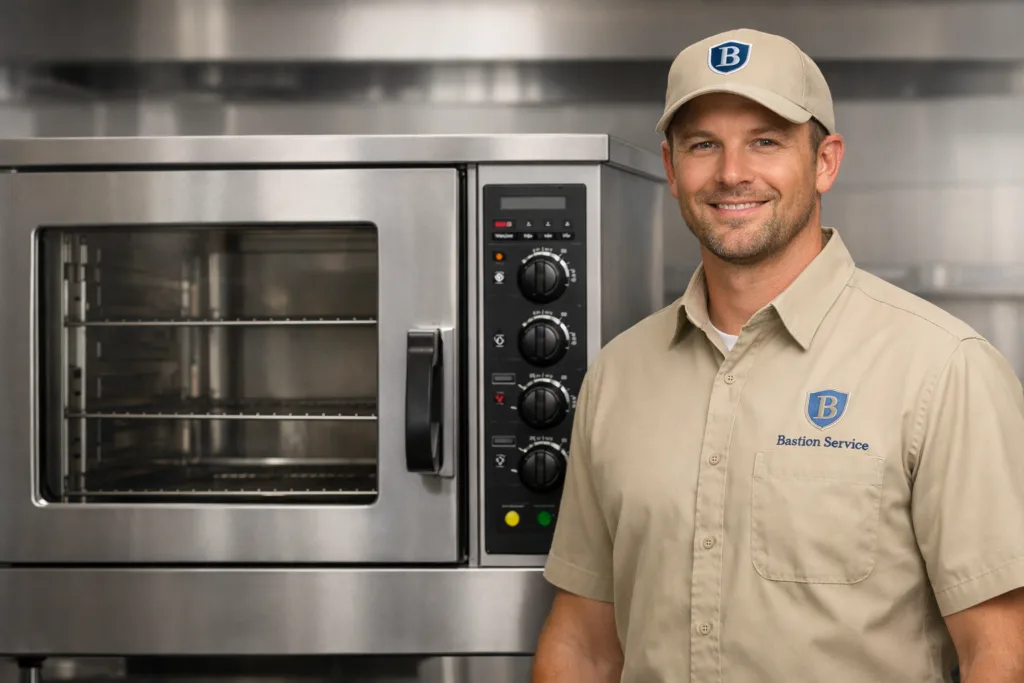




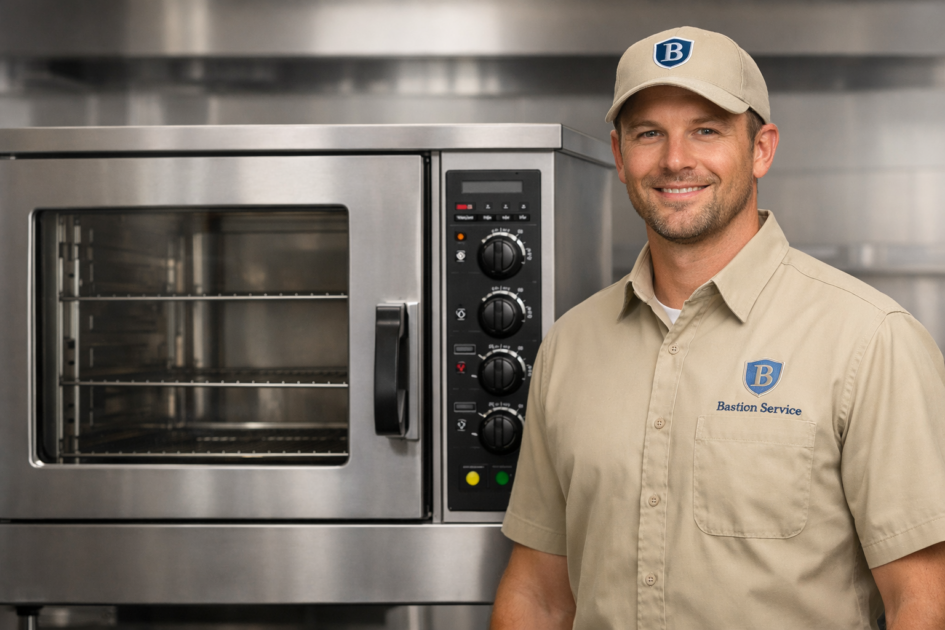
When a Vulcan oven starts heating unevenly, runs too hot, fails to recover between loads, or shuts down during service, the immediate issue is lost output. For businesses in El Segundo, the most useful next step is a service visit built around symptom-based testing so the repair plan fits the actual fault. Problems that look like a temperature issue may trace back to ignition, airflow, sensors, controls, door sealing, or incoming power, and those differences matter when uptime is on the line.
Related commercial service paths in El Segundo include Vulcan Commercial Repair in El Segundo, Commercial Oven Repair in El Segundo, and Vulcan Range Repair in El Segundo.
Bastion Service works with El Segundo businesses to diagnose Vulcan oven problems that interrupt prep, cooking consistency, and normal kitchen workflow. The goal is not simply to restore heat, but to identify what is causing unstable operation and recommend the repair that best supports safe, consistent daily use.
Common Vulcan oven problems seen in daily operation
Not heating or taking too long to preheat
If the oven powers on but does not build heat normally, several systems may be involved. Gas models may have ignition or burner-related faults, while electric models may have failed heating components, relay issues, or wiring problems. In either case, operators often notice slow startup, weak heat, or a unit that never reaches the selected setting. Because different failures can create the same complaint, testing is more useful than guessing based on one symptom alone.
Uneven baking or temperature swings
When one pan finishes faster than another, products brown inconsistently, or results vary from one cycle to the next, the oven may have sensor drift, poor circulation, convection component wear, heat loss at the door, or burner performance issues. In a working kitchen, this usually shows up as re-fires, over-monitoring by staff, product waste, and longer ticket times.
Ignition faults and intermittent shutdowns
An oven that clicks repeatedly, starts late, drops out during operation, or restarts unpredictably can have ignition instability, safety circuit interruptions, overheating conditions, control faults, or loose electrical connections. Intermittent problems are especially disruptive because the unit may appear normal for part of the day and then fail under load when production demand is highest.
Control, display, and programming problems
If the display is erratic, settings do not respond correctly, or the oven cannot hold programmed temperatures with confidence, the issue may involve the interface, control board, relays, harnesses, or temperature feedback components. Even when some heat is present, control problems reduce confidence in every batch because staff cannot rely on timing or setpoint accuracy.
Door, hinge, and gasket wear
A door that does not close properly can cause major performance complaints. Worn gaskets, weak hinges, latch problems, and cabinet leakage allow heat to escape, which affects recovery time and consistency. In some cases, what looks like a heating failure is really a heat-retention problem that keeps the oven working harder than it should.
Why a Vulcan oven may not heat evenly or reach set temperature
This is one of the most common complaints because several faults can produce nearly identical results at the operator level. A weak igniter, failing burner assembly, inaccurate sensor, drifting thermostat function, damaged door seal, restricted airflow, or control problem can all lead to uneven heat or a cabinet that never settles at the selected temperature.
In convection units, airflow problems are especially important because the oven may still generate heat while circulating it poorly. In other cases, the oven reaches temperature slowly but loses ground between loads, which can point to recovery issues rather than a total heat failure. The repair decision depends on whether the problem is isolated to one component or reflects wear across multiple systems.
What symptom patterns usually tell you
Slow recovery between batches
If the oven seems acceptable when empty but struggles after the door opens or after a new load is added, the issue may involve weak heat production, poor circulation, door leakage, or temperature feedback that is no longer accurate. This matters in kitchens that depend on predictable recovery to maintain output during rush periods.
Hot spots in specific areas of the cavity
Localized overcooking can point to circulation imbalance, failing convection parts, warped components, or burner distribution issues. Staff may compensate by rotating pans more often, but that workaround adds labor and does not solve the root cause.
Repeated need to adjust settings manually
When staff keep changing temperatures or extending cook times to get acceptable results, the oven is already signaling a performance problem. That often means the control system and the actual cooking environment no longer match, which is a strong reason to schedule service before a complete failure occurs.
When continued use can make repairs more involved
Running a Vulcan oven with unstable ignition, poor sealing, weak circulation, or electrical irregularities can increase wear on related components. A unit that struggles to maintain temperature may cycle excessively, overwork heating parts, or create larger control issues over time. What starts as uneven baking can eventually become a shutdown problem if the underlying fault is left in place.
Operators should also pay attention to unusual smells, repeated resets, abnormal noises, visible heat escaping from the door area, or inconsistent startup behavior. If there is a persistent gas odor, stop using the oven and address safety conditions before arranging appliance service.
How repair decisions are usually made
The most practical repair path depends on the exact symptom, the condition of the oven overall, and whether the fault is isolated or part of a larger pattern. A single failed component in an otherwise stable unit is often worth addressing promptly. If the oven has recurring control issues, heating instability, door wear, and shutdown complaints together, the service recommendation may need to account for broader equipment condition rather than one part alone.
For business owners and kitchen managers, the real question is not only whether the oven can be fixed, but whether it can return to steady daily use with predictable results. That is why diagnosis, parts condition, and operating history all matter before approving a repair.
Preparing for a Vulcan oven service visit
It helps to note exactly what the oven is doing and when the problem appears. Useful details include whether the unit fails at startup, drifts during long cook cycles, struggles after the door opens, overheats certain racks, or shuts down during busy periods. If the display shows errors, if ignition sounds have changed, or if staff have noticed inconsistent timing, those details can make the diagnosis more efficient.
It is also helpful to know whether the issue affects every cycle or only appears under heavier production. Symptom timing often helps separate a control fault from a heat-generation problem, an airflow issue, or a door-related loss of temperature stability.
Service-focused support for El Segundo kitchens
For ovens that affect output, consistency, or safe operation, waiting usually increases disruption rather than reducing it. A service appointment based on the actual symptom pattern can clarify whether the problem involves ignition, heating, controls, airflow, or heat retention and what repair steps make the most sense next. For businesses in El Segundo, that means moving from guesswork to a repair decision that supports kitchen workflow, scheduling, and more reliable oven performance.


