





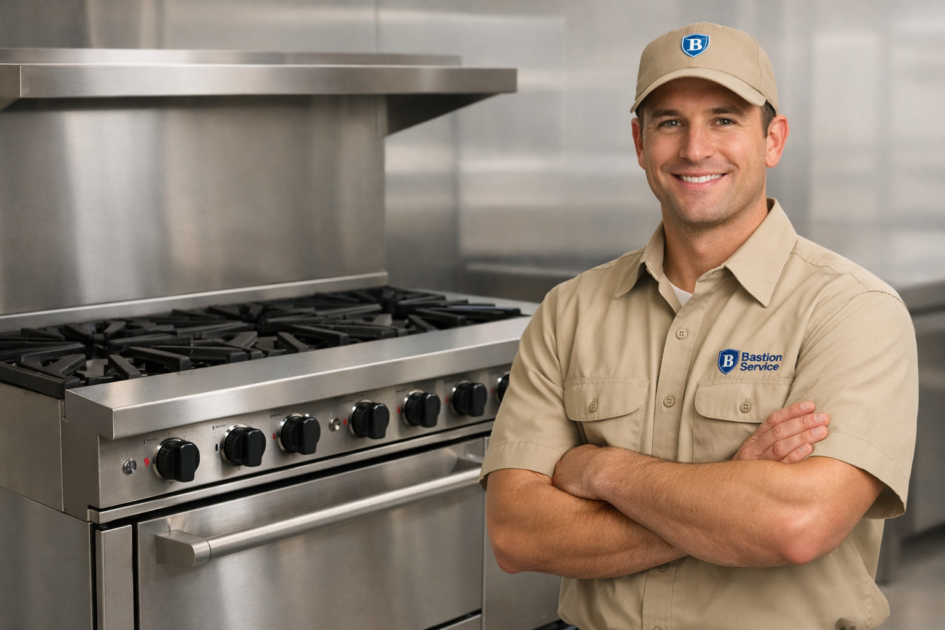
When Vulcan cooking equipment starts affecting ticket times, food consistency, or line capacity, service decisions need to happen quickly. Restaurants and other food-service businesses in El Segundo often call for repair when an oven will not hold temperature, a fryer recovers too slowly for rush periods, or a range burner becomes unreliable enough to disrupt workflow. Bastion Service provides symptom-based repair support that helps operators understand what is failing, whether the unit should stay in use, and how to schedule work with the least disruption possible.
For specific equipment paths in El Segundo, review Vulcan Oven Repair in El Segundo, Vulcan Range Repair in El Segundo, and Vulcan Fryer Repair in El Segundo.
What Vulcan cooking equipment problems do technicians troubleshoot?
Most service calls involve a symptom pattern rather than a single obvious failure. Vulcan cooking equipment repair commonly starts with issues such as:
- Ovens that run too hot, too cold, or heat unevenly
- Ranges with weak flame, delayed ignition, or burners that do not stay lit
- Fryers with slow heat recovery, unstable oil temperature, or nuisance shutdowns
- Equipment that clicks repeatedly but does not ignite properly
- Controls that drift, stop responding, or cycle unpredictably
- Units that work intermittently and then fail during active service
- Unexpected shutdowns that create production delays
These symptoms can be tied to ignition parts, burners, thermostats, sensors, controls, gas components, wiring, switches, or airflow-related problems. Because several faults can produce similar performance issues, accurate testing matters before parts are replaced or staff try to work around the problem for too long.
Oven problems that affect consistency and throughput
Temperature drift, slow preheat, and uneven results
A Vulcan oven that does not reach set temperature or struggles to maintain it can cause immediate production problems. Staff may start extending cook times, rotating pans, or changing placement to compensate for weak or uneven heat. In a busy kitchen, that creates inconsistency from batch to batch and slows down service in ways that are hard to absorb during peak periods.
Possible causes include thermostat or sensor faults, ignition trouble, control issues, gas delivery problems, or heat loss related to door sealing and component wear. The main repair question is whether the fault is isolated and repairable without delay or whether the oven should be taken out of rotation until the issue is corrected.
Overheating and hot spots
Not every oven problem shows up as low heat. Some units overshoot the set point, cycle poorly, or create strong hot spots that affect quality and increase waste. That can point to control response issues, sensing errors, or burner regulation problems. If the kitchen is relying on guesswork to avoid scorching or undercooking, repair is usually the better next step than continued adjustment by staff.
Range issues that slow the line
Weak burners and unstable flame
On a Vulcan range, weak burner output can turn ordinary station work into a bottleneck. Pans take longer to recover, sauté timing changes, and cooks start shifting work to other burners just to maintain pace. In some cases the issue stays limited to one burner, but in others it reflects a broader problem involving valves, ignition parts, burner assemblies, or gas flow.
Unstable flame also deserves prompt attention. If a burner lights inconsistently, burns unevenly, or drops out during use, the problem affects both productivity and safe operation. A proper evaluation helps determine whether the range can remain in partial use or whether it should be shut down until repaired.
Ignition delays and repeated lighting attempts
Delayed lighting often gets treated as an annoyance at first, but repeated ignition attempts usually mean wear or failure somewhere in the ignition system. Clicking, pilot issues, delayed flame establishment, or burners that light only after several tries can worsen over time. If staff have to relight a burner repeatedly or avoid certain stations, the equipment is already affecting service enough to justify repair scheduling.
Fryer problems that reduce output
Slow recovery during rush periods
Fryers are often judged by output more than by whether they simply heat up. A Vulcan fryer with slow recovery may still appear functional, but if oil temperature drops too far between loads, production speed and product quality both suffer. Operators may see longer ticket times, pale batches, uneven finishing, or pressure on other equipment as volume shifts away from the struggling fryer.
Slow recovery can result from burner problems, thermostat issues, sensor faults, control trouble, or heat-transfer-related conditions that need inspection. The key service decision is whether the fryer can continue in limited use or whether keeping it online will create larger delays and more expensive failure.
Temperature swings and high-limit trips
Oil temperature that climbs too high, drops too low, or trips safety limits should not be ignored. These symptoms can indicate regulation or sensing problems that make the fryer unreliable and difficult to manage in active production. If the unit is shutting down unexpectedly or requiring resets, it is usually more efficient to address the fault than to keep losing time to intermittent stoppages.
Ignition and shutdown problems across cooking equipment
Ovens, ranges, and fryers can all develop ignition-related failures that show up as no-heat calls, burner dropout, repeated clicking, failed startup, or shutdown in the middle of operation. These issues often involve igniters, flame sensing, wiring, controls, switches, or gas-related components. What matters from an operations standpoint is not just whether the unit starts, but whether it starts reliably and stays running through normal use.
If equipment must be restarted repeatedly, shuts down without warning, or behaves differently from one cycle to the next, that points to a fault pattern worth testing rather than guessing at. Intermittent operation is especially disruptive because it can appear resolved between failures and then interrupt service at the worst time.
If there is a strong or persistent gas smell, stop using the equipment and address the gas safety issue first before arranging repair. If there is no gas odor but ignition remains unreliable, prompt service is still important to prevent more downtime and possible damage to related components.
Control and thermostat faults
Not every heating problem comes from a burner or igniter. Many Vulcan cooking equipment calls involve controls that no longer respond correctly, thermostatic components that drift, or electrical issues that create erratic behavior. In practice, this may look like an oven that preheats and then stops heating, a fryer that cycles unpredictably, or a range function that works only part of the time.
Control-related faults can be frustrating because staff often adapt around them temporarily. They may reset the unit, change settings more often, or avoid using a problem station during busy hours. Those workarounds can keep production moving for a short time, but they rarely improve reliability and often delay a repair decision until the equipment causes a larger disruption.
When the equipment should not stay in service
Some problems allow for limited short-term operation while repair is being scheduled, but others should move the unit out of service. Continued use becomes harder to justify when:
- The equipment overheats or will not regulate temperature
- Burners fail to ignite reliably
- The fryer is tripping limits or shutting down during use
- Flame behavior is unstable
- Controls stop responding or change behavior unexpectedly
- Staff are bypassing normal procedures just to keep the unit working
In those situations, ongoing use can increase food quality issues, labor waste, and the chance of a more serious outage. For operators in El Segundo, earlier service scheduling is often the most cost-effective way to avoid losing a busier shift to a preventable breakdown.
Repair planning for business kitchens
The repair-versus-replacement decision usually depends on the age of the equipment, current condition, parts availability, recent breakdown history, and how much downtime the kitchen can absorb. Many Vulcan oven, range, and fryer problems are repairable when diagnosed early. The challenge is knowing whether the current symptom points to a straightforward fix or to multiple failing systems that may continue to interrupt operations.
A service visit helps answer practical questions that matter to management: Can the unit remain in limited use? Is the issue likely to worsen quickly? Can the repair be completed on-site, or does it require follow-up parts and planned downtime? That information makes it easier to protect service flow instead of reacting after a complete failure.
Scheduling Vulcan cooking equipment repair in El Segundo
If a Vulcan oven, range, or fryer is creating temperature problems, ignition trouble, shutdowns, or slower production, the most useful next step is to schedule repair before the issue spreads into broader downtime. A focused diagnosis can identify the fault, clarify whether the equipment should remain in use, and outline the repair path so the kitchen can plan around service instead of being surprised by a full outage.




