
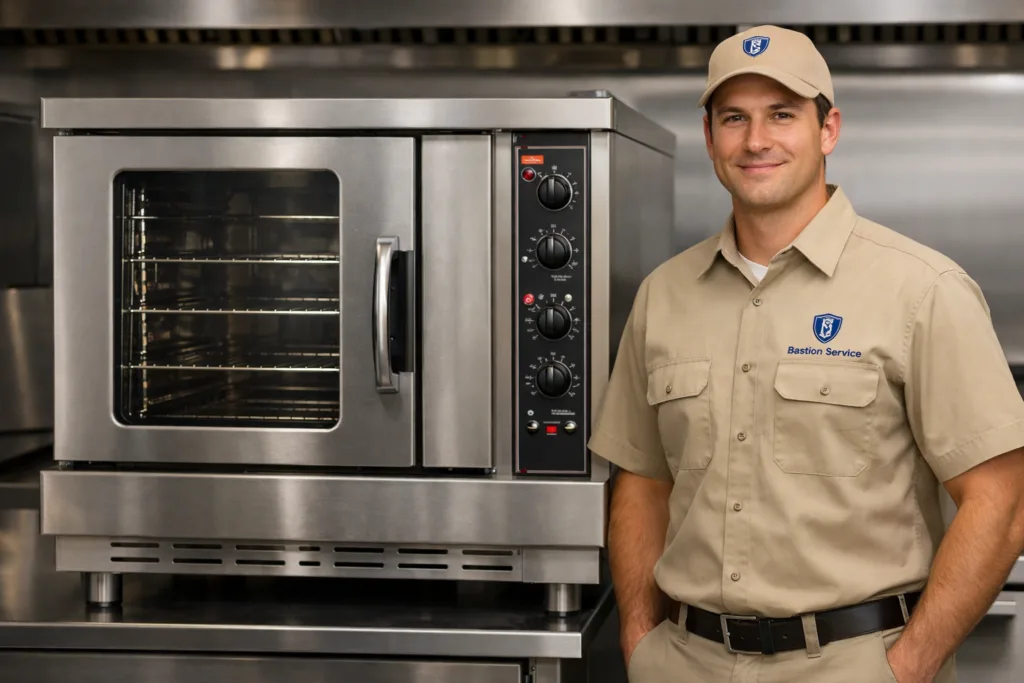




When a Vulcan oven starts missing temperature, cycling unpredictably, or slowing production, the service decision should focus on the exact failure pattern and how quickly the unit can return to stable operation. For businesses in Santa Monica, that usually means evaluating heat output, ignition behavior, sensor accuracy, controls, and overall condition before authorizing parts. Bastion Service helps businesses sort out whether the problem is isolated and repairable or part of a larger reliability issue that will continue to interrupt daily workflow.
Related commercial service paths in Santa Monica include Vulcan Commercial Repair in Santa Monica, Commercial Oven Repair in Santa Monica, and Vulcan Range Repair in Santa Monica.
Common Vulcan Oven Problems That Disrupt Daily Use
Not heating or slow to preheat
If the oven does not heat at all, heats weakly, or takes much longer than normal to preheat, the problem may involve the igniter, gas valve response, temperature sensor, heating circuit, control board, or wiring. Slow heat-up is often treated as a minor inconvenience at first, but in a busy kitchen it can delay prep, throw off timing, and reduce output across the shift.
Uneven baking or inconsistent results
When the same recipe cooks differently from one rack to another, the issue may be related to airflow, convection fan performance, door gasket wear, burner distribution, or temperature feedback problems. Staff often start compensating by rotating pans, extending cook times, or avoiding certain rack positions, but that usually masks the problem instead of fixing it.
Temperature swings during operation
An oven that overshoots, drops below set temperature, or struggles to recover after the door is opened may have a failing sensor, thermostat issue, relay problem, or control fault. These temperature swings can create inconsistent batches and make it difficult to maintain product quality during peak production.
Ignition delays and intermittent shutdowns
If the oven clicks repeatedly, lights inconsistently, or shuts down mid-cycle, diagnosis may need to focus on ignition sequence, flame sensing, gas delivery, electrical connections, and heat-related component failure. Intermittent faults are especially disruptive because the oven may appear usable during a quick check, then fail once it is under normal workload.
Why a Symptom-Based Diagnosis Matters
Many oven complaints sound similar from the outside. A unit that is not reaching set temperature could have a sensor problem, weak ignition, a control issue, airflow trouble, or a partially failing heating component. Replacing parts based only on the symptom can increase cost without restoring reliable performance.
A symptom-based diagnosis helps identify the actual cause, check for related wear, and determine whether continued operation could create more damage. It also helps businesses in Santa Monica make better decisions about scheduling, parts approval, and whether the oven is still a good candidate for repair.
Why Is My Vulcan Oven Not Heating Evenly or Reaching Set Temperature?
This problem often comes back to temperature sensing, ignition performance, airflow, calibration drift, or a control issue that prevents the oven from regulating heat correctly. In some cases, the oven is producing heat but not distributing it evenly. In others, it never develops full heat output, so recovery becomes slow and cooking results vary from batch to batch.
Common signs include:
- Longer-than-normal preheat times
- Food cooking faster on one side or one rack
- Frequent need to adjust cook times manually
- Products coming out underdone, overdone, or inconsistent
- Noticeable difference between displayed and actual temperature
When these symptoms repeat, the issue is usually beyond normal adjustment and should be evaluated before it affects more production.
When to Schedule Oven Repair
Service is usually worth scheduling when the oven shows repeat temperature variance, delayed ignition, shutdowns during use, slow preheat, overheating, or visible wear affecting normal operation. If staff have already changed cook times, reduced oven use, or started relying on workarounds to get through service, the equipment is already affecting efficiency.
It is also smart to schedule repair when the oven works only after resets, behaves differently from day to day, or becomes unreliable during the busiest parts of the schedule. Problems that seem manageable during prep often become much more disruptive under full operating load.
When Continued Use Can Make the Repair Bigger
Some faults get more expensive when the oven stays in rotation. Repeated ignition attempts can stress ignition-related components. Overheating can damage controls and other nearby parts. Airflow and fan problems can lead to uneven internal temperatures that affect both food quality and component life. Door seal issues can increase heat loss and keep the oven running longer than it should.
If there is a strong or persistent gas smell, stop using the oven. If needed, leave the area and contact the gas utility or emergency service before arranging appliance repair. If there is no gas odor but ignition is delayed, inconsistent, or rough, service should still be scheduled before normal use continues.
Repair or Replace: What Usually Decides It
The better choice depends on the failed component, overall condition of the oven, prior repair history, parts cost, and how important the unit is to daily production. Repair often makes sense when the problem is isolated and the oven is otherwise structurally sound. Replacement becomes more likely when breakdowns are recurring, multiple systems are showing wear, or restoring stable performance would require a level of investment that no longer fits the equipment’s remaining value.
That is why the decision should come after diagnosis, not before. A proper assessment helps separate a repairable fault from a pattern of declining reliability.
Preparing for a Service Visit
Before scheduling, it helps to note the exact symptom pattern. Useful details include whether the oven fails during preheat or during cooking, whether the issue happens every day or only under heavier use, whether temperatures run high or low, and whether shutdowns occur at a specific point in the cycle. Staff observations about noises, delayed ignition, error behavior, or inconsistent rack performance can also speed up troubleshooting.
If possible, be ready to share the model information, approximate age, prior repair history, and whether the oven has recently shown changes in cook performance. Better symptom details often lead to a faster repair plan and fewer unnecessary part changes.
Service Planning for Businesses in Santa Monica
For restaurants and other food-service businesses in Santa Monica, oven problems quickly affect prep timing, consistency, and labor flow. The goal is not just to get the oven running for one shift, but to confirm whether the repair path supports reliable daily use. When a Vulcan oven shows repeat heating, ignition, or control problems, the most useful next step is prompt service scheduling based on the symptoms you are seeing now, the downtime impact on your operation, and the condition of the unit overall.


