
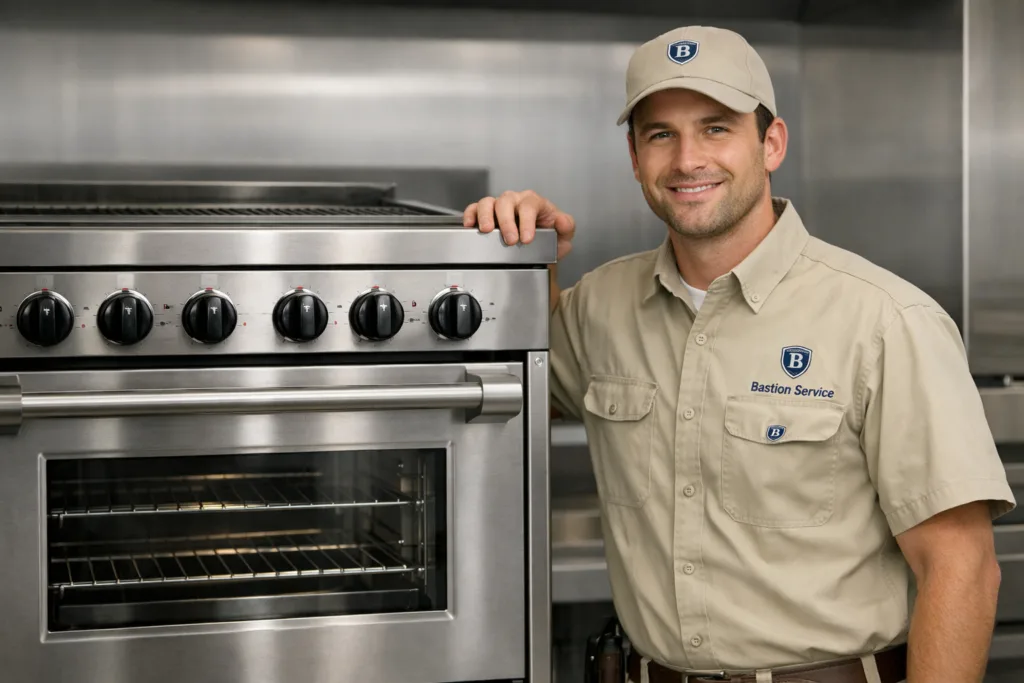




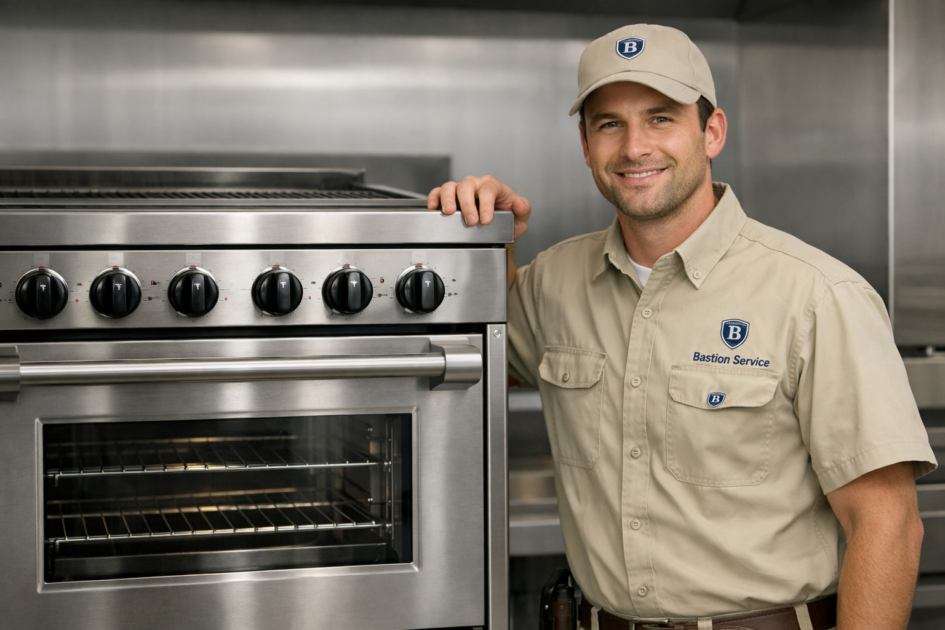
When a Wolf oven starts interrupting kitchen output, the priority is not guesswork but a service visit that ties the symptom to the failed part or system. In El Segundo, oven problems can quickly affect production timing, food quality, and staff workflow, especially when the unit is slow to recover heat or behaves differently from one cycle to the next. Bastion Service works from the actual symptom pattern so businesses can move from disruption to a defined repair plan with fewer delays and less trial-and-error.
Related commercial service paths in El Segundo include Wolf Commercial Repair in El Segundo, Commercial Oven Repair in El Segundo, and Wolf Range Repair in El Segundo.
How Wolf oven problems typically show up in daily operations
Oven failures are not always a complete no-heat event. Many start as smaller changes that become more disruptive over time: longer preheat, drifting temperature, uneven browning, shutdowns during use, or controls that stop responding consistently. In busy kitchens, those changes often show up first as missed timing, extra monitoring by staff, or inconsistent results between batches.
A symptom-based inspection helps separate issues involving heat generation, temperature sensing, controls, airflow, ignition, or electrical supply. That matters because two ovens can produce the same complaint on the surface while needing very different repairs.
Why a Wolf oven may not heat evenly or reach set temperature
If the oven is running cool, overshooting, or failing to recover after the door opens, several components may be involved. A weak heating circuit, worn igniter, sensor drift, relay failure, damaged wiring, or control fault can all interfere with stable temperature performance. In convection models, airflow problems can add another layer by creating hot spots or slow recovery even when the heating system is partly working.
Businesses in El Segundo usually notice this problem in practical ways:
- Items needing longer bake times than usual
- Uneven color or doneness across pans or racks
- Staff adjusting set temperatures to compensate
- Frequent opening and checking because results are unpredictable
- Output slowing down during peak production periods
These symptoms are worth addressing early because ongoing operation under unstable heat can place additional stress on controls, heating components, and related wiring.
Slow preheat and poor temperature recovery
A Wolf oven that preheats too slowly or struggles to return to temperature after loading can create a steady drag on service. What looks like a minor delay often affects the full pace of the kitchen once multiple batches depend on timely heat recovery.
Common causes can include reduced heating output, ignition weakness in gas models, failing temperature sensors, door-seal heat loss, convection fan issues, or control problems that are not driving the system correctly. The key is identifying whether the oven is underheating continuously or only failing under load, because that difference often points the repair in a more accurate direction.
Uneven baking, hot spots, and inconsistent results
Uneven heat is one of the most frustrating oven complaints because the unit may still appear usable while producing unreliable food quality. One side of the cavity may run hotter, one rack may finish much faster than another, or the same product may come out differently across repeated cycles.
This type of issue can be linked to:
- Temperature sensor drift or poor calibration response
- Convection fan or airflow problems
- Door gasket wear or poor door alignment
- Control board irregularities affecting heat cycling
- Partial heating failure that reduces overall balance inside the cavity
When staff are rotating pans, changing rack positions, or modifying cook times to compensate, the oven is already signaling that service is needed. Those workarounds may keep production moving for a short time, but they can also hide the root failure and make the problem more expensive if it spreads.
Ignition problems in gas Wolf ovens
Gas oven issues often present as delayed ignition, unreliable startup, weak burner ignition, or a unit that starts and then fails to continue heating properly. These symptoms can be tied to igniters, flame sensing, gas valve response, ignition control components, or supporting electrical faults.
If there is a persistent gas smell, the oven should not continue in use until the issue is addressed safely. When the problem is inconsistent ignition without a gas odor, it is still important to schedule service before the unit returns to normal volume. Intermittent ignition problems can worsen suddenly and lead to avoidable downtime during active service hours.
Control failures, error codes, and shutdowns during operation
Modern Wolf ovens depend on controls that coordinate temperature regulation, timing, inputs, and safety functions. If the display shows fault codes, stops responding, resets unexpectedly, or shuts the oven down mid-cycle, the problem may involve the control board, sensor communication, overheated electronics, wiring faults, or unstable power reaching the unit.
Intermittent shutdowns are especially disruptive because they interrupt production without always leaving a simple visible cause. In those cases, testing the oven under normal operating conditions often reveals more than replacing a part based only on the code shown on the display.
Door seal, closure, and airflow issues that affect performance
Not every oven problem starts with the heating system itself. Worn gaskets, misaligned doors, weak closing action, and airflow restrictions can all reduce heat retention and lead to inconsistent results. These issues may cause:
- Longer preheat times
- Temperature swings during cooking
- Higher energy use
- Extra wear on heating components
- Noticeable heat escaping around the door
Because these symptoms can look similar to sensor or control problems, inspection should include both the heat-producing components and the parts that keep heat contained and distributed correctly.
When to schedule Wolf oven repair in El Segundo
Service should be scheduled once the oven shows a repeating pattern that affects timing, quality, or safe operation. That includes no-heat conditions, slow preheat, erratic temperatures, burner ignition delays, control panel failures, or shutdowns that interrupt batches. It also includes situations where the oven technically still works but only if staff constantly monitor it or compensate for changed behavior.
For businesses in El Segundo, the most costly oven issue is often not a complete breakdown but reduced confidence in the equipment. When teams cannot trust cook times or temperature response, output slows even before the oven fully fails.
Signs continued use may increase repair scope
Some problems get more expensive the longer the oven stays in service. Continued operation may worsen damage when the unit overheats, cycles abnormally, loses power intermittently, shows signs of electrical stress, or struggles with ignition. Running the oven through these conditions can place extra load on control components, fans, relays, sensors, and heating parts that were not the original source of the problem.
If the oven is compromising consistency, requiring repeated restarts, or changing behavior from shift to shift, it is usually more efficient to stop relying on temporary workarounds and move to repair scheduling.
Repair or replacement: what the decision usually depends on
Whether a Wolf oven should be repaired or replaced depends on the specific failure, the overall condition of the unit, the number of systems affected, and how critical that oven is to day-to-day output. If the problem is isolated to a serviceable component and the rest of the equipment remains solid, repair is often the sensible path. If the oven has recurring failures across multiple major systems or shows broader wear that limits confidence after repair, replacement may deserve consideration.
The useful question is not simply whether the oven can be made to run again, but whether the repair restores dependable operation for the workload expected of it.
What to have ready before the service visit
A little preparation can help speed diagnosis and reduce repeat downtime. Before service, it helps to note:
- Whether the oven is gas or electric
- Any fault codes or display messages
- How long the problem has been happening
- Whether the issue is constant or intermittent
- What staff observe during preheat, cooking, and shutdown
- If the unit fails under heavy load more than during light use
That information gives the technician a better starting point and can make it easier to identify whether the issue is tied to heat production, sensing, controls, airflow, or ignition.
Service-focused next steps for El Segundo businesses
When a Wolf oven starts affecting consistency, timing, or safe operation, the best next step is to schedule service based on the actual symptom rather than continue adjusting around it. In El Segundo, a repair visit should help determine what failed, whether continued use is increasing risk, and what action will return the oven to stable operation with the least disruption to the business.




