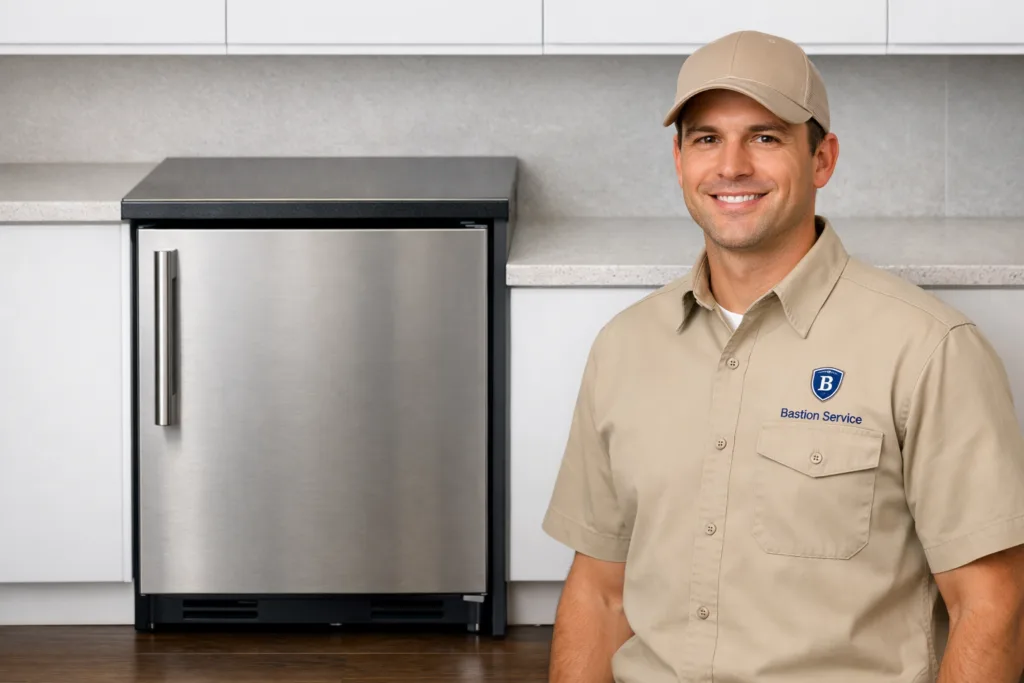
Temperature problems in a U-Line refrigerator rarely stay small for long. What starts as a slightly warm shelf or a little condensation can turn into spoiled food, recurring frost, or a unit that runs all day without reaching the set temperature. In Redondo Beach homes, the most useful approach is to match the repair path to the exact symptom pattern instead of assuming every cooling issue points to the same failed part.
Common U-Line refrigerator symptoms that point to service
U-Line refrigerators are often installed where steady temperature control matters, including kitchen beverage storage, undercounter refrigeration, and specialty food storage. Because of that, even minor changes in performance tend to show up quickly. If the refrigerator is not holding temperature, leaking, frosting over, or sounding different than usual, service is often the best next step before additional wear develops.
Food is not staying cold enough
If milk, produce, or leftovers are warming up before their time, the problem may involve restricted airflow, dirty condenser coils, a failing fan motor, a sensor issue, or trouble in the cooling system itself. Sometimes the unit still feels partly cold, which can make the issue seem less urgent than it is. Uneven cooling often means cold air is not circulating correctly, while a broad loss of cooling can signal a more serious mechanical or electrical fault.
Helpful signs to watch for include:
- Top shelves warmer than lower shelves
- Cold drinks near one side but not the other
- Food spoiling faster than normal
- A refrigerator that runs constantly but does not improve
Temperature swings from one day to the next
A U-Line refrigerator that seems fine in the morning and too warm by evening may have an intermittent control problem, a sensor reading issue, or a fan that is slowing down under load. Temperature swings can also happen when frost starts blocking airflow behind interior panels. This kind of inconsistency is worth addressing early because repeated warming and re-cooling puts extra strain on the appliance and can affect food quality.
Water leaking inside the cabinet or onto the floor
Leaks are commonly tied to a blocked defrost drain, condensation that is not draining correctly, a door that is not sealing well, or a connection issue on models with ice-making features. Water around the base of the refrigerator should not be ignored. Even a slow leak can lead to cabinet damage, flooring problems, and moisture buildup that is harder to notice until it spreads.
Frost buildup that keeps coming back
Frost on drawers, rear panels, or stored items usually means unwanted moisture is entering the cabinet or the defrost process is not working properly. A worn gasket, an alignment issue with the door, a defrost component failure, or poor airflow can all create the same visible symptom. If the frost returns after you wipe it away, the cause is still active and usually needs repair rather than cleanup alone.
Noisy operation or unusual cycling
Changes in sound often help narrow down what is happening. A rattling noise may come from vibration or fan contact. Buzzing can point to a motor or compressor-related issue. Repeated clicking without normal cooling may mean the system is trying and failing to start correctly. A refrigerator that cycles too frequently or seems to run without stopping is usually compensating for reduced cooling efficiency somewhere in the system.
What these symptoms can mean
One reason refrigerator problems are often misjudged is that very different failures can create similar symptoms. A warm cabinet does not always mean a compressor problem, and frost does not automatically mean the same defrost part has failed on every unit. A symptom-based inspection helps separate likely causes such as:
- Airflow restrictions inside the cabinet
- Condenser or evaporator fan problems
- Thermistor or control faults
- Door gasket wear or sealing problems
- Drainage blockages
- Defrost system failure
- Compressor or sealed system issues
That matters because the repair outlook is very different depending on which category the fault falls into. A serviceable fan or sensor issue is not the same decision as a major sealed system failure.
When the refrigerator is still running but not performing well
Homeowners sometimes wait because the unit has not stopped completely. But a refrigerator that is technically running can still be in trouble. If it is staying on for long stretches, struggling to recover after the door opens, or producing only partial cooling, it may be operating under strain. Continued use in that condition can increase wear on motors and cooling components.
It is smart to schedule service soon if you notice:
- Soft ice or drinks that are no longer fully chilled
- Condensation on shelves or along door openings
- Frequent compressor noise with little temperature improvement
- Recurring frost after manual removal
- Puddling that returns after cleaning
When to limit use and act quickly
Some symptoms suggest the appliance should not simply be monitored for another week. If the refrigerator is clearly warm, clicking repeatedly without cooling, leaking enough water to spread beyond the appliance footprint, or showing heavy frost that is blocking normal storage, the problem may get worse with continued operation. Food safety also becomes a concern when temperatures are no longer stable.
In those situations, faster service helps reduce the chance of losing groceries or causing secondary damage to surrounding surfaces.
Repair versus replacement for a U-Line refrigerator
For many Redondo Beach homeowners, the decision comes down to the failed component, the age and condition of the refrigerator, and whether the issue appears isolated or part of broader wear. Repairs are often reasonable when the problem involves a fan motor, sensor, gasket, drain issue, control component, or another part that can be replaced without major system work.
Replacement becomes more likely when there are repeated breakdowns, cooling system complications, or repair costs that are too close to the value of the appliance. The goal is not just to get the refrigerator running again, but to judge whether the repair is likely to restore stable operation in a way that makes sense for the household.
What homeowners should expect from a service visit
A productive appointment should identify the most likely cause of the symptom, explain why the refrigerator is behaving that way, and clarify whether repair is practical based on the unit’s condition. That gives you a better basis for deciding whether to move forward now, monitor the appliance briefly, or start planning for replacement if the issue is more extensive than expected.
For U-Line refrigerator repair in Redondo Beach, that kind of focused evaluation is especially helpful when the symptoms are intermittent, because the visible problem at home may only be the surface sign of a deeper airflow, control, or cooling issue.
Support for related U-Line refrigeration problems
Some households notice that the problem is not limited to the main refrigerator section. If the issue involves a matching freezer compartment, an ice maker that has slowed down, or a wine cooler that is no longer holding steady temperature, it helps to evaluate those symptoms in context rather than treating them as unrelated. Many cooling complaints overlap, and the right repair path depends on how the entire U-Line setup is performing.