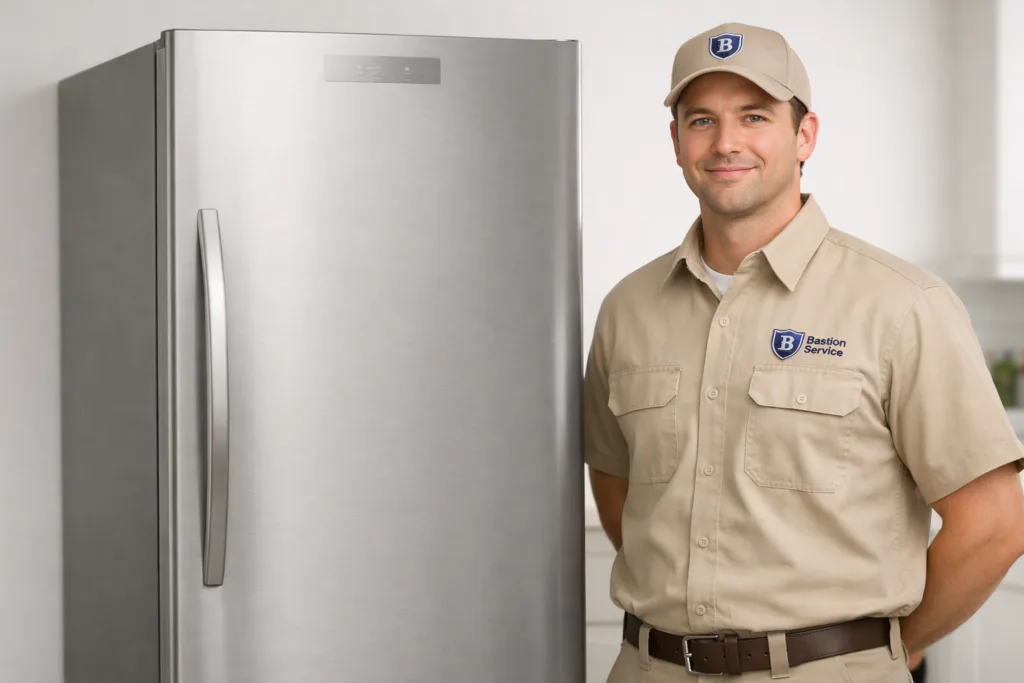
A Kenmore freezer that starts softening food, building frost, or running much longer than usual can go from minor inconvenience to expensive food loss fast. The most useful first step is narrowing the problem by symptom, because poor airflow, a defrost failure, a bad door seal, a control issue, and a compressor-related fault can all look similar at first.
Start with what the freezer is actually doing
Small details usually point the diagnosis in the right direction. If the freezer is still cold but not cold enough, that suggests a different repair path than a unit that is completely warm, dead, or clicking without starting. In El Segundo homes, homeowners often notice trouble first when ice cream softens, frozen food develops ice crystals, frost spreads across the back panel, or the freezer seems to run almost nonstop.
Pay attention to changes like these:
- Food that is frozen in one section but soft in another
- Heavy frost on drawers, shelves, or the interior back wall
- New buzzing, clicking, rattling, or louder humming
- Water under or inside the freezer
- A door that pops open, does not seal well, or feels misaligned
- Long run times with weak freezing performance
Common Kenmore freezer symptom patterns
Not freezing well or partially thawing
If a Kenmore freezer is running but struggling to hold temperature, the issue may involve restricted airflow, evaporator fan problems, dirty condenser components, a weak start device, sensor or control trouble, or a more serious sealed-system problem. Partial thawing should be taken seriously because repeated warming and refreezing can affect food quality and can signal that the unit is losing the ability to recover properly.
When cooling is inconsistent, it helps to notice whether the problem is constant or comes in cycles. A freezer that cools for a while and then warms again often points to a different underlying fault than one that never gets cold enough at all.
Frost buildup that keeps coming back
Frost is one of the clearest warning signs in freezer repair. Thick frost on the back interior panel often suggests a defrost system failure. Frost around food packages, bins, or the door opening may point to warm air leaking in through a worn gasket, a door alignment issue, or frequent moisture intrusion.
Manually removing the frost may restore airflow for a short time, but if the cause is still there, the frost usually returns. Once airflow is blocked, the freezer may become very cold in one area and too warm in another.
Running constantly or running louder than normal
A freezer that seems to never shut off is often struggling to reach the set temperature. That can happen because of dirty coils, weak airflow, a poor door seal, control issues, or compressor starting trouble. Noise changes matter too. Clicking may suggest a start problem, rattling may come from loose panels or vibration, and an evaporator fan issue can create a rubbing or squealing sound.
Not every sound means a major failure, but a new sound paired with weaker cooling usually deserves prompt attention.
No cooling or no power
If the freezer appears completely dead, the fault may involve incoming power, wiring, controls, or a failed component. If the interior light works but there is no cooling, attention usually shifts to the fans, start components, compressor behavior, and temperature control system. Repeated clicking with little or no cooling is especially important because repeated start attempts can strain the system further.
What specific symptoms can indicate
Symptom-based diagnosis helps avoid replacing parts that are not causing the problem. Some common examples include:
- Frost only on the back panel: often tied to defrost heater, sensor, thermostat, or control problems.
- Water pooling at the bottom: may indicate a blocked defrost drain or ice melt not draining properly.
- Warm upper shelves with colder lower sections: can suggest airflow restriction or fan trouble.
- Clicking and then silence: may point to a failing start relay or compressor-related issue.
- Door not sealing evenly: gasket wear, hinge problems, cabinet leveling, or overpacked storage may be contributing.
- Excessive ice formation despite very cold temperatures: may be related to sensor or control problems rather than simple overcooling.
The reason this matters is simple: clearing ice does not fix a failed defrost circuit, and replacing a door gasket does not solve a compressor or sealed-system issue.
When service should not be delayed
Some freezer problems can wait a short time for scheduling. Others can quickly become more expensive if ignored. Service is usually worth arranging promptly when the freezer cannot maintain stable temperature, frost returns right after being cleared, the compressor keeps trying to start, or the freezer is leaking water onto the floor.
It is also wise to act when the unit still seems to be working, but performance has clearly changed. A freezer that takes much longer to freeze groceries, runs overnight more than it used to, or develops uneven temperatures may be in the early stage of a larger failure.
Signs continued use may make things worse
- The compressor clicks repeatedly without normal cooling
- Frost buildup is choking airflow and forcing longer run times
- The gasket is loose enough to let in constant moisture
- The freezer warms and recovers in noticeable cycles
- Water leakage is reaching nearby flooring
Simple checks homeowners can make first
Before assuming the worst, a few basic observations can help. Make sure the door is fully closing, check whether food packages are blocking vents, and look for visible frost patterns rather than clearing everything immediately. If the freezer has been overfilled, airflow may be reduced. If the gasket is dirty or twisted, the door may not seal as tightly as it should.
It also helps to avoid repeated unplugging and restarting. That can temporarily change the symptom pattern and make it harder to tell whether the problem is with defrost, airflow, controls, or compressor starting.
Repair versus replacement for a Kenmore freezer
Many Kenmore freezer problems are repairable when the fault is limited to fans, defrost parts, controls, door gaskets, or starting components. Replacement becomes a more serious consideration when the unit has a sealed-system failure, major compressor trouble, repeated breakdown history, or overall wear that makes another repair hard to justify.
The best decision usually depends on three things: the confirmed failure, the freezer’s overall condition, and whether the repair is likely to restore stable long-term temperature control. A good diagnosis is what separates a manageable repair from a unit that may continue causing food loss and frustration.
What a service visit should help determine
A useful freezer service visit should do more than get the appliance running for the moment. It should identify why cooling changed, why frost returned, or why the compressor stopped starting properly. That often means evaluating temperature behavior, fan operation, door sealing, defrost function, controls, and compressor start performance together.
This matters because freezer symptoms often overlap. What looks like a thermostat issue may really be frost blocking airflow. What sounds like a fan problem may actually be the result of an icing pattern caused by defrost failure. The right repair plan depends on sorting that out before parts are replaced.
Practical next steps for homeowners in El Segundo
If your Kenmore freezer is losing temperature, icing up, leaking, or making new noises, treat the problem as something to diagnose early rather than something to watch for weeks. Keep the symptom notes simple: what changed, when it started, whether frost is present, and whether the freezer is still cooling at all.
For households in El Segundo, the smartest approach is usually to act before unstable cooling leads to spoiled food or added strain on the appliance. Once the exact fault is identified, it becomes much easier to decide whether repair is the right move or whether replacement makes more sense.