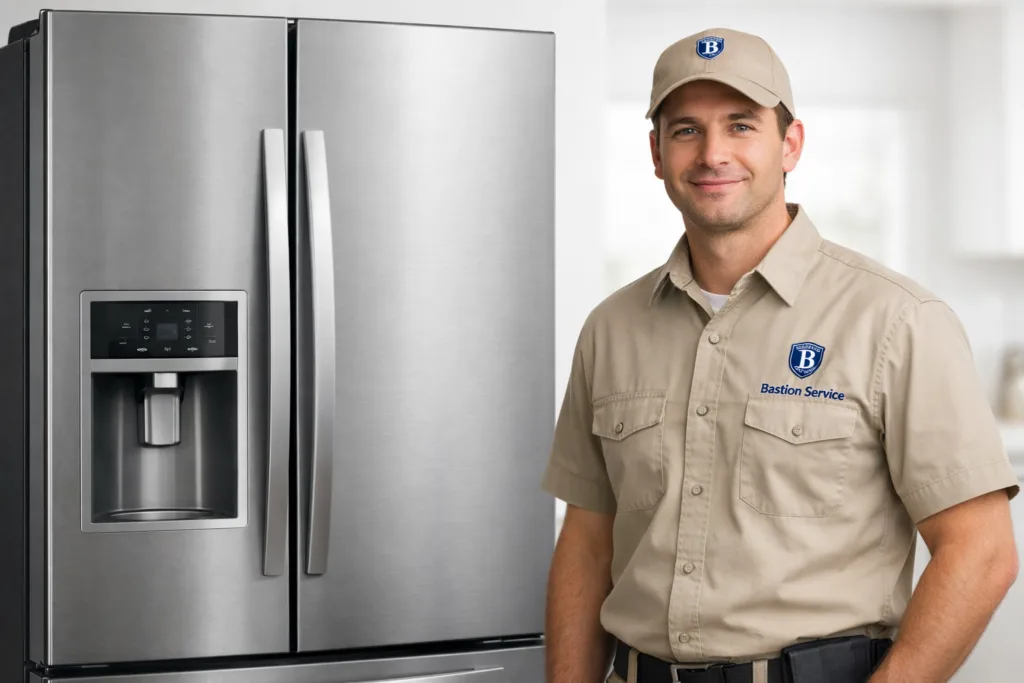
Food loss is usually what gets noticed first, but the bigger issue is often instability inside the freezer. A Whirlpool unit may seem “almost cold enough” while temperatures drift above safe storage levels, frost blocks airflow, or a fan problem prevents even cooling from shelf to shelf. Looking at the pattern of symptoms is the fastest way to narrow down what is actually failing.
Common Whirlpool freezer symptoms and what they may indicate
Most freezer failures do not begin with a complete shutdown. Many start with subtle changes that get worse over days or weeks. If your freezer is still running but not performing normally, these are the signs worth paying attention to.
Not freezing hard enough
If frozen food feels soft, ice cream is slushy, or items near the door thaw first, the issue may involve weak airflow, a failing evaporator fan, sensor or control trouble, a faulty start device, or a sealed-system problem. In some cases, the freezer cools unevenly, which can make one section seem normal while another warms up.
This kind of symptom often gets mistaken for overloading, warm groceries, or a door left open. While those can contribute, recurring soft-freeze conditions usually point to a mechanical or electrical issue that needs testing.
Heavy frost on walls, shelves, or around the door
Frost buildup usually means moisture is entering the compartment or the freezer is not defrosting correctly. A worn gasket, door alignment issue, blocked vent, or failed defrost component can all create the same visible result: increasing ice and reduced cooling performance.
Once frost starts choking airflow, the freezer may run longer and louder while preserving food less effectively. That is why repeated manual defrosting rarely solves the real problem for long.
Clicking, buzzing, or unusually loud fan noise
Changes in sound matter, especially when they appear alongside weak cooling. Repeated clicking may indicate a compressor start problem. Buzzing can happen when the unit tries to start but struggles. A scraping or grinding fan noise can mean ice contact, a worn motor, or restricted circulation inside the freezer compartment.
Noise alone does not always mean a major repair, but new sounds paired with temperature issues are usually a sign that the freezer should be checked sooner rather than later.
Water leaks or sheets of ice in the bottom
Water under the appliance or ice collecting where it should not be often points to a blocked or frozen drain, excess moisture intrusion, or defrost-related trouble. In addition to affecting performance, leaks can damage flooring and create slippery spots around the freezer.
Why symptom-based diagnosis matters
Two Whirlpool freezers can show the same outward symptom and need completely different repairs. A unit that seems to need a compressor may actually have a control failure. One that appears to have a thermostat problem may really be struggling with frost-packed airflow or a fan that is not moving cold air properly.
That is why part swapping based only on the most obvious symptom can waste time and money. A useful service call should identify which system is failing, how far the problem has progressed, and whether repair is likely to restore normal household use.
Problems that usually should not be ignored
Some freezer issues can wait a day or two for scheduling. Others can quickly turn into spoiled food, heavier ice buildup, or added stress on major components. It is smart to stop watching and start acting if you notice any of the following:
- The freezer runs constantly but still does not hold temperature
- Food is thawing, softening, or refreezing unevenly
- Frost returns soon after being cleared
- The door does not seal well or pops back open
- There is water leaking around or under the appliance
- The freezer makes new clicking, buzzing, or grinding sounds
- The unit fails to restart normally after cycling off
These symptoms usually mean the problem is active, not incidental. Waiting often makes diagnosis harder because secondary ice buildup or extended run time can mask the original failure.
What often causes poor freezer performance
Whirlpool freezer repairs commonly involve one of a few core systems. Understanding them can help make sense of what your appliance is doing.
Airflow problems
Cold air has to move correctly throughout the compartment. If vents are blocked, the evaporator fan is weak, or frost has built up around the air path, temperatures can become uneven. You may notice one shelf freezing normally while another is too warm.
Defrost system failures
When the defrost system is not doing its job, ice accumulates on the evaporator area and eventually prevents proper cooling. This often begins as a frost complaint and turns into a not-cold-enough complaint later.
Door seal and closure issues
A poor seal lets warm, humid air enter repeatedly. That can lead to frost, long run times, temperature swings, and extra wear on internal components. Even a slightly warped gasket or door alignment problem can create ongoing performance issues.
Start and compressor-related issues
If the freezer clicks, buzzes, or struggles to cool after starting, the start device or compressor circuit may be involved. These problems can look sudden, but they often build over time with intermittent weak cooling before the unit stops maintaining temperature entirely.
Controls and sensors
Modern freezers depend on controls to regulate temperature and defrost timing. If those controls misread conditions or fail to respond properly, the appliance may run too much, too little, or at the wrong times.
Repair or replace?
Not every freezer problem points in the same direction. Repair is often reasonable when the issue is limited to a fan motor, door gasket, drain problem, defrost component, control issue, or start device. Those repairs can restore normal performance without replacing the appliance.
Replacement becomes a more serious consideration when the freezer has repeated major failures, extensive sealed-system trouble, or an overall condition that makes additional repair hard to justify. Age, reliability history, and the cost of restoring dependable operation all matter.
For many homeowners in El Segundo, the real question is not simply whether the unit can be fixed, but whether the result is likely to be worth it for daily use. A good diagnosis should answer both.
What to do before service arrives
If the freezer is still running, a few simple steps can help reduce food loss and make the symptom pattern easier to evaluate:
- Keep the door closed as much as possible
- Move high-value or temperature-sensitive food if thawing has started
- Do not chip away ice with sharp tools
- Take note of unusual sounds, leaks, or visible frost locations
- Check whether the door is sealing fully all the way around
If the unit has stopped cooling almost entirely, continuing to load or open it repeatedly usually makes the situation worse.
Residential Whirlpool freezer repair in El Segundo
Freezer trouble disrupts meal planning, grocery storage, and everyday routines quickly. In El Segundo homes, the most helpful next step is a service visit focused on the actual symptom pattern, the likely failed system, and whether repair is a sensible path for the appliance you have. When the cause is identified early, homeowners are in a much better position to protect food, avoid repeat issues, and make an informed repair decision.