
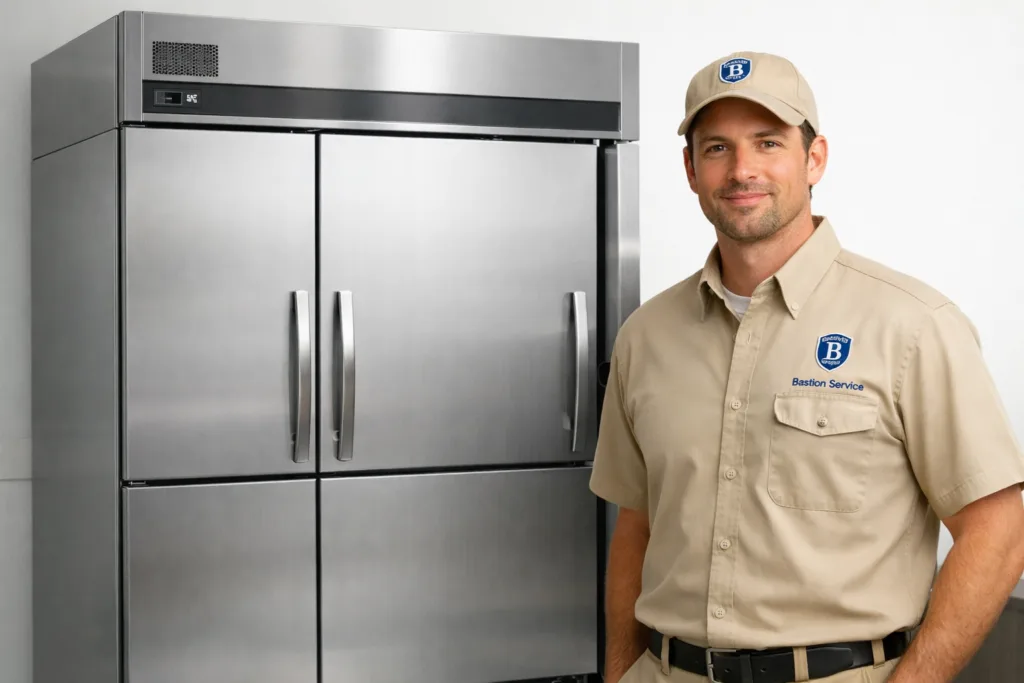




When a Turbo Air refrigerator starts running warm, icing over, leaking, or cycling the wrong way, the impact shows up quickly in product loss risk, prep delays, and staff workarounds. In West Hollywood, service is most useful when the symptom pattern is evaluated first so the repair plan matches the actual failure instead of guessing from surface signs. Bastion Service helps businesses identify what is affecting cooling performance, airflow, temperature control, and day-to-day reliability so scheduling decisions can be made with less downtime and less uncertainty.
Related commercial service paths in West Hollywood include Turbo Air Commercial Repair in West Hollywood, Commercial Fridge Repair in West Hollywood, and Turbo Air Freezer Repair in West Hollywood.
Turbo Air refrigerator problems that disrupt daily operations
A refrigerator issue rarely stays confined to one cabinet. A reach-in that drifts above target temperature can affect ingredient holding, beverage service, opening routines, and back-of-house workflow. Intermittent cooling is especially disruptive because the unit may seem normal for part of the day, then fall out of range during busier periods or frequent door openings.
For businesses in West Hollywood, the most important question is not just whether the refrigerator is still running, but whether it is holding temperature consistently under real operating conditions. That distinction helps separate minor airflow or door-seal issues from defrost faults, control problems, fan failures, condenser-related strain, or deeper system concerns that need prompt repair.
Common symptoms and what they often indicate
Cabinet is warm or not holding temperature
If the refrigerator cannot maintain the setpoint, possible causes include dirty condenser coils, restricted air movement, evaporator fan problems, worn door gaskets, sensor issues, thermostat faults, control board problems, or compressor-related trouble. A unit that runs for long stretches without pulling down properly is often struggling with heat removal, airflow, or refrigeration performance.
This symptom should be taken seriously because continued operation under warm conditions can strain components while also putting stored product at risk.
Frost buildup or interior icing
Ice accumulation around the evaporator area, frost on stored items, or blocked airflow can point to a defrost issue, poor door sealing, a fan problem, or repeated warm-air intrusion during heavy use. Even when the cabinet still feels cold, frost buildup can reduce air circulation and make the refrigerator cool unevenly from top to bottom or front to back.
Water leaking inside or onto the floor
Water around the base of the unit or pooling inside the cabinet may come from a clogged drain, drain line freeze-up, excess condensation, gasket failure, or melting ice linked to a cooling or defrost problem. Leaks are easy to dismiss when the refrigerator still appears to be operating, but they often signal a condition that will continue to worsen if ignored.
Refrigerator runs constantly or short cycles
A Turbo Air refrigerator that rarely shuts off may be unable to reach target temperature efficiently. One that starts and stops too often may have a control issue, sensing fault, electrical problem, or compressor-start concern. Either pattern increases wear and usually means the unit is compensating for another problem rather than operating normally.
Airflow feels weak or uneven
If some shelves stay cold while others run warm, airflow should be checked. Fan motor issues, frost restriction, blocked product loading, damaged air channels, or evaporator-related problems can all create uneven temperatures inside the same cabinet. In kitchen and food-service settings, this often shows up as inconsistent holding from one zone of the refrigerator to another.
New noise, rattling, or vibration
A change in sound can be an early warning sign. Buzzing, rattling, scraping, clicking, or louder-than-normal fan noise may indicate motor wear, loose mounting, blade interference, panel vibration, or compressor stress. Noise alone does not confirm a major failure, but noise combined with temperature drift or cycling changes should move service higher on the priority list.
Why symptom-based diagnosis matters
Many refrigerator issues overlap. A warm cabinet could be caused by coil restriction, fan failure, a door not sealing, a control issue, or a sealed-system problem. Frost may come from a defrost fault, but it can also result from warm-air intrusion or poor air movement. Water under the unit may be a drain issue, or it may be the result of icing and melting tied to another cooling problem.
That is why diagnosis needs to confirm the failure pattern before repair approval. The goal is to determine what the refrigerator is doing under load, which components are not performing correctly, and whether the problem is isolated or part of a broader reliability issue.
When to schedule service
It makes sense to schedule repair when the refrigerator shows any of these signs:
- Temperature swings or inability to hold the setpoint
- Cabinet feels warm even though the unit is running
- Repeated frost or ice buildup
- Weak airflow or inconsistent cooling between shelves
- Water leaks, puddling, or recurring condensation
- Door not closing or sealing correctly
- Continuous running or frequent short cycling
- Unusual fan or compressor noise
- Control irregularities, alarms, or erratic temperature display
Waiting too long can turn a manageable repair into a larger failure involving heavier component stress, avoidable spoilage, and longer interruption to service.
Repair decisions based on condition and workload
Not every Turbo Air refrigerator problem leads to the same recommendation. A unit with a sound cabinet and an isolated issue involving fans, controls, sensors, drainage, door hardware, or defrost components is often a good repair candidate. On the other hand, a refrigerator with repeated breakdowns, significant wear, ongoing cooling instability, or a major system problem may need a more careful cost-versus-service-life evaluation.
For West Hollywood businesses, the practical question is whether the repair is likely to restore stable operation for the workload the unit handles every day. That includes looking at age, overall condition, prior service history, and whether the current fault appears limited or part of a larger pattern.
How to prepare before the technician arrives
A few details can make service faster and more accurate. If possible, note when the problem started, whether it is constant or intermittent, and whether it gets worse during busy hours. It also helps to know if the cabinet is running warm everywhere or only in certain sections, whether frost returns after being cleared, and whether the noise or leak happens at specific times.
Businesses can also prepare by:
- Keeping the model information available
- Moving sensitive product if holding temperature is no longer reliable
- Making sure the unit is accessible for inspection
- Noting recent changes in loading, cleaning, or operating conditions
- Reporting any previous repairs or recurring symptoms
What a service visit should accomplish
A refrigerator repair visit should do more than react to one symptom. It should identify the likely cause of the failure, confirm whether the unit is safe to keep operating, and outline the next repair step in terms that are useful for a manager, owner, or kitchen lead. That may include whether product should be relocated, whether use should be limited, and whether the current issue suggests near-term reliability concerns even if the cabinet is still cooling part of the time.
For businesses in West Hollywood, the best outcome is a service plan that addresses the actual fault, reduces guesswork, and helps return the Turbo Air refrigerator to stable operation as quickly as possible. When cooling performance, airflow, leaks, frost, or cycling problems start affecting workflow, scheduling repair early is usually the most practical next step.


