
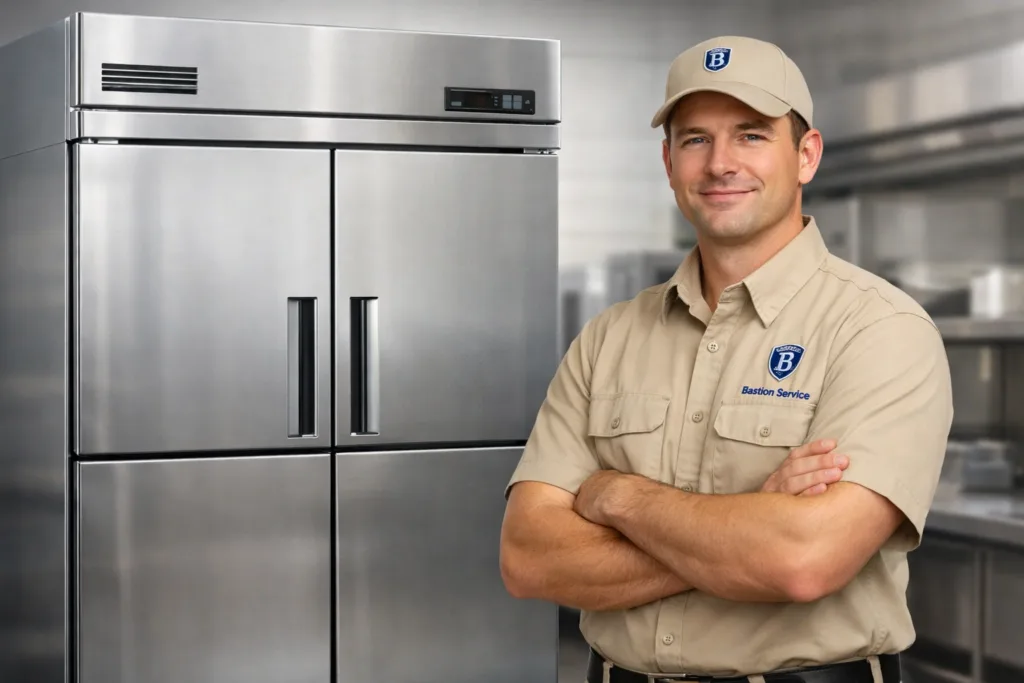




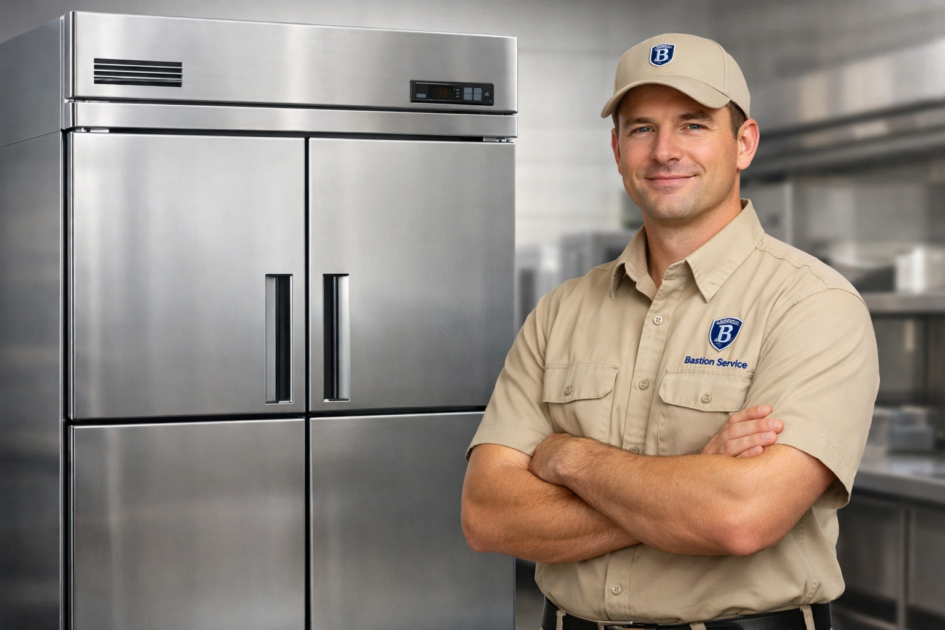
Freezer problems often show up first as slower pull-down, uneven cabinet temperatures, fan noise, frost around the evaporator area, or product that no longer feels fully solid by the end of a shift. For businesses in West Hollywood, those warning signs usually mean the unit needs to be checked before a smaller performance issue turns into inventory loss or a complete cooling failure. Bastion Service handles Turbo Air freezer repair with a service-first approach that focuses on the symptom pattern, equipment condition, and how quickly the problem is affecting daily operations.
Related commercial service paths in West Hollywood include Turbo Air Commercial Repair in West Hollywood, Commercial Freezer Repair in West Hollywood, and Turbo Air Refrigerator Repair in West Hollywood.
Common Turbo Air freezer symptoms and what they may indicate
Turbo Air freezers can develop different faults that look similar at first glance. A cabinet that seems warm one hour and normal the next may have an airflow problem, a sensor issue, a defrost fault, a weak fan motor, or a sealed-system concern. Looking at the exact behavior of the freezer helps narrow down what is failing and what kind of repair makes sense.
Why is my Turbo Air freezer not staying cold enough?
If the cabinet is not holding the set temperature, there may be restricted condenser airflow, evaporator fan trouble, a thermostat or sensor problem, frost choking airflow, a door that is letting warm air in, or reduced refrigerant performance. In a busy kitchen or food-storage environment, poor temperature hold can also show up as soft product, longer recovery after door openings, or cold spots in one section of the cabinet and warmer spots in another.
This symptom should be taken seriously because the compressor may run harder and longer while the freezer still fails to maintain proper storage conditions. The longer that pattern continues, the more likely it is that additional components will be stressed.
Frost buildup inside the cabinet
Frost that keeps returning usually points to moisture entering the cabinet or a defrost-related problem. Common causes include worn door gaskets, misaligned doors, defrost heater issues, control faults, drain problems, or evaporator fan issues that leave cold air trapped in the wrong area. Heavy frost can reduce airflow enough to create a second symptom: the freezer sounds like it is working constantly, but the actual storage temperature keeps drifting.
Freezer runs all the time or short cycles
A freezer that rarely shuts off may be compensating for heat gain, dirty coils, poor airflow, a failing fan motor, weak compressor output, or a control problem that is not reading cabinet conditions correctly. Short cycling can point to electrical issues, overheating protection, faulty relays, or compressor trouble. Either pattern is worth scheduling service for quickly, especially if the unit is part of a high-use operation where temperature stability matters all day.
Water leaks, ice under shelves, or drain-related problems
Water where it should not be can come from a blocked or frozen drain line, defrost water not clearing correctly, excess frost melting in the wrong area, or warm air intrusion that creates abnormal condensation. In a work setting, leaks and interior ice sheets do more than affect freezer performance. They can also disrupt cleaning routines, create slip risks, and make door operation or product access more difficult.
Unusual noises or weak airflow
Buzzing, rattling, clicking, or fan noise that was not there before can be an early clue that a motor, blade, compressor component, or mounting part is wearing out. If airflow sounds weak or inconsistent, the freezer may struggle to keep a uniform temperature throughout the cabinet. That can lead to freezing performance that seems random unless the airflow issue is found and corrected.
What a symptom-based diagnosis helps uncover
One visible problem does not always equal one obvious repair. A warm cabinet might be caused by poor door sealing just as easily as a fan failure or a more serious refrigeration issue. Frost might be the result of repeated warm-air intrusion, but it can also point to a defrost problem that keeps worsening over time. That is why diagnosis matters before part replacement is approved.
For businesses in West Hollywood, this helps answer practical questions fast: Is the issue isolated to one component? Is the freezer still safe to use temporarily? Is the current complaint likely to spread into a larger failure? Does the repair make financial sense based on the unit’s overall condition? A thorough inspection gives a better basis for those decisions than treating only the most obvious symptom.
When to schedule service
It is time to schedule Turbo Air freezer repair in West Hollywood when the freezer shows repeat temperature swings, product softening, frost that returns soon after removal, error codes, unusual cycling, leaks, or noise changes. Service is also a good idea when staff notice the cabinet taking much longer than normal to recover after loading or door openings.
Waiting too long can lead to more ice restriction, heavier compressor strain, and a repair that becomes more involved than it needed to be. If the cabinet is still operating but underperforming, reducing product load and arranging inspection promptly is usually the safer move for protecting inventory and avoiding a no-cool event during business hours.
Repair decisions that often depend on the exact failure
Many Turbo Air freezer issues can be addressed without replacing the unit. Fan motors, sensors, gaskets, defrost components, drain-related parts, controls, and some electrical items are often repairable when the cabinet and refrigeration system are otherwise in solid condition. In other cases, repeated cooling loss, compressor deterioration, or broader system wear may change the recommendation.
The right path usually depends on more than the current complaint alone. Age, cabinet condition, prior repair history, and how heavily the freezer is used all matter. A unit that has one isolated fault is different from a unit showing repeated signs of declining performance across several systems.
How businesses can prepare for a freezer service visit
Before service is scheduled, it helps to note the exact symptom and when it occurs. Useful details include whether the problem is constant or intermittent, whether frost returns after defrosting, whether the noise starts during startup or while running, and whether the issue is worse after door openings or restocking. If the freezer has a display or alarm, recording what it shows can also help narrow the diagnosis faster.
- Note the current cabinet temperature and any recent temperature swings.
- Check whether doors are sealing fully and closing without resistance.
- Look for visible frost patterns, pooled water, or blocked airflow paths.
- Move sensitive inventory if storage temperature is no longer dependable.
- Avoid repeated manual resets that may mask the original symptom.
Focused repair help for Turbo Air freezer problems in West Hollywood
When a Turbo Air freezer starts missing temperature, building frost, leaking, or making unusual noise, the most useful next step is to schedule service based on the actual operating symptoms rather than wait for a full breakdown. For businesses in West Hollywood, fast attention to those warning signs can reduce downtime, protect stored product, and make the repair decision more straightforward before the problem affects the rest of the workday.


