
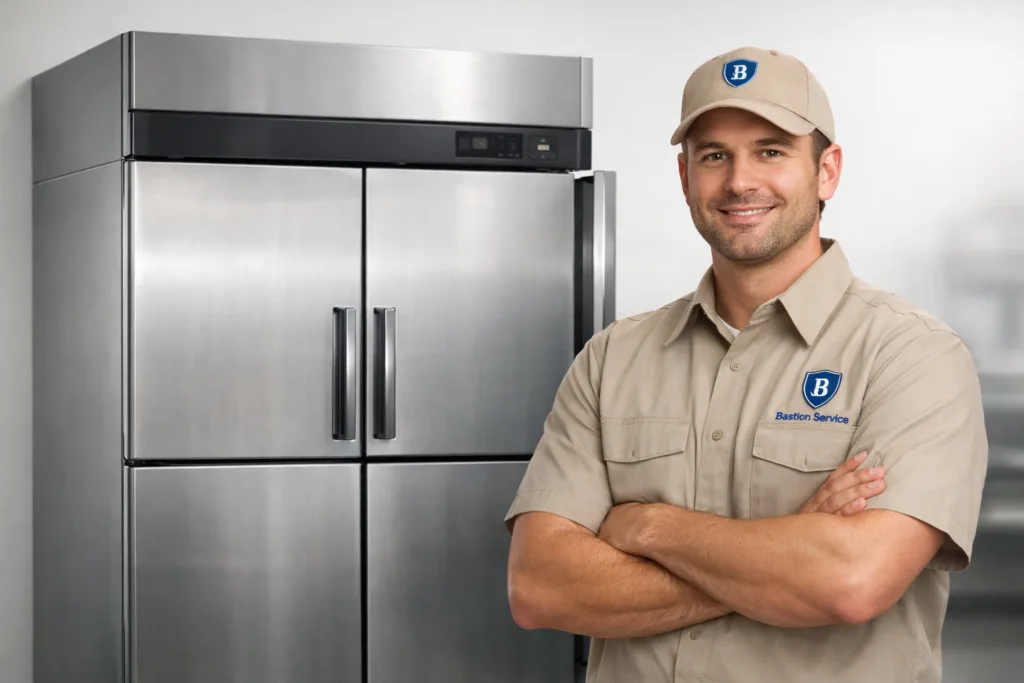




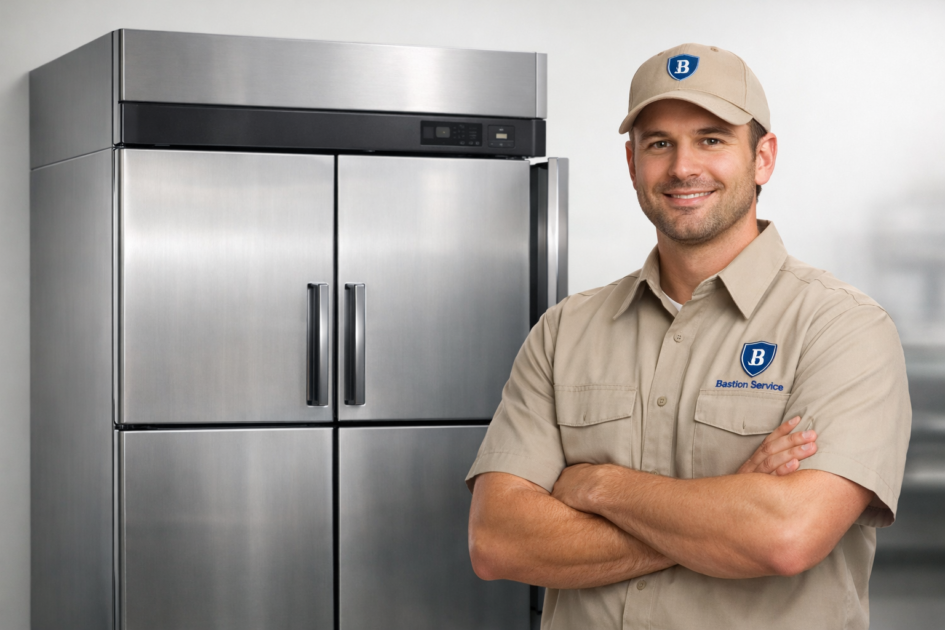
A Hoshizaki refrigerator that starts running warm, cycling irregularly, leaking, or building frost can disrupt storage, prep, and daily workflow fast. For businesses in West Hollywood, the most useful next step is service that traces the symptom back to the actual failure point so repair scheduling, parts approval, and downtime planning are based on what the equipment is really doing. Bastion Service handles Hoshizaki refrigerator issues with a service-first approach focused on diagnosis, repair options, and restoring stable operation.
Related commercial service paths in West Hollywood include Hoshizaki Commercial Repair in West Hollywood, Commercial Fridge Repair in West Hollywood, and Hoshizaki Freezer Repair in West Hollywood.
What Temperature and Cooling Problems Usually Mean
When a refrigerator is no longer holding a steady cabinet temperature, the cause is not always obvious from the first symptom. A warm interior, slow recovery after door openings, or uneven cooling from top to bottom can come from airflow restrictions, dirty condenser coils, failing fan motors, sensor errors, control issues, door gasket leaks, or refrigeration circuit problems. Different faults can create very similar temperature complaints, which is why symptom pattern matters.
In busy kitchens, storage areas, and other workspaces in West Hollywood, staff often notice the problem before an alarm or complete shutdown happens. Product may need to be shifted, settings may need repeated adjustment, or the unit may seem fine at one moment and then drift out of range again. That inconsistency is often a sign that the refrigerator is no longer operating reliably even if it still runs.
Common Hoshizaki Refrigerator Symptoms
Cabinet is warm or not holding set temperature
If the refrigerator is on but product is not staying cold enough, the problem may involve poor condenser airflow, an evaporator fan issue, sensor drift, a thermostat or control fault, a door that is not sealing correctly, or a sealed-system issue. A unit that cools sometimes but not consistently can be especially difficult because it may appear to recover while still exposing inventory to unsafe swings.
Frost buildup or weak airflow inside the cabinet
Frost on panels, ice around the evaporator section, or reduced air movement can point to a defrost problem, fan failure, door leakage, or controls that are not cycling correctly. When airflow drops, the refrigerator may run longer and still fail to keep the cabinet evenly cooled. This often shows up as cold spots in one area and warmer product in another.
Water leaking, pooling, or excessive condensation
Water on the floor or moisture collecting inside the unit can be tied to a blocked drain, poor door sealing, temperature control issues, or frost melting in the wrong place. Leaks should not be treated as minor because they can affect surrounding surfaces, create slip hazards, and signal a cooling problem that is getting worse.
Noisy operation, short cycling, or constant running
Buzzing, clicking, rattling, or loud fan noise may indicate worn moving parts, compressor start issues, loose components, or airflow-related stress. A refrigerator that runs almost nonstop without pulling down to the correct temperature usually needs prompt attention. A unit that starts and stops too often can also point to electrical or control problems that increase wear over time.
Why Hoshizaki Refrigerators Lose Temperature Stability
Temperature complaints usually come down to one of a few system-level issues: the refrigerator cannot move enough air, cannot remove enough heat, cannot read temperature accurately, or cannot complete its cooling cycle correctly. That can involve something straightforward such as coil contamination or a door gasket problem, but it can also involve fan motors, relays, control boards, sensors, defrost components, or refrigerant-related faults.
The key for a business owner or manager is not to assume that one visible symptom tells the whole story. Frost does not always mean only a defrost issue. A warm cabinet does not always mean compressor failure. Condensation does not always start with the drain. A proper service visit separates the symptom from the underlying cause so the repair decision is based on evidence rather than guesswork.
When Service Should Be Scheduled
It is time to schedule refrigerator service when the unit:
- Cannot hold a consistent safe temperature
- Takes too long to recover after door openings
- Shows repeated frost or ice buildup
- Leaks water or develops heavy condensation
- Runs constantly or short cycles
- Makes new or worsening noises
- Triggers recurring alarms or staff complaints
Another strong sign is when the team starts compensating for the equipment. If staff are avoiding certain shelves, moving product to another unit, adjusting controls repeatedly, or limiting use because they do not trust the refrigerator, the equipment is already affecting operations. That is usually the point where diagnosis and repair planning become more urgent.
What a Service Visit Should Check
A productive refrigerator service call should do more than confirm that the cabinet feels warm. It should evaluate temperature performance, coil condition, condenser and evaporator airflow, fan operation, defrost function where applicable, control response, sensors, drains, and door sealing. If the symptoms point beyond those areas, the inspection should also narrow down whether the issue is electrical, mechanical, or within the refrigeration system.
That process helps answer the questions businesses in West Hollywood usually care about most: whether the unit can stay in service safely for the moment, what repair is actually needed, whether parts are likely to be required, and how the problem may affect uptime if delayed.
Repair or Replacement: How the Decision Usually Gets Made
Many Hoshizaki refrigerator problems are repairable when the cabinet is otherwise in good condition and the failure is limited to components such as fans, sensors, controls, gaskets, drains, or other serviceable parts. In those cases, repair can restore stable performance without the disruption of replacing the unit.
Replacement becomes a more serious consideration when the refrigerator has a pattern of repeated failures, major refrigeration circuit issues, or repair costs that no longer match the remaining useful life of the equipment. The right recommendation depends on the unit’s condition, the severity of the fault, the role it plays in daily operations, and the risk of continued downtime.
How to Prepare Before the Technician Arrives
If service is being scheduled, it helps to note what the refrigerator has been doing over the last few days. Useful details include whether the cabinet is always warm or only at certain times, whether frost appears in one area, whether alarms are recurring, whether noises happen during startup, and whether the issue started after cleaning, loading changes, or power interruption. That symptom history can shorten diagnosis time.
It also helps to keep the area around the refrigerator accessible and to avoid making repeated control changes right before service unless product protection requires it. Frequent adjustments can mask the original symptom pattern and make the fault harder to trace.
For businesses in West Hollywood, Hoshizaki refrigerator repair is ultimately about protecting inventory, workflow, and equipment reliability. When cooling performance becomes inconsistent, the smartest move is to schedule service before a minor issue turns into a longer outage, a product-loss event, or a more expensive repair.


