
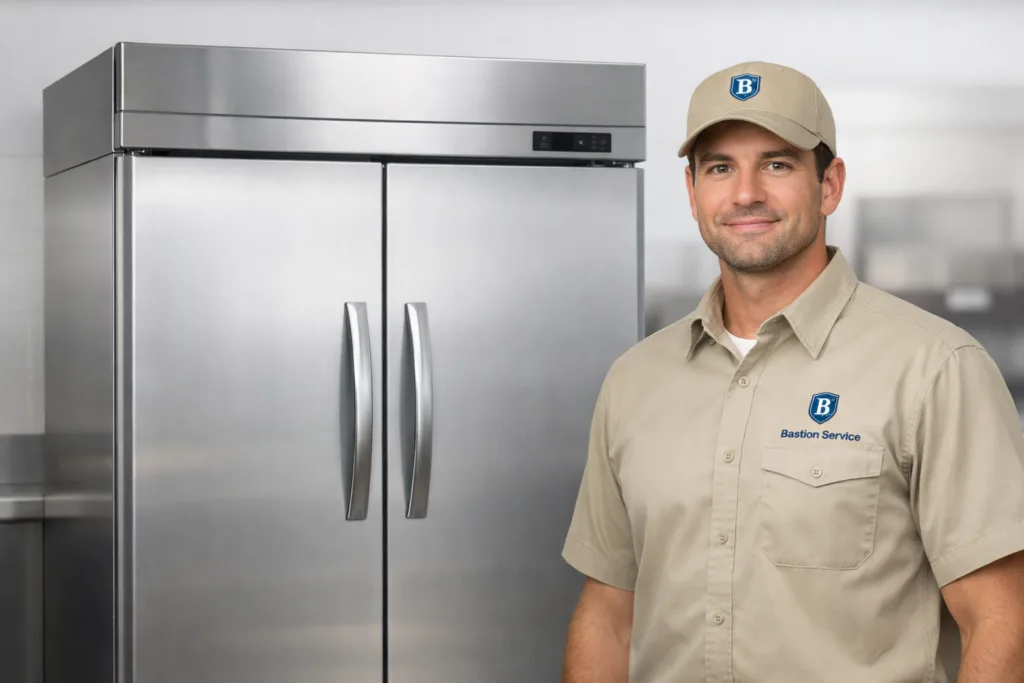




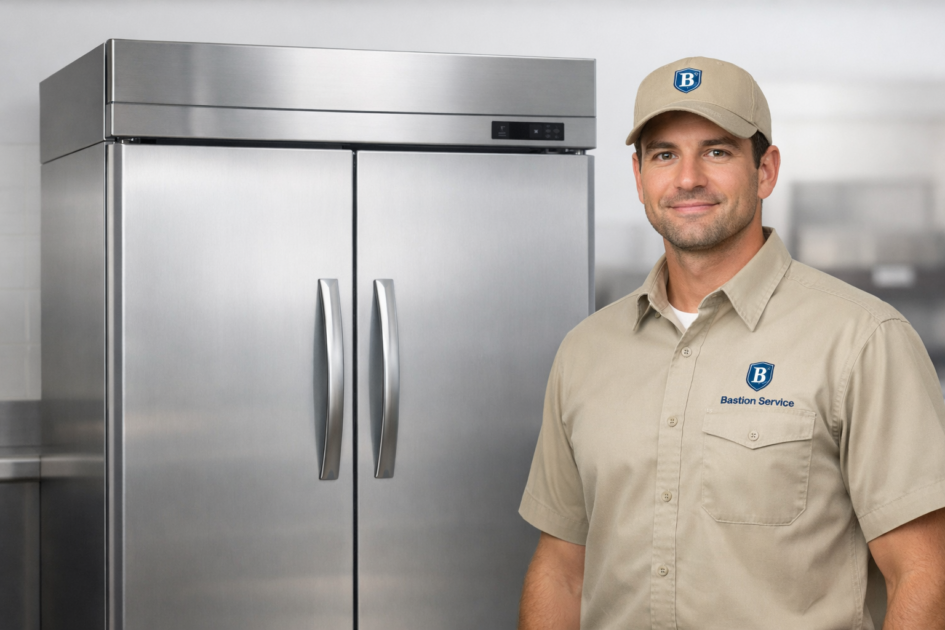
Turbo Air refrigerator problems can disrupt storage temperatures, slow prep, and put daily operations under pressure if they are not addressed quickly. The most effective service call starts with symptom-based testing so the repair is aimed at the actual fault rather than the most obvious guess. Bastion Service handles Turbo Air refrigerator issues in Sawtelle with attention to temperature performance, airflow, electrical operation, and the practical repair choices that make sense for working equipment.
Related commercial service paths in Sawtelle include Turbo Air Commercial Repair in Sawtelle, Commercial Refrigerator Repair in Sawtelle, and Turbo Air Freezer Repair in Sawtelle.
Why accurate diagnosis matters before repair
A refrigerator that runs warm, leaks water, develops frost, or cycles oddly can have more than one possible cause. What looks like a cooling failure may actually be an airflow restriction, a weak fan motor, a sensor problem, a door seal issue, a drain blockage, or a more serious refrigeration-system fault. Testing first helps separate a correctable component problem from a larger reliability concern.
For businesses in Sawtelle, that distinction matters because the wrong repair wastes time while inventory, workflow, and opening readiness remain at risk. A service-focused diagnosis also helps determine whether the unit can be restored efficiently or whether repeated issues are starting to point toward a larger equipment decision.
Common Turbo Air refrigerator symptoms and what they may indicate
Not holding temperature
If the cabinet temperature rises above target, recovers slowly after door openings, or varies throughout the day, several conditions may be involved. Dirty condenser surfaces, blocked airflow, failing evaporator or condenser fans, thermostat or sensor errors, weak door gaskets, and low cooling performance can all produce similar complaints.
In a busy kitchen, prep area, or storage space, even small temperature swings can become a larger problem once the refrigerator is opened frequently. A unit that is not holding temperature should be evaluated before staff start compensating with repeated adjustments or temporary product transfers.
Frost buildup inside the cabinet
Frost around interior panels, evaporator areas, or door openings usually points to moisture intrusion or circulation trouble. A door not sealing correctly, repeated warm-air entry, airflow obstruction, or a defrost-related problem can all contribute to ice formation.
Once frost builds up, the refrigerator may cool unevenly and lose usable storage space. The extra strain can also affect fan movement and overall system efficiency, which is why recurring frost should be treated as a repair issue rather than just a cleaning issue.
Water leaking inside or onto the floor
Water leaks often trace back to blocked drain lines, excess condensation, damaged gaskets, or operating conditions that cause abnormal moisture. In some cases, temperature instability inside the cabinet leads to more water accumulation than the unit is designed to manage normally.
For businesses in Sawtelle, floor leaks are more than an inconvenience. They can create safety concerns, interfere with nearby equipment use, and signal a refrigeration problem that is getting worse.
Loud operation or unusual vibration
New buzzing, rattling, clicking, humming, or fan noise can indicate loose hardware, worn motors, fan blade interference, compressor stress, or electrical control issues. Some sounds appear only during startup or shutdown, while others continue throughout the cooling cycle.
If the refrigerator sounds different from its normal pattern, it is worth scheduling service before the noise turns into a no-cool failure or a more involved parts issue.
Unit running constantly or short cycling
A Turbo Air refrigerator that rarely shuts off may be trying to compensate for heat buildup, poor airflow, leaking door seals, or declining cooling capacity. Short cycling, on the other hand, may point to controls, sensors, electrical faults, or compressor-related stress.
Both patterns increase wear. When run time changes noticeably, the problem should be checked before the refrigerator loses temperature control completely.
Why is my Turbo Air refrigerator not holding temperature?
This is one of the most common service complaints, but it does not have one single answer. Temperature loss can start with:
- Restricted condenser airflow from dirt or blockage
- Evaporator or condenser fan failure
- Door gaskets that no longer seal tightly
- Sensor or control faults affecting cycle timing
- Heavy frost that disrupts air movement
- Refrigeration-system performance problems
The key is identifying whether the issue is external airflow, internal air circulation, control response, or actual cooling-system decline. That is why measured testing matters more than adjusting settings repeatedly and hoping the box recovers.
When to schedule service
It is time to schedule repair when the refrigerator cannot maintain safe holding temperatures, product is being relocated to backup storage, frost keeps returning, leaks continue after cleaning, or new noises appear during operation. These symptoms usually do not resolve on their own, and delay often increases downtime.
Fast service is especially important when staff notice warm spots in the cabinet, slow temperature pull-down, weak airflow, or visible moisture buildup. Those are often early signs that the problem is expanding beyond a minor maintenance issue.
What technicians typically check on a service visit
A proper refrigerator diagnosis usually includes review of operating temperatures, air circulation, fan function, door condition, drainage, control behavior, and component response under load. Depending on the symptom, the visit may also focus on signs of compressor strain, condenser condition, defrost performance, or electrical irregularities.
This kind of step-by-step evaluation helps determine whether the repair is likely to be straightforward or whether the refrigerator has overlapping issues that affect long-term reliability. For operators, that makes it easier to approve a repair with a realistic understanding of condition, urgency, and expected outcome.
Repair decisions that support uptime
Many Turbo Air refrigerator problems can be resolved effectively when the fault is isolated early. Fan motors, gaskets, drains, controls, sensors, and similar components may be repairable without turning the issue into a prolonged outage. But when a refrigerator has repeated cooling failures, severe wear, or signs of broader system decline, the better decision may depend on age, use pattern, and the cost of restoring stable operation.
The most useful repair recommendation is not based on the symptom alone. It is based on how the unit is performing now, what failed, and whether the repair will return the refrigerator to consistent service without creating another interruption soon after.
Preparing for a refrigerator repair appointment
Before service, it helps to note the main symptom, when it started, whether it is constant or intermittent, and whether the cabinet is running warm, icing up, leaking, or making new noise. If possible, staff should also observe whether fans are moving air, whether the doors are sealing fully, and whether the issue becomes worse during peak use.
That information can speed up diagnosis and help prioritize the most likely causes. In a business setting, even a short symptom history can make the visit more efficient and reduce unnecessary delays in getting the refrigerator back into dependable operation.
If your Turbo Air refrigerator in Sawtelle is losing temperature, building frost, leaking, or showing signs of unstable operation, prompt repair service is the best next step. A focused diagnosis helps limit downtime, protect stored product, and move quickly toward the right repair decision for your equipment.


