
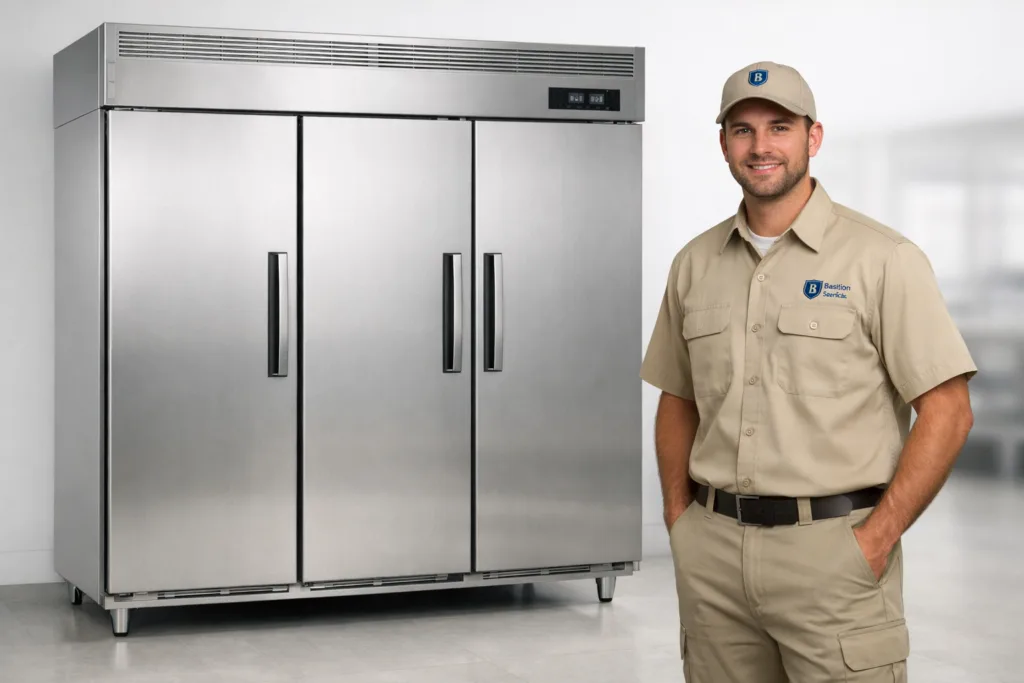




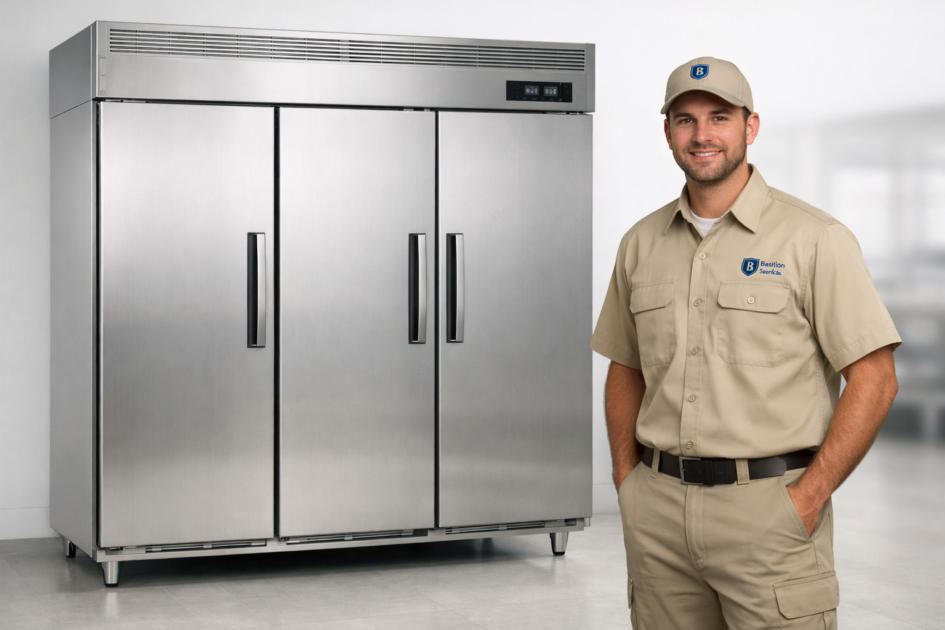
When Turbo Air refrigeration equipment starts affecting inventory protection or daily workflow, the priority is to determine what failed, how urgently service is needed, and whether the unit should remain in operation until repair. For businesses in Sawtelle, symptom-based service is often the fastest way to reduce downtime because warm cabinets, ice buildup, water leaks, and airflow problems can point to very different repair paths. Bastion Service provides repair support for Turbo Air refrigerator and freezer issues with scheduling based on operating condition, temperature behavior, and the business impact of the failure.
For specific equipment paths in Sawtelle, review Turbo Air Refrigerator Repair in Sawtelle, Turbo Air Freezer Repair in Sawtelle, and Commercial Appliance Repair in Sawtelle.
What Turbo Air refrigeration equipment problems do you troubleshoot?
Turbo Air refrigerator and freezer problems often begin with one visible symptom, but the root cause may involve airflow, controls, defrost components, door sealing, fan motors, drainage, or the cooling system itself. Troubleshooting usually focuses on how the equipment is behaving during normal use rather than on one isolated complaint.
- Refrigerators running warm or struggling to recover after door openings
- Freezers not reaching set temperature or allowing product to soften
- Heavy frost, ice accumulation, or blocked evaporator airflow
- Water leaks, interior moisture, or recurring drain overflow
- Fans not moving air correctly through the cabinet
- Units running constantly, short cycling, or showing unusual noise
- Temperature swings that disrupt consistency during busy hours
- Cabinets that cool unevenly from top to bottom or front to back
Because these symptoms can overlap, effective repair planning depends on testing the actual operating condition instead of replacing parts based on guesswork.
Warm refrigerator and freezer symptoms
When temperature starts drifting above normal
A warm refrigerator does not always mean a major cooling failure, and a weak freezer may not be caused by the same parts that affect fresh-food storage. Temperature loss can come from restricted condenser airflow, dirty coils, fan failure, sensor drift, control problems, damaged gaskets, evaporator icing, or declining compressor performance. In some cases, the cabinet cools intermittently, which makes the problem harder to judge without active diagnosis.
For Sawtelle businesses, temperature instability matters because it can interrupt prep, storage, and service long before the unit fully stops cooling. If the cabinet is taking longer to recover, showing inconsistent readings, or falling behind during peak use, repair should be scheduled before the equipment shifts from manageable performance loss to complete outage.
Signs the problem is getting more serious
Escalating cooling issues often show up as longer run times, hotter exterior surfaces near the compressor section, repeated alarm conditions, or product temperatures that no longer match the display. A freezer that once recovered overnight but now stays soft through the day usually needs prompt attention. The same is true for a refrigerator that cycles constantly yet still cannot maintain stable holding conditions.
Frost buildup and airflow problems
Why ice often points to a larger repair need
Frost inside a Turbo Air freezer is not just a cosmetic issue. Ice can form because of defrost failure, door seal leakage, humid air entering the cabinet, a fan problem, or airflow restriction around the evaporator section. Once enough ice builds up, air movement drops and the cabinet may start warming even though the system still appears to be running.
In refrigerators, localized ice can also interfere with circulation and create uneven temperatures from shelf to shelf. That matters when one section seems acceptably cold while another section is clearly warming. In business-use refrigeration equipment, poor airflow can turn a small service issue into a cabinet-wide performance problem.
Common airflow-related warning signs
- Back panel icing or visible frost around interior vents
- Little or no air movement inside the cabinet
- Cold spots and warm spots in different storage areas
- Fans that sound weak, intermittent, or unusually loud
- Doors that seem closed but still allow moisture intrusion
When frost and airflow symptoms appear together, early service helps prevent further strain on the system and can reduce the chance of broader component damage.
Leaks, pooled water, and condensation issues
Water around a refrigerator or freezer may come from a blocked drain, frozen drain line, excess condensation, internal ice melt, or a door-sealing problem that allows moisture to build inside the cabinet. Floor moisture is more than an inconvenience. It can create safety concerns, interfere with sanitation, and signal that the refrigeration problem is worsening behind the panels.
Some leak issues remain limited to drainage, but recurring moisture paired with frost, weak cooling, or long run times often suggests a larger repair need. If the same unit is leaking repeatedly after cleanup, it is usually worth checking for a defrost-related fault or another condition that is causing water to return.
Long run times, short cycling, and unusual noise
Changes in run pattern often reveal performance strain before a complete cooling failure occurs. A Turbo Air unit that runs nearly nonstop may be compensating for dirty heat-rejection surfaces, poor airflow, gasket leakage, icing, or declining system efficiency. Short cycling can point to control issues, electrical problems, or a unit that is struggling to operate normally under load.
Noise changes matter too, especially when they appear with other symptoms. Buzzing, clicking, rattling, or louder-than-normal fan noise may indicate loose components, fan motor trouble, compressor stress, or vibration caused by a developing mechanical issue. Not every sound means immediate shutdown, but a noticeable change in sound combined with poor cooling should move service higher on the priority list.
How symptom patterns affect repair decisions
The most useful repair decisions come from looking at symptoms together rather than one at a time. For example, a freezer with frost buildup, poor airflow, and soft product points toward a different service path than a refrigerator with no frost, normal airflow, but inaccurate temperature control. A leaking cabinet with stable cooling may be manageable for a short period, while a leaking cabinet that is also warming usually requires much faster action.
That is why diagnosis matters for scheduling. Some equipment can stay in limited use with careful monitoring until repair is performed. Other units should be removed from service quickly to avoid inventory loss, additional component damage, or a more expensive failure. The correct choice depends on actual cabinet temperature, recovery behavior, and whether the symptom is stable or rapidly worsening.
Repair or replacement?
Many Turbo Air refrigerator and freezer problems are repairable, especially when the issue involves fan motors, controls, sensors, gaskets, drains, defrost components, or airflow-related faults. Replacement becomes a more serious consideration when the equipment has repeated major failures, advanced overall wear, or cooling-system decline that no longer makes financial sense to correct.
A good service evaluation helps separate a repairable operational issue from a unit that is nearing the end of its practical life. Instead of making the decision based only on warm temperatures or visible ice, businesses can weigh repair scope, equipment condition, downtime exposure, and how critical that unit is to daily operations.
When to schedule service in Sawtelle
Service should be scheduled promptly when a Turbo Air refrigerator or freezer starts running warm, loses airflow, develops heavy frost, leaks repeatedly, runs constantly, or fails to recover to normal temperature after routine use. Faster scheduling is especially important when the unit supports high-turnover inventory, limited cold storage capacity, or daily service that cannot easily shift to backup equipment.
If the equipment is still operating but showing early warning signs, addressing the problem sooner may help avoid a full breakdown. If it is no longer holding temperature, is icing over heavily, or is showing repeated performance collapse, the next step is to schedule repair and assess whether continued operation is still reasonable while service is pending.
For businesses in Sawtelle, Turbo Air refrigeration repair is ultimately about restoring reliable cabinet performance and limiting disruption to storage, prep, and service. When a refrigerator or freezer starts showing temperature drift, frost buildup, leaks, or abnormal run behavior, scheduling a diagnostic visit provides a clear repair direction and helps determine the safest next step for the equipment and the operation it supports.


