
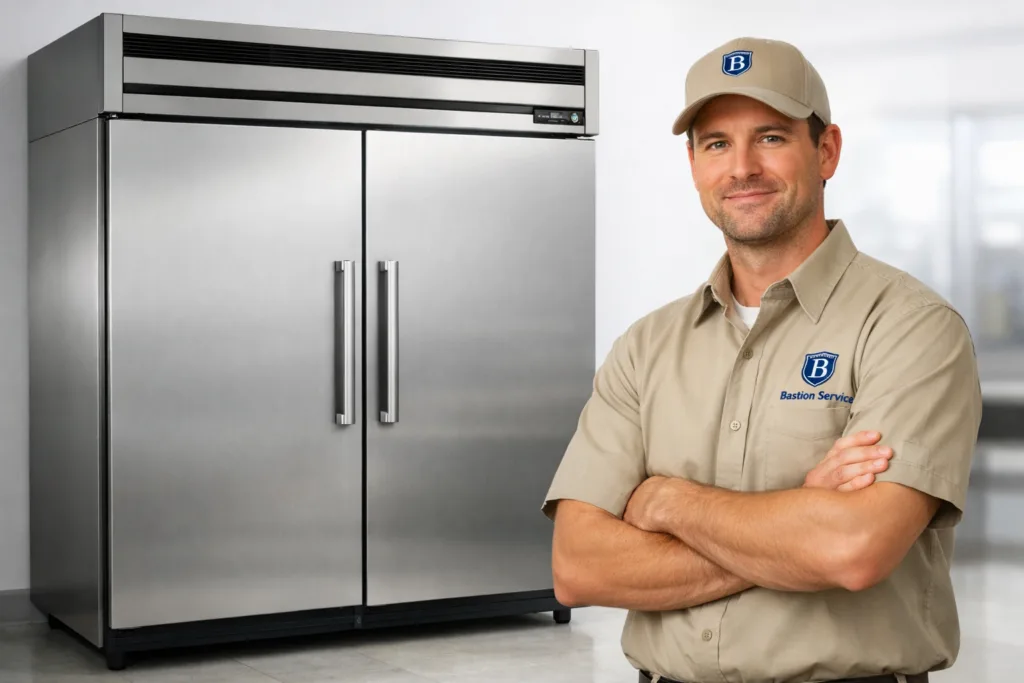




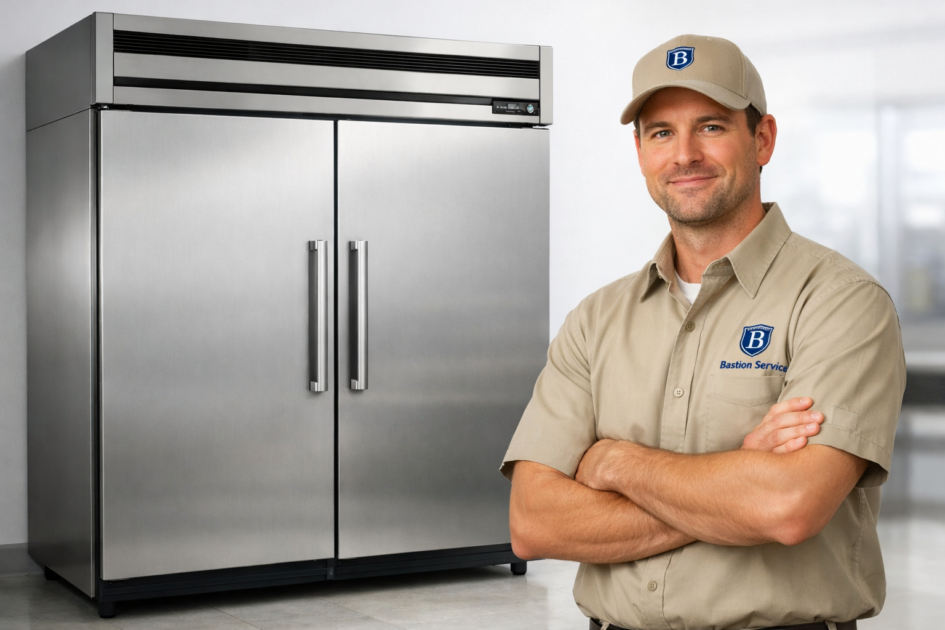
True refrigerators are often central to daily operations, so a cooling problem can quickly turn into product risk, workflow disruption, and scheduling pressure for businesses in Sawtelle. When a unit starts running warm, icing over, leaking, or making unusual noise, the most useful next step is service that ties the symptom pattern to the likely failure, explains whether the refrigerator can stay in limited use, and helps you plan repair timing around downtime.
Related commercial service paths in Sawtelle include True Commercial Repair in Sawtelle, Commercial Refrigerator Repair in Sawtelle, and True Freezer Repair in Sawtelle.
Bastion Service works on True refrigerator issues in Sawtelle with a business-focused approach: inspect the unit, narrow down the cause, and recommend the next step based on operating condition rather than assumptions. That matters when the same visible problem can come from airflow restriction, fan failure, controls, defrost faults, door sealing problems, drainage issues, or a more serious cooling-system concern.
Common True refrigerator problems businesses notice first
Not holding temperature
A True refrigerator that will not stay at the set temperature may show warm product, slow pull-down, uneven cooling from top to bottom, or recovery delays after the door opens. In many cases, the issue is related to poor condenser airflow, evaporator fan problems, sensor or control faults, gasket leakage, or frost interfering with circulation. Sometimes the cabinet still cools somewhat, which makes the problem easy to underestimate even while performance keeps slipping.
Temperature loss should be taken seriously because continued operation under strain can increase wear on major components and create product-safety concerns. If the cabinet is drifting, fluctuating, or only cooling part of the time, it is usually better to have the cause confirmed before the unit falls further behind.
Frost buildup inside the cabinet
Frost on the back panel, evaporator cover, or around the air path often points to a defrost problem, an air leak at the door, or moisture repeatedly entering the cabinet. As ice builds, airflow drops. That can make a refrigerator appear to have a compressor problem when the immediate issue is actually restricted air movement.
Heavy frost can also create a cycle where the unit runs longer, cools less effectively, and builds even more ice. When that pattern shows up, service is usually best scheduled before the cabinet reaches a point where stored product is affected.
Water leaking onto the floor or inside the unit
Leaks may come from a blocked drain, meltwater that cannot move properly during defrost, cabinet leveling issues, or condensation caused by warm air entering through worn seals. In active kitchens, prep areas, and other workspaces, even a small leak can turn into a sanitation concern or slip hazard.
Water around a refrigerator is also a clue that a cooling or defrost issue may be developing in the background. Treating it as only a housekeeping problem can delay a repair that would otherwise be straightforward.
Constant running or short cycling
If a True refrigerator seems to run almost nonstop, it may be struggling with restricted airflow, dirty coils, weak cooling performance, or excess heat gain through the doors. If it clicks on and off too often, the problem may involve controls, electrical components, sensors, or compressor-related issues.
Both patterns matter because they usually indicate inefficiency and stress. A unit that never seems satisfied is often telling you that it cannot maintain normal conditions without overworking itself.
Noise, vibration, or reduced airflow
Buzzing, rattling, fan scraping, or vibration may point to loose hardware, fan motor wear, blade interference, or mounting issues. Reduced airflow from vents can show up before a full cooling failure becomes obvious. These symptoms are worth checking early because they often affect temperature consistency long before the cabinet completely stops cooling.
Why a True refrigerator may stop holding temperature
Temperature problems are one of the most common reasons businesses request service, but they do not all come from the same source. A refrigerator that runs warm may have a condenser that cannot reject heat properly, an evaporator section that is iced over, a fan that is not moving air, a control that is reading incorrectly, or a door that is letting warm air in throughout the day.
In other cases, the cabinet reaches temperature overnight but loses control during busy hours. That pattern can suggest marginal cooling capacity, airflow loss, or a component beginning to fail under load. Looking at when the problem occurs is often just as helpful as looking at the temperature reading itself.
Because these symptoms overlap, diagnosis matters before parts are replaced. Swapping components based only on a warm cabinet complaint can waste time while the underlying cause remains unresolved.
Symptoms that usually mean service should be scheduled soon
- Product temperature is inconsistent or higher than expected.
- The cabinet alarms, resets, or needs repeated adjustment to keep running.
- Frost returns quickly after being cleared.
- Fans stop moving air or make grinding or scraping sounds.
- Water keeps appearing under the refrigerator.
- The compressor struggles to start or the unit cycles abnormally.
- The refrigerator only performs properly during low-demand hours.
Even if the unit is still operating, these signs often point to a repair need that will become more disruptive if delayed. Businesses in Sawtelle usually benefit from addressing these patterns before they lead to a full interruption during service hours.
What technicians look at during diagnosis
Service is typically guided by the exact complaint rather than by replacing the same parts on every visit. A warm cabinet may lead to inspection of coil condition, airflow, fans, controls, sensors, defrost function, and door sealing. Frost complaints often shift attention toward defrost components, moisture entry, air circulation, and drain behavior. Leak complaints may involve checking the drain path, cabinet pitch, condensation sources, and whether ice buildup is redirecting water.
This symptom-based process helps answer the questions operators actually care about: whether the refrigerator can remain in use temporarily, what the likely repair path is, and whether the cost makes sense for the condition of the unit.
When continued operation can make the problem worse
Some refrigerators limp along long enough to create the impression that service can wait. The risk is that an airflow issue can drive excessive run time, a fan problem can reduce temperature recovery, and a defrost problem can slowly choke off cooling until the cabinet fails at the worst possible time. Running a unit with poor ventilation or unresolved icing can also place added strain on the rest of the system.
If the refrigerator is clearly outside normal performance, especially with product inside, it is usually better to have the problem assessed than to rely on repeated adjustments or manual workarounds.
Repair or replace?
Many True refrigerator problems are repairable when the cabinet is in otherwise solid condition and the issue is limited to fans, controls, gaskets, electrical components, drainage, or maintenance-related cooling loss. Replacement becomes a more serious consideration when the refrigerator has multiple recurring failures, advanced wear, or a high-cost issue on a unit with uncertain remaining life.
The best decision is not based on part price alone. It should also consider reliability, risk to stored product, disruption to operations, and whether another breakdown is likely in the near future. A proper inspection gives that decision useful context.
How to prepare for a service visit
Before scheduling repair, it helps to note the main symptom and when it occurs. Useful details include whether the cabinet is warm all the time or only during busy periods, whether frost is light or heavy, whether leaks happen constantly or after defrost, and whether any noises started before the cooling issue. If the refrigerator has a display or alarm history, that information can also help narrow down the problem faster.
Businesses can also prepare by checking whether product needs to be relocated if temperatures are no longer stable. That reduces pressure during the visit and helps protect inventory while the issue is being evaluated.
Service-focused next steps for businesses in Sawtelle
When a True refrigerator begins affecting temperature control, airflow, sanitation, or day-to-day workflow, the goal is to move from symptom to repair plan quickly. For businesses in Sawtelle, that means scheduling service based on what the cabinet is doing now, how severely operations are being affected, and whether continued use creates added risk. A timely diagnosis can help you avoid unnecessary downtime, protect stored product, and make a better repair decision before a manageable issue becomes a larger interruption.


