
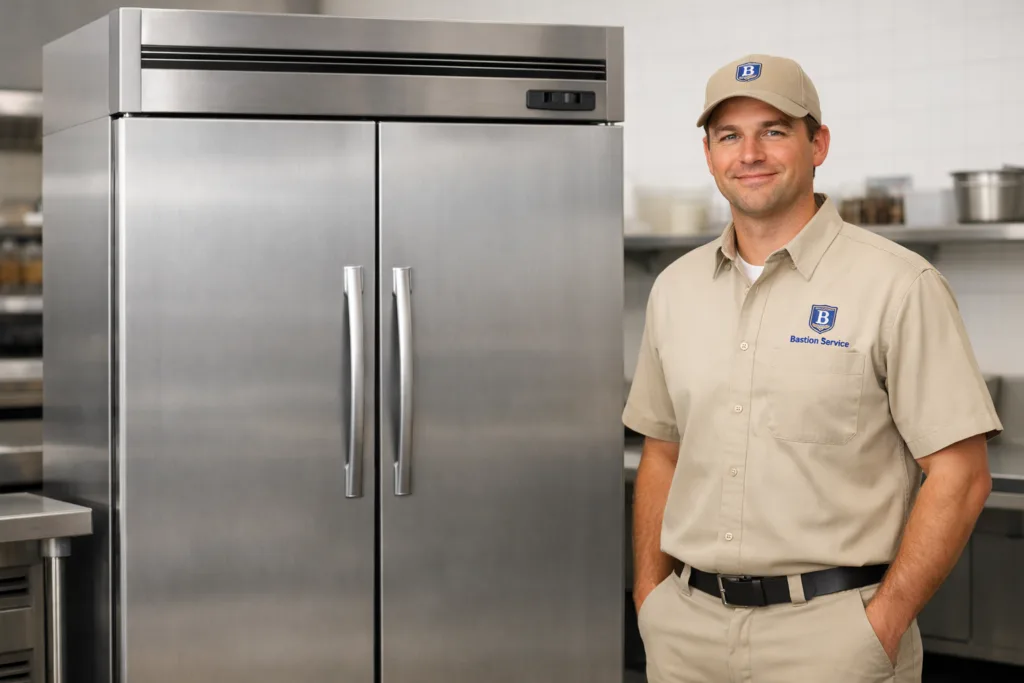




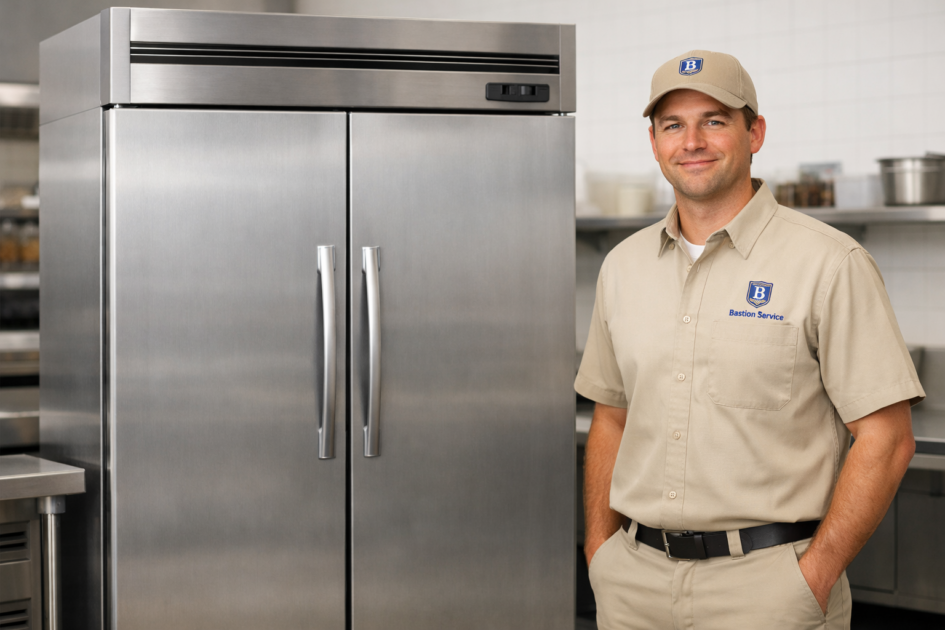
When a Turbo Air refrigerator starts losing stability during the workday, the main priority is protecting product and limiting disruption to service. A unit that runs but cannot hold consistent temperature, recover after door openings, or move air properly can create immediate pressure on kitchen workflow, prep timing, and storage decisions. In Los Angeles, scheduling repair early often helps avoid a larger interruption later, especially when the symptom pattern already points to a developing cooling or control problem.
Related commercial service paths in Los Angeles include Turbo Air Commercial Repair in Los Angeles, Commercial Refrigerator Repair in Los Angeles, and Turbo Air Freezer Repair in Los Angeles.
Turbo Air refrigerator service focused on real operating symptoms
Turbo Air refrigerator problems are easiest to solve when the symptom is matched to how the unit is actually behaving in daily use. A reach-in that warms up during busy periods, a prep refrigerator with uneven product temperatures, or a cabinet that ices up after seeming normal for days may all have different root causes. Bastion Service works from the operating pattern first so repair decisions are based on what the refrigerator is doing under load, not on guesswork or repeated part swapping.
That approach matters because similar complaints can come from very different failures. A warm cabinet might be caused by weak airflow, sensor error, fan failure, dirty condenser coils, door gasket leakage, control issues, or a sealed-system problem. The right repair path depends on what testing shows, how severe the temperature drift is, and whether the unit is still safe to keep in service while repair is being arranged.
Common Turbo Air refrigerator problems and what they may indicate
Cabinet is warm or not holding set temperature
If the refrigerator temperature rises above the expected range or fluctuates throughout the day, likely causes include restricted condenser airflow, evaporator fan problems, thermostat or sensor faults, control board issues, refrigerant loss, or compressor-related trouble. Warm holding conditions should not be treated as a minor inconvenience. Even if the unit cools again later, inconsistent cabinet temperature usually means the system is struggling and may fail more noticeably during peak use.
Uneven temperatures from shelf to shelf
When items near one area stay cold but products in another area run warmer, airflow is often part of the problem. Ice buildup on the evaporator, blocked air channels, failing fan motors, overloaded shelving, or door openings that expose the cabinet to heavy kitchen heat can all contribute. Uneven cooling is especially important to address because the control display may look close to normal while actual product temperatures vary across the cabinet.
Unit runs constantly or cycles the wrong way
A Turbo Air refrigerator that rarely shuts off may be fighting dirty coils, poor ventilation, door seal leaks, weak cooling performance, or inaccurate control feedback. A unit that starts and stops too often may have electrical issues, compressor stress, relay problems, or a control fault. Both patterns matter because they increase wear and often signal a refrigerator that is no longer operating efficiently enough for daily business use.
Frost buildup, ice formation, or blocked airflow
Frost on the evaporator cover, ice inside the cabinet, or reduced airflow from interior vents can point to defrost problems, gasket leakage, fan failure, or moisture intrusion from frequent door openings. Once frost starts interfering with airflow, the refrigerator can fall out of temperature even if core refrigeration components are still working. This is one reason icing complaints should be diagnosed promptly instead of being treated as a simple nuisance.
Water leaking inside or under the refrigerator
Water around the unit may come from a clogged drain, defrost drainage issue, condensation caused by poor door sealing, or freeze-and-thaw patterns inside the evaporator section. In busy work areas, leaks also create slip hazards and sanitation concerns. If the leak keeps returning after basic cleanup, the source usually needs to be traced and corrected rather than monitored.
Noise, rattling, clicking, or vibration
Unusual sound does not always mean immediate failure, but it often points to components under stress. Fan motors, loose mounting hardware, compressor issues, starting components, and cabinet vibration can all create noises that were not there before. A clicking or buzzing refrigerator that is also struggling to cool deserves faster attention because sound changes paired with performance changes often indicate a more meaningful fault.
Why a Turbo Air refrigerator may stop holding temperature
Temperature loss is one of the most important service calls because it can come from several different systems inside the refrigerator. Some cases are tied to maintenance-related airflow restriction. Others involve evaporator icing, sensor or control errors, weak fan operation, poor heat rejection, refrigerant problems, or compressor inefficiency. The same complaint can also appear when the displayed temperature does not match the actual cabinet temperature.
For businesses in Los Angeles, the repair decision should be based on whether the unit is failing occasionally or showing a repeatable pattern such as warming during rush periods, drifting overnight, or recovering too slowly after routine door use. Those patterns help separate a minor issue from one that is likely to worsen quickly.
Signs the problem is becoming urgent
- Stored product is warmer than the control setting suggests.
- The refrigerator runs nearly nonstop during normal use.
- Ice repeatedly returns after being cleared.
- Fans sound weak, irregular, or unusually loud.
- Staff keep changing settings to compensate for poor cooling.
- Water leakage is recurring around the cabinet base or interior.
- The unit struggles to recover after routine door openings.
When more than one of these signs appears at the same time, waiting often leads to longer downtime, more product risk, and a harder repair process.
What diagnosis should cover before repair is approved
A useful service visit should do more than confirm that the refrigerator is warm. It should verify actual temperature performance, review airflow conditions, inspect coils and fan operation, evaluate defrost function where relevant, check door sealing, and test control response against how the cabinet is behaving. If needed, electrical and refrigeration-system checks help determine whether the issue is isolated to a support component or tied to deeper cooling failure.
This matters because replacing the wrong part can delay restoration and increase costs. For example, a control complaint may really be an airflow issue. An apparent fan problem may be tied to icing from a defrost fault. A refrigerator that seems to need a thermostat may actually be losing capacity elsewhere in the system. Good diagnosis shortens the path to the correct repair.
When continued use can make the problem worse
Some refrigerators can remain in limited use while service is being scheduled, but others should not be pushed. If the cabinet is warming steadily, icing heavily, leaking significantly, or running without stopping, continued operation can increase compressor strain and create wider temperature instability. Repeated door openings under those conditions can make the recovery problem even worse.
For food-service businesses, hotels, laundromats with refrigerated storage areas, and other local businesses that depend on steady cold holding, the bigger risk is not only full shutdown. It is the period before shutdown, when the refrigerator appears to be functioning but no longer protects product consistently.
Repair or replacement: how businesses usually decide
Repair is often the better option when the problem is tied to fan motors, sensors, controls, gaskets, drains, electrical components, or maintenance-related cooling restriction. Replacement becomes a more serious discussion when the refrigerator has repeated major failures, advanced wear, or a high-cost refrigeration issue combined with age and heavy daily use.
The right choice depends on the condition of the cabinet, the role of the unit in operations, recent repair history, and the cost of downtime if the problem returns. For an essential refrigerator, the decision is usually about restoring stable performance with the least disruption, not simply choosing the lowest immediate expense.
How to prepare for a Turbo Air refrigerator repair visit
- Note the current symptom pattern, including when the problem is worst.
- Check whether the display matches actual product temperature readings.
- Identify any recent noise changes, leaks, icing, or long run times.
- Clear safe access to the unit and surrounding ventilation space.
- Be ready to explain whether the issue is constant or intermittent.
These details help speed up diagnosis and make it easier to determine whether the problem is tied to usage conditions, airflow, controls, or cooling performance.
Scheduling service for a Turbo Air refrigerator in Los Angeles
If a Turbo Air refrigerator is showing warm temperatures, frost buildup, airflow loss, water leakage, or abnormal cycling, the best next step is to schedule service before the issue turns into a full no-cool event. Early repair planning helps businesses in Los Angeles protect inventory, reduce avoidable downtime, and move from symptom uncertainty to a repair decision based on how the equipment is actually performing.


