
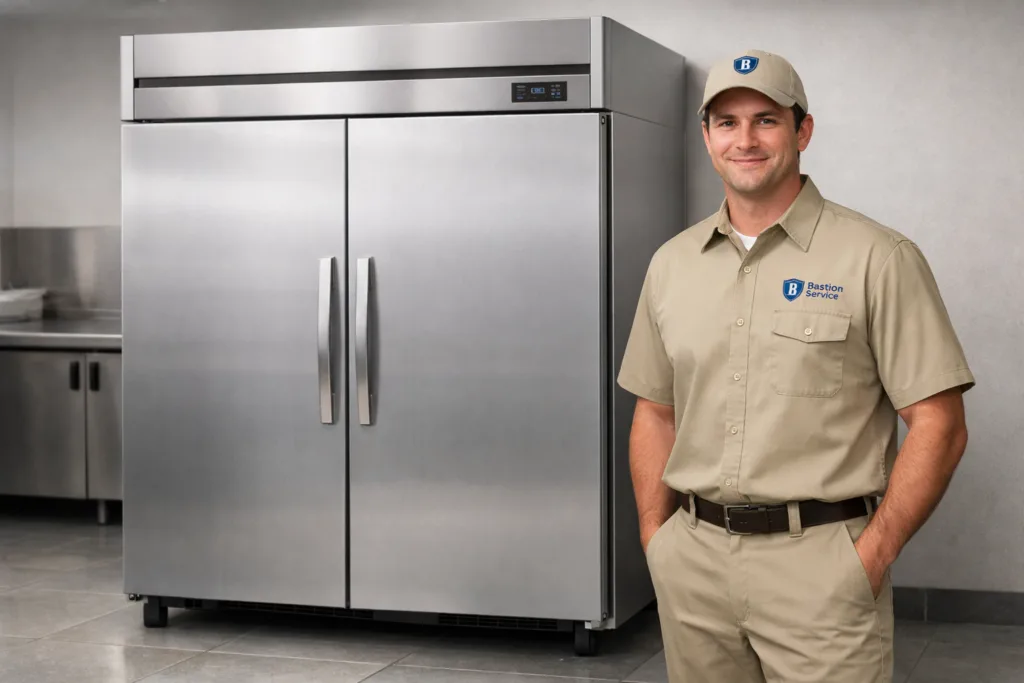




Refrigerator problems rarely stay small for long in a busy operation. When a Hoshizaki unit starts running warm, building frost, leaking, or making unusual noise, the next step should be service that identifies the actual fault, explains the risk to inventory and workflow, and helps you schedule repair before downtime spreads into prep, storage, or daily production. Bastion Service works with Los Angeles businesses that need Hoshizaki refrigerator issues evaluated based on real operating symptoms, not guesswork.
Related commercial service paths in Los Angeles include Hoshizaki Commercial Repair in Los Angeles, Commercial Refrigerator Repair in Los Angeles, and Hoshizaki Freezer Repair in Los Angeles.
Common Hoshizaki Refrigerator Symptoms That Need Service
Most refrigerator failures show warning signs before the cabinet stops cooling entirely. Recognizing those patterns early can help reduce product loss, avoid unnecessary part replacement, and keep a manageable issue from turning into a larger outage.
Cabinet temperature is rising or fluctuating
If the refrigerator is not holding a steady temperature, the cause may be simple or more involved. Dirty condenser coils, poor evaporator airflow, weak door sealing, sensor drift, control faults, fan motor problems, or refrigerant system issues can all produce similar symptoms. A unit that cools inconsistently in the morning, then struggles later in the day, often needs a closer look at airflow, heat rejection, and how the controls are responding under load.
Temperature swings matter even when the box still feels cold. In kitchens, prep areas, and storage spaces, inconsistent cabinet temperature can affect product safety, recovery time after door openings, and confidence in the unit during peak demand.
The refrigerator runs constantly or short cycles
A Hoshizaki refrigerator that runs nearly nonstop may be fighting restricted airflow, heavy heat load, coil contamination, weak cooling performance, or poor door closure. A unit that starts and stops too often may point to control issues, electrical problems, compressor protection events, or intermittent component failure.
Both patterns increase wear. Constant run time can overwork major components, while short cycling can prevent stable cooling and put extra stress on starting and control parts.
Frost buildup keeps returning
Frost inside the cabinet, around the evaporator area, or near the door opening usually means moisture is getting where it should not. Common causes include damaged gaskets, doors not closing fully, defrost issues, blocked airflow, or frequent warm-air intrusion from traffic-heavy use. If staff are clearing frost repeatedly and it comes back quickly, the refrigerator likely needs repair rather than another temporary cleanup.
Water is leaking onto the floor or pooling inside
Leaks can come from clogged drains, defrost drainage problems, excess condensation, or air infiltration. In addition to affecting the refrigerator, water around the unit creates slip risk and can disrupt surrounding work areas. Persistent moisture also makes it harder to separate a drainage issue from a temperature or airflow problem unless the unit is inspected as a whole.
Fans are noisy or airflow seems weak
Buzzing, rattling, grinding, or changes in normal operating sound often point to fan motor wear, loose hardware, vibration issues, or compressor strain. Weak airflow can make a refrigerator look like it has a major cooling failure when the real issue is air movement inside the cabinet or across the coil. If product near one section stays colder than another, airflow should be checked early.
Why a Warm Hoshizaki Refrigerator Is Not Always the Same Repair
A warm cabinet is a symptom, not a diagnosis. Two refrigerators can show the same temperature problem for completely different reasons. One may have a dirty condenser and restricted heat rejection. Another may have a failing evaporator fan, a control problem, or declining sealed-system performance. Replacing the first obvious part without confirming the root cause can add cost and delay recovery.
Effective service usually starts with how the unit is behaving in actual use:
- How far the cabinet temperature is drifting
- Whether the problem is constant or intermittent
- How the fans, compressor, and controls are responding
- Whether frost, moisture, or poor door sealing is present
- How quickly the refrigerator recovers after normal door openings
That symptom-based approach helps determine whether the issue is related to airflow, controls, defrost, electrical components, door hardware, or the refrigeration circuit itself.
When to Schedule Hoshizaki Refrigerator Repair
Service should be scheduled when the refrigerator begins showing any of the following:
- Cabinet temperatures trending upward
- Slow recovery after doors are opened
- Repeated frost buildup
- Water leaks or heavy condensation
- Fans that sound rough, weak, or intermittent
- Doors not sealing or closing correctly
- Long run times or frequent cycling
- Noticeable hot spots or uneven cooling inside the cabinet
These issues are easier to address when the refrigerator is still operating well enough to show a useful failure pattern. Waiting until the unit stops completely can turn a targeted repair into a more disruptive emergency.
When Continued Operation Can Make the Problem Worse
Some units should not simply be watched and reset. If a Hoshizaki refrigerator is failing to recover temperature, tripping protection, producing heavy frost, leaking heavily, or sounding strained, continued operation can increase stress on major components and complicate the repair.
Common stopgap measures can also backfire. Lowering the control setting repeatedly, overloading the cabinet with product that blocks airflow, or restarting the unit again and again may hide the original issue while increasing wear. If the refrigerator can no longer maintain stable storage conditions, it should be evaluated before routine use continues.
Common Causes Behind Hoshizaki Refrigerator Performance Problems
While every service call depends on the unit’s exact condition, several fault categories appear often in refrigerator repair:
- Airflow restrictions: dirty coils, blocked vents, failing fans, or product placement that disrupts circulation
- Door-related problems: torn gaskets, sagging hinges, poor alignment, or doors left slightly open during heavy use
- Control and sensor issues: inaccurate temperature readings, faulty controls, or intermittent electrical response
- Defrost-related faults: frost accumulation caused by incomplete or irregular defrost operation
- Drainage issues: blocked drain lines, overflow, or condensation management problems
- Cooling system concerns: compressor strain, weak refrigeration performance, or other deeper cooling faults
The value of diagnosis is separating a serviceable issue from a larger system problem so repair decisions are based on the refrigerator’s actual condition.
Preparing for a Service Visit
Before repair is scheduled, it helps to note what the refrigerator has been doing and when the problem appears. Details that can speed up diagnosis include:
- Current cabinet temperature and how long it has been off target
- Whether the issue is worse at certain times of day
- Any recent frost, leaks, alarms, or unusual sounds
- Whether the unit is running constantly or stopping unexpectedly
- If the problem began suddenly or has been getting worse gradually
This kind of information can make troubleshooting more efficient and help determine whether the unit may need to be taken out of use until repair is completed.
Repair or Replacement: How Businesses Usually Decide
Many Hoshizaki refrigerator problems are worth repairing when the cabinet is structurally sound and the fault is isolated. Fan motors, controls, sensors, gaskets, hinges, drain issues, and many electrical faults can often be resolved without replacing the equipment.
Replacement becomes a more serious consideration when the refrigerator has repeated major failures, declining overall cooling performance, cabinet deterioration, or repair costs that no longer match the expected remaining life of the unit. In Los Angeles, that decision is often tied to downtime exposure just as much as part cost. If one refrigerator failure affects prep flow, storage capacity, or product protection across the operation, the larger business impact matters.
Service Considerations for Los Angeles Operations
Refrigeration equipment in Los Angeles often works through long operating hours, frequent door openings, warm ambient conditions, and tight production schedules. That environment can make a borderline airflow issue or weak cooling condition show up faster and more aggressively than expected. Restaurants, hotels, cafés, food-service businesses, and other local operations need refrigerator repair that looks beyond the surface symptom and considers how the unit performs under real daily demand.
If your Hoshizaki refrigerator is running warm, leaking, frosting over, or struggling to keep up, the most useful next step is to schedule service while the symptoms can still be traced clearly. Timely repair can help limit downtime, protect stored product, and restore more predictable operation before a partial cooling issue becomes a full interruption.


