




When a Traulsen refrigerator starts running warm, freezing product unevenly, leaking, or alarming during business hours, the priority is to get the unit evaluated quickly and schedule service based on the actual failure. In Los Angeles, refrigeration problems can disrupt prep, storage, sanitation, and staffing within a single shift, so the most useful next step is to identify which system is causing the symptom before repair decisions are made.
Related commercial service paths in Los Angeles include Traulsen Commercial Repair in Los Angeles, Commercial Refrigerator Repair in Los Angeles, and Traulsen Freezer Repair in Los Angeles.
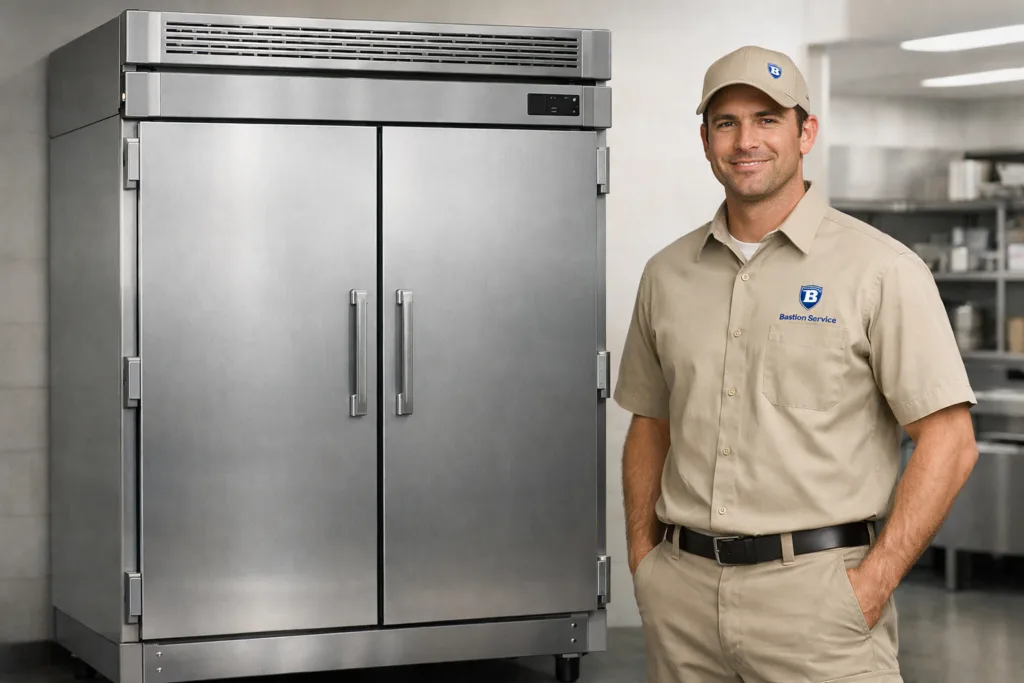
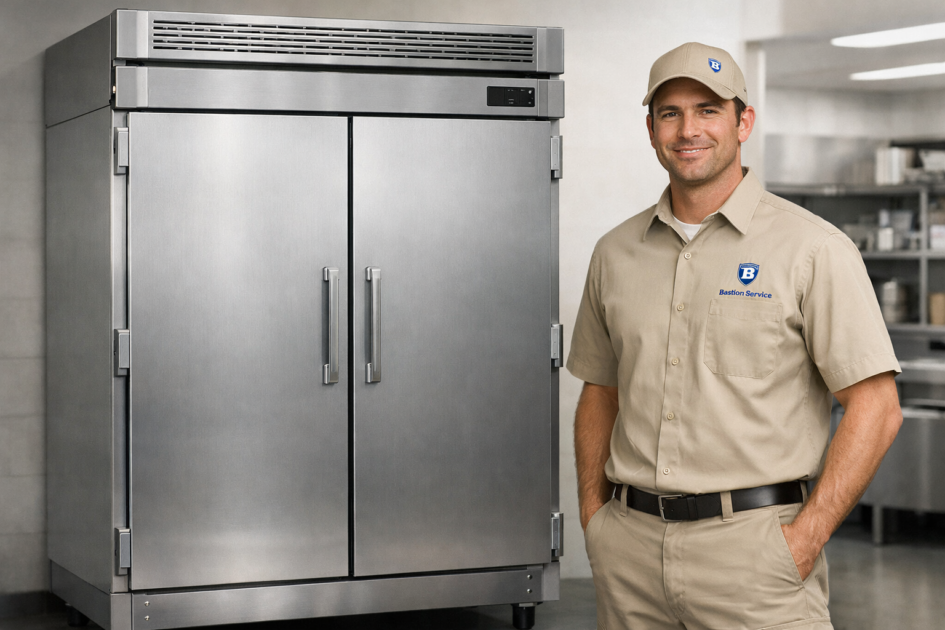
Bastion Service works with Los Angeles businesses that rely on Traulsen refrigeration for daily operations, with repair visits centered on symptom pattern, operating condition, and the urgency of the downtime. That service-focused approach helps determine whether the issue is isolated to airflow, controls, drainage, fans, door sealing, or deeper cooling performance loss.
Common Traulsen refrigerator problems and what they may mean
Cabinet temperature is too warm
If the cabinet is not holding temperature, several different failures may be involved. Restricted condenser airflow, weak evaporator fan performance, control board faults, sensor inaccuracies, door gasket leakage, compressor problems, and refrigerant-side issues can all produce a warm interior. Because the symptom looks similar across very different failures, testing matters more than guessing.
In a busy kitchen, hotel, or food-service workspace, a refrigerator that is only slightly warm can still create major problems. Product may need to be moved, staff may adjust settings repeatedly, and the unit may begin running longer than normal in an attempt to recover. That pattern usually means service should be scheduled before inventory loss or broader component strain develops.
Items are freezing inside the refrigerator section
A Traulsen refrigerator that starts freezing product instead of cooling evenly often points to an airflow or sensing problem. Faulty temperature sensing, inconsistent fan operation, control issues, or poor circulation inside the cabinet can create cold spots that affect only certain shelves or zones.
This symptom is easy to overlook because the equipment is still “cold,” but it often signals that the refrigerator is no longer regulating properly. If staff are shifting products around the cabinet to avoid freezing, the unit is already showing a performance problem that should be diagnosed.
Unit runs constantly or cycles irregularly
Long run times usually indicate that the refrigerator is struggling to maintain target temperature. Dirty coils, poor ventilation, worn gaskets, frequent warm-air intrusion, fan motor issues, or declining cooling efficiency can all cause the system to run harder than it should. Short cycling can point to control, electrical, or component stress problems.
Either pattern increases wear over time. If a Traulsen refrigerator suddenly sounds like it is always on, or if it starts turning on and off more frequently than usual, the change in behavior is often just as important as the temperature symptom itself.
Water leaks or moisture around the cabinet
Water on the floor or inside the cabinet may come from a blocked drain line, condensation issue, gasket leakage, or frost-related airflow problems. In some cases, ice buildup interferes with normal drainage and leads to intermittent leaks that seem to come and go.
Leaks should not be treated as a minor housekeeping issue. Moisture can affect surrounding flooring, create slip hazards, and signal a cooling or defrost problem that will continue getting worse if the underlying cause is not corrected.
Frost buildup inside the refrigerator
Frost where it should not be is often tied to humid air entering the cabinet, door seal failure, circulation problems, or defrost-related faults. Excess frost can restrict airflow and reduce temperature consistency, which then creates a second layer of cooling complaints such as warm sections, slow recovery, or unusual run times.
If frost is returning soon after staff remove it, the unit likely needs repair rather than another manual cleanup. Repeated frost is usually a symptom of an active mechanical or control problem.
Noise, alarms, or erratic controls
Buzzing, rattling, clicking, repeated alarms, or inconsistent display readings can all indicate developing trouble. Fan motors, loose hardware, relays, sensors, and electronic controls are common sources of these complaints. Some noises are harmless, but new or worsening sounds paired with temperature issues should be taken seriously.
An alarm that keeps coming back is especially important because it usually means the refrigerator is detecting an operating condition outside its normal range. Even if the cabinet appears to recover temporarily, recurring alarms are a strong reason to book service.
Why symptom-based diagnosis matters
With Traulsen refrigeration, the visible symptom is not always the failed part. A warm cabinet does not automatically mean compressor failure, and frost does not always point to a single defrost component. The same complaint can come from different systems, and more than one issue may be present at the same time.
That is why repair planning should start with how the unit is behaving: whether temperature drift is constant or intermittent, whether one section is affected more than another, whether alarms are tied to recovery periods, and whether airflow seems weak or obstructed. Those details help narrow the fault and reduce unnecessary parts replacement.
Signs it is time to schedule service
It is usually time to schedule Traulsen refrigerator repair when the unit cannot maintain a stable holding temperature, when product begins freezing unexpectedly, when alarms repeat, when water or frost keeps returning, or when the refrigerator is running harder than normal. These conditions rarely correct themselves, and continued use can put more stress on the cooling system and related components.
- Temperature readings drift even after settings are adjusted
- Staff notice warm spots or freezing in specific areas of the cabinet
- The refrigerator takes too long to recover after doors are opened
- Condensation, leaks, or ice buildup appear repeatedly
- Fans, controls, or alarms behave inconsistently during normal use
If staff are relying on workarounds such as rotating product constantly, placing items only on certain shelves, wiping up recurring water, or resetting alarms to get through the day, the equipment is already signaling a need for repair attention.
What businesses can prepare before a repair visit
A few details can make diagnosis faster and more useful. If possible, note the temperature pattern, whether the issue affects the whole cabinet or one area, how long the problem has been happening, and whether any alarms or display codes have appeared. It also helps to know if the symptom is constant or mainly shows up during peak use.
During service, technicians often need a clear picture of how the refrigerator performs under real conditions, not just whether it powers on. Information about door usage, recent cleaning, unusual noise, or repeated frost and leak patterns can help connect the complaint to the likely failure.
Repair or replacement: how the decision is usually made
Many Traulsen refrigerator problems are repairable, especially when the issue involves fan motors, sensors, controls, gaskets, drainage faults, or airflow restrictions. If the cabinet structure is still in good shape and the equipment remains a fit for the operation, repair is often the more practical path.
Replacement becomes a more serious consideration when the refrigerator has repeated major failures, persistent cooling decline, extensive wear, or downtime that no longer makes sense for the business. The decision usually depends on the actual fault, the condition of the cabinet and refrigeration system, and how critical that unit is to daily workflow.
Traulsen refrigerator service in Los Angeles with operations in mind
For businesses in Los Angeles, refrigerator repair is not just about restoring cooling in a general sense. It is about protecting product, limiting disruption, and making a sound decision on the next step as quickly as possible. When a Traulsen unit shows signs of temperature instability, airflow trouble, leaks, frost, or repeated alarms, scheduling service based on the specific symptoms is the best way to move from downtime to a workable repair plan.


