





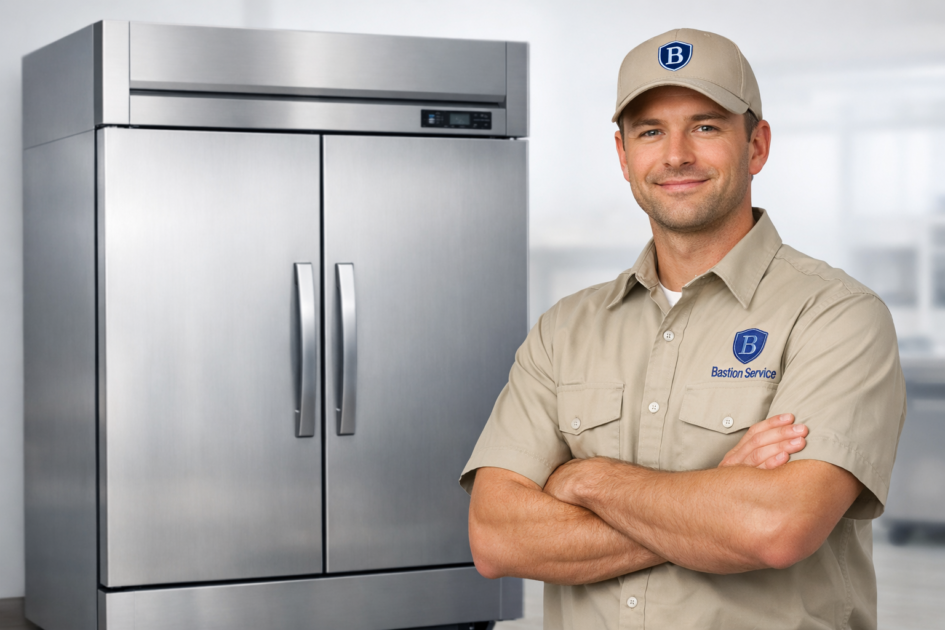
Turbo Air refrigerator problems can interrupt storage temperatures, slow kitchen or prep workflows, and create unnecessary pressure on staff trying to keep product protected during the day. In Brentwood, service is most useful when the visit is centered on the exact complaint the unit is showing in real operating conditions, whether that is a warm cabinet, uneven cooling, ice buildup, leaking water, or a refrigerator that runs constantly without recovering properly. Bastion Service helps businesses identify the cause, understand the repair scope, and schedule the next step based on downtime risk and equipment condition.
Related commercial service paths in Brentwood include Turbo Air Commercial Repair in Brentwood, Commercial Refrigerator Repair in Brentwood, and Turbo Air Freezer Repair in Brentwood.
Common Turbo Air Refrigerator Problems
Not holding temperature
If the cabinet is running warm or drifting above its set range, several faults may be possible. Dirty condenser coils, restricted airflow, evaporator fan failure, a weak door seal, sensor errors, control faults, or sealed-system issues can all show up as the same general complaint. A refrigerator that cools somewhat but does not pull down consistently often needs more than a quick setting adjustment.
This symptom matters most when staff notice product temperatures becoming harder to manage during busy periods, after routine door openings, or toward the warmest part of the day. If the unit cannot recover normally, repair should be scheduled before the problem affects inventory or daily operations more seriously.
Frost or ice buildup inside the cabinet
Frost on interior panels, around the evaporator area, or near the door opening usually points to airflow or moisture-entry problems. Worn gaskets, doors that do not close squarely, defrost component failure, or a fan issue can all contribute. As frost builds, airflow drops, and the refrigerator may begin acting like it has a major cooling failure even when the root cause started elsewhere.
When ice accumulation keeps returning after cleanup, that is a sign the refrigerator needs diagnosis rather than repeated manual defrosting. Ongoing frost can increase run time, reduce available storage performance, and make temperature instability worse.
Water leaking under or inside the refrigerator
Water around a Turbo Air refrigerator may come from a blocked drain, condensate overflow, ice melting in the wrong place, or a cabinet that is no longer draining correctly. In some cases, leaking begins after frost buildup has already been affecting operation for some time. What looks like a simple water issue may actually be tied to a larger refrigeration or defrost problem.
Leaks should be addressed promptly because they can create cleanup problems, affect surrounding flooring, and signal conditions that usually do not improve on their own.
Noisy operation or constant running
Grinding, buzzing, rattling, or unusually loud fan noise can indicate motor wear, blade interference, loose mounting, compressor strain, or heavy airflow restriction. A refrigerator that seems to run all day without satisfying temperature demand is often working under stress. Even if the cabinet still feels cool, long run cycles can point to declining performance.
When noise changes suddenly or the unit begins cycling abnormally, it is worth scheduling service before a smaller mechanical issue leads to a more disruptive failure.
Why Symptom-Based Diagnosis Matters
Turbo Air refrigerators can show the same outward symptom for very different reasons. A warm cabinet, for example, may be caused by a door gasket problem, sensor drift, a failed evaporator fan, a frosted coil, poor condenser airflow, or sealed-system weakness. Replacing one visible part without confirming the full cause can lead to repeat calls, unnecessary expense, and more lost time.
That is why the repair decision should be based on how the refrigerator is actually performing, how long the issue has been present, and whether related wear is already affecting other components. For businesses in Brentwood, the goal is not just getting the unit running in the moment, but restoring stable operation that supports normal workflow.
Signs Service Should Be Scheduled Soon
- The refrigerator is no longer maintaining a stable holding temperature.
- Staff are adjusting controls repeatedly to keep the cabinet usable.
- Frost returns quickly after being cleared.
- Water is pooling under the unit or appearing inside the cabinet.
- Fan noise, rattling, or compressor sound has changed.
- The cabinet struggles to recover after ordinary door openings.
- The unit runs longer than normal with little improvement in cooling.
Any of these patterns can indicate a problem that is getting more expensive with time. Early service often helps limit secondary issues such as compressor strain, heavier frost buildup, or temperature inconsistency that spreads across the full cabinet.
How Ongoing Use Can Increase Downtime Risk
A refrigerator does not have to stop completely to become a serious operational problem. Units that still run while cooling poorly often place added strain on motors, controls, and refrigeration components. If airflow is blocked, if the door is not sealing well, or if frost is restricting circulation, the system may run harder for longer periods with less useful cooling in return.
In Brentwood, businesses relying on refrigerated storage often feel the impact first through slower recovery, less confidence in product holding conditions, and staff workarounds that interrupt routine tasks. Delaying service can turn a contained repair into a broader issue involving multiple components or a longer outage window.
Repair Versus Replacement Considerations
Many Turbo Air refrigerator issues are still worth repairing when the cabinet is structurally sound and the fault is limited to items such as fan motors, sensors, controls, gaskets, defrost parts, drainage components, or other serviceable refrigeration parts. Replacement becomes a more serious consideration when there are repeated cooling complaints, multiple major failures, or signs that the unit may not return to reliable operation even after the immediate repair is made.
The decision is usually clearest after testing confirms both the current fault and the overall condition of the refrigerator. For a business, that means weighing repair cost against expected reliability, interruption to operations, and the likelihood of stable performance after service is completed.
What to Have Ready Before a Service Visit
Helpful details can speed up diagnosis and improve repair planning. If possible, note when the problem started, whether it is constant or intermittent, what temperatures staff have observed, and whether the issue appears after loading, cleaning, or heavy door use. It also helps to mention visible frost, standing water, control display behavior, unusual sound changes, or any recent resets or setting changes.
If the model information is available and the refrigerator can be safely accessed, that can also reduce delays during the visit. The more specific the symptom history, the easier it is to focus on the most likely causes first.
Service-Focused Support for Brentwood Businesses
Turbo Air refrigerator repair in Brentwood is ultimately about protecting uptime, product storage, and day-to-day workflow. When a unit starts running warm, leaking, icing up, or sounding abnormal, the best next step is to schedule service based on the actual symptom pattern rather than wait for a full shutdown. A repair visit focused on diagnosis, component condition, and realistic next steps helps businesses make faster decisions and return the refrigerator to dependable use with less disruption.


