
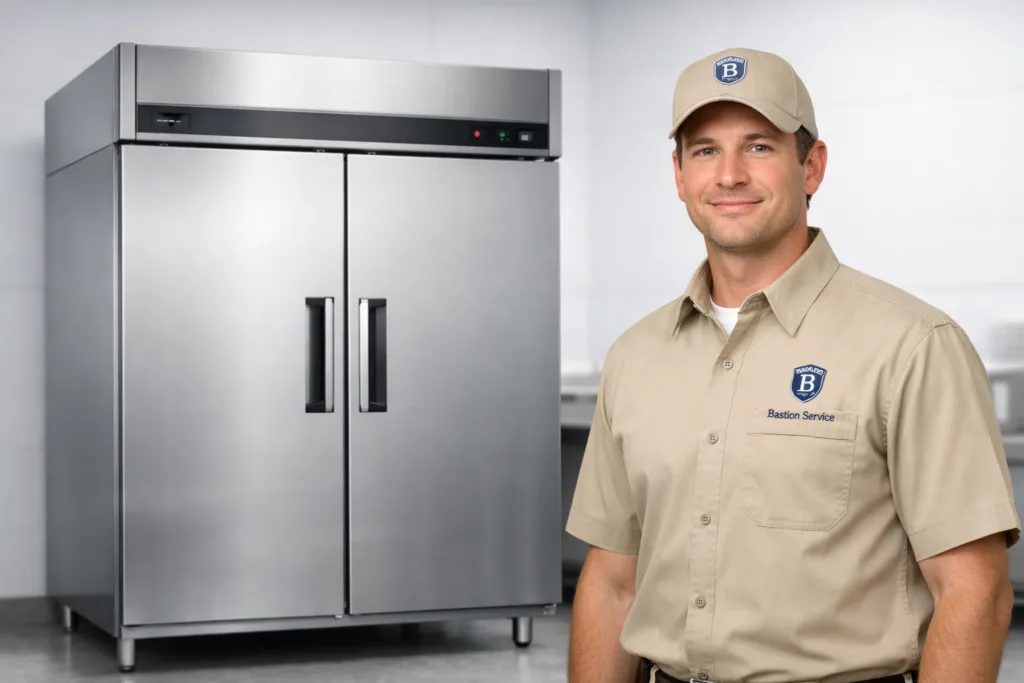




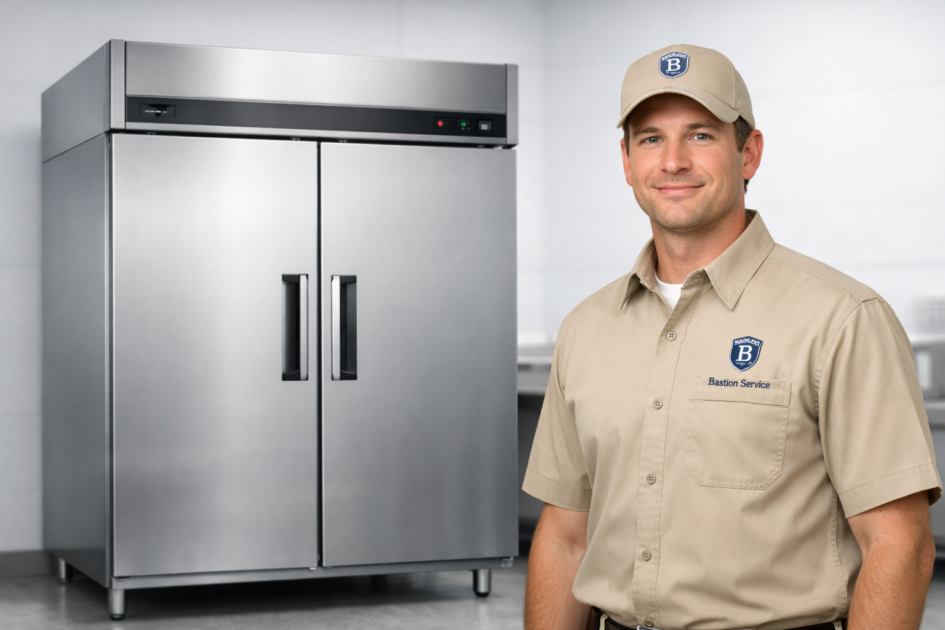
Freezer trouble can disrupt inventory, prep timing, and daily workflow long before the unit stops entirely. When a Turbo Air freezer starts running warm, building frost, leaking, or making unusual noise, the most useful next step is service that ties the symptom to the likely failure area and schedules repair based on downtime risk. Bastion Service helps businesses in Brentwood identify what is affecting freezer performance, whether the issue appears related to airflow, controls, door sealing, defrost operation, or the refrigeration system itself.
Related commercial service paths in Brentwood include Turbo Air Commercial Repair in Brentwood, Commercial Freezer Repair in Brentwood, and Turbo Air Refrigerator Repair in Brentwood.
Why a Turbo Air freezer may stop holding temperature
A freezer that is not staying cold enough does not always have a single obvious cause. In many cases, the cabinet is still running, fans may still be moving air, and the problem shows up first as soft product, longer run times, or slow recovery after the door opens. That pattern usually means the unit needs diagnosis rather than another control adjustment.
Common causes include restricted condenser airflow, evaporator fan problems, sensor or thermostat issues, defrost failures, poor door sealing, ice blocking air movement, or compressor and refrigerant-related problems. Similar symptoms can come from very different faults, so the repair plan should be based on testing and inspection rather than guesswork.
Signs the temperature problem is getting worse
- Product is softer than normal even though the freezer is still running
- The cabinet takes too long to pull down after loading or restocking
- Temperatures improve overnight but drift during active business hours
- The unit runs almost constantly with little recovery
- Staff are repeatedly adjusting settings without lasting improvement
Frost buildup, ice accumulation, and airflow problems
Heavy frost inside a Turbo Air freezer often points to an issue that affects both temperature stability and efficiency. Ice can form around the evaporator area, on interior panels, or near the door opening when moisture is getting into the cabinet or when the defrost system is not clearing buildup the way it should.
As frost thickens, airflow can drop off and the freezer may begin struggling to maintain temperature across the entire cabinet. Some areas may seem colder than others, and product near the front or upper sections may be affected first. A door gasket that does not seal well, a door that is not closing fully, or a defrost component failure can all create this pattern.
What frost can indicate
- Warm air entering through a worn gasket or misaligned door
- Defrost system components not cycling properly
- Evaporator airflow being reduced by ice buildup
- Moisture intrusion from frequent opening during busy periods
- Drain-related issues that allow ice to build where it should not
Fan noise, nonstop running, and short cycling
A Turbo Air freezer that suddenly sounds louder or behaves differently is often giving an early warning. Buzzing, rattling, clicking, scraping, or strong fan noise can point to ice interference, worn fan motors, mounting vibration, compressor starting trouble, or a control issue that is affecting normal operation.
Short cycling is another symptom that should not be ignored. If the freezer starts and stops too often, it may be reacting to a faulty control component, unstable operating conditions, or a mechanical issue that is preventing normal performance. On the other hand, a freezer that seems to run nonstop may be trying to compensate for heat gain, poor airflow, a defrost problem, or a refrigeration fault.
Either pattern can raise operating stress and increase the chance of a larger breakdown if service is delayed.
Leaks, moisture, and door seal concerns
Water on the floor near a freezer is not just a nuisance. It can signal a drain problem, excess condensation, ice melting in the wrong area, or a door seal issue that is allowing warm, humid air into the cabinet. In a busy kitchen, food-service operation, hotel, or other business setting, floor moisture also creates a safety concern for staff moving quickly around equipment.
Door-related issues are especially easy to underestimate. A gasket that looks only slightly worn can still allow enough air infiltration to create frost, longer run times, and uneven box temperatures. Hinges, alignment, and door closure all matter because even a small sealing problem can keep a freezer from operating normally.
What a service visit should help you determine
The point of freezer repair is not to swap parts until the symptom changes. A productive visit should narrow the problem to the system that is actually failing and clarify how urgent the repair is for business operations in Brentwood.
That usually includes answers to questions such as:
- Is the freezer currently safe to keep using?
- Is product at risk if operation continues through the next shift?
- Is the fault isolated to one component or part of a broader performance decline?
- Will repair likely restore stable operation, or is replacement planning more realistic?
- Should the unit be taken out of rotation until work is completed?
When to schedule repair sooner rather than later
Some issues can wait for a planned service window. Others should be addressed quickly because continued operation may increase wear, raise the chance of product loss, or turn a manageable problem into a major failure.
Priority service is usually warranted when:
- The freezer is not maintaining a stable low temperature
- Ice buildup is visibly restricting airflow
- The compressor is struggling to start or sounds abnormal
- Fan operation is inconsistent or noticeably louder than normal
- Water is collecting around the unit
- The cabinet has recurring alarms or repeated recovery delays
If staff are compensating by moving product, forcing doors shut, clearing ice manually, or changing settings throughout the day, those are signs the underlying fault is not resolved. Service at that stage is often about preventing escalation as much as restoring normal cooling.
Repair or replace: how businesses usually make the call
Not every Turbo Air freezer problem points to replacement. Many issues involving gaskets, fan motors, controls, sensors, drains, or defrost components can be resolved effectively when the cabinet and core system are otherwise in good shape. In those cases, targeted repair may return the unit to stable operation without broader investment.
Replacement becomes more likely when the freezer has repeated temperature reliability problems, multiple failing components, signs of major system wear, or a pattern of downtime that keeps disrupting operations. The right decision depends on the age and condition of the unit, the severity of the current fault, and how critical that freezer is to the business day.
For many businesses in Brentwood, the most useful approach is to base that decision on present condition and repair scope rather than on symptoms alone.
Preparing for a Turbo Air freezer repair appointment
Before service, it helps to note how the problem appears during actual use. Knowing whether the freezer struggles after loading, during peak hours, after defrost, or throughout the entire day can make diagnosis more efficient. It is also helpful to watch for patterns such as noise changes, visible frost location, door closure problems, and whether one section of the cabinet is performing differently from another.
If product temperatures are already becoming a concern, businesses should prepare for temporary storage or limited-use decisions until the unit is evaluated. That kind of planning can reduce disruption and help repair move forward faster once the fault is identified.
When a Turbo Air freezer in Brentwood starts showing temperature swings, frost buildup, leaks, airflow issues, or unusual operating behavior, timely service helps protect product and reduce avoidable downtime. The best next step is to have the unit inspected based on the exact symptoms, determine whether continued use is reasonable, and move ahead with repair scheduling that fits the urgency of the problem.


