
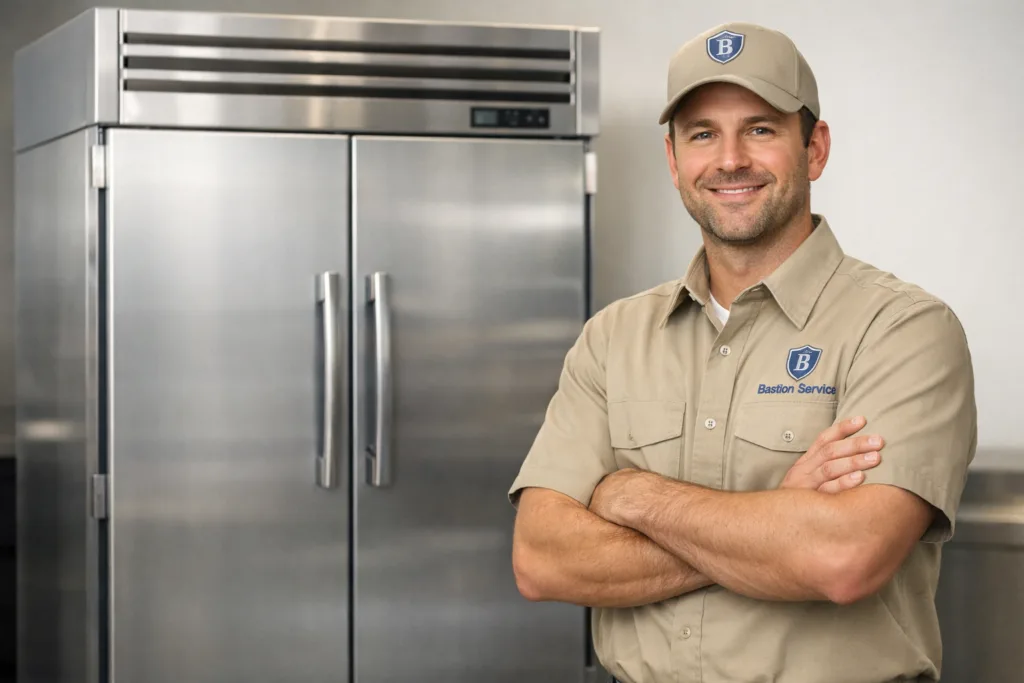





When a True refrigerator starts drifting out of range, leaking, icing up, or sounding different than normal, service should focus on protecting inventory and getting the unit back into stable operation with as little disruption as possible. In Brentwood, businesses often need more than a quick part swap—they need the problem traced to the actual source so repair scheduling, temporary workarounds, and downtime decisions are based on what the equipment is really doing.
Related commercial service paths in Brentwood include True Commercial Repair in Brentwood, Commercial Refrigerator Repair in Brentwood, and True Freezer Repair in Brentwood.
Bastion Service helps businesses in Brentwood evaluate True refrigerator issues by matching the symptom pattern to likely failures in airflow, controls, fans, door sealing, drainage, or cooling performance. That makes it easier to decide whether the unit can remain in use briefly, whether loading should be reduced, and which repair path is most likely to restore reliable operation.
Common True refrigerator symptoms and what they often mean
Cabinet temperature is too warm or keeps fluctuating
A warm cabinet does not always point to one failed part. Temperature problems can come from dirty condenser coils, poor ventilation around the unit, weak evaporator or condenser fan operation, sensor inaccuracies, control faults, gasket leaks, or declining compressor performance. If the refrigerator cools somewhat but struggles during busy periods, the issue may be tied to heat load, repeated door openings, or airflow restrictions inside the cabinet.
Temperature swings matter because product may appear protected while the cabinet is actually recovering too slowly. A refrigerator that reaches setpoint eventually but cannot hold it under normal use still needs attention before the condition worsens.
Frost buildup, ice formation, or condensation
Frost on interior panels, ice around the evaporator area, or recurring moisture can indicate door-seal leakage, defrost problems, blocked airflow, drainage issues, or controls that are not cycling correctly. In a busy kitchen, prep area, or service line, even a small air leak can turn into heavy frost when humidity and door traffic increase.
Moisture problems should not be dismissed as cosmetic. Ice buildup can interfere with airflow and fan movement, while condensation can affect surrounding surfaces and create repeated cleanup issues for staff.
Refrigerator runs constantly or cycles on and off too often
If a True refrigerator rarely shuts off, it may be compensating for restricted coil airflow, poor gasket sealing, hot surrounding conditions, or reduced cooling capacity. Short cycling can suggest electrical faults, control problems, overload conditions, or compressor stress. Either pattern increases wear and can turn a manageable issue into a larger repair if the unit is pushed through daily use without inspection.
Unusual noise, rattling, or vibration
Changes in sound can come from fan motors, loose panels, blade interference, mounting issues, compressor strain, or vibration caused by uneven placement. Noise by itself is not always a major failure, but noise combined with warm temperatures, slow recovery, or cycling changes is a strong indicator that service should be scheduled soon.
Water leaking inside or around the unit
Leaks often trace back to blocked or slow drains, ice melt from airflow or defrost issues, door openings that introduce excess moisture, or cabinet conditions that cause condensation to collect where it should not. A leak can seem minor at first, yet it often points to an operating problem that affects temperature stability at the same time.
Display readings, alarms, or controls do not seem accurate
If the display does not match actual product temperature, alarms repeat without a clear reason, or controls respond inconsistently, the cause may involve sensors, wiring, moisture intrusion, or control-board issues. These faults are important because they can hide the true condition of the cabinet and delay the right repair decision.
Why a symptom-based diagnosis matters
True refrigerator problems often overlap. A warm cabinet, for example, could come from airflow restriction, fan failure, control trouble, gasket leakage, or a deeper cooling-system issue. Frost can be caused by door sealing problems, drain faults, or control-related defrost failure. Without diagnosis, it is easy to replace a visible part while the actual cause remains unresolved.
For businesses in Brentwood, that matters because repeat visits and trial-and-error repairs extend downtime and can put product at risk. A focused service visit should separate maintenance-related conditions from component failure and identify whether continued operation is likely to increase damage.
When to schedule service instead of waiting
It makes sense to arrange repair when staff notice any of the following:
- Cabinet temperatures rising above normal range
- Slow recovery after door openings
- Frost or moisture returning after cleaning
- Doors not sealing tightly
- Constant running or repeated short cycling
- New noises or stronger vibration
- Water collecting under or inside the refrigerator
- Repeated alarms or unstable display readings
Waiting can increase strain on fans, controls, and the compressor, especially when the unit is already working harder to maintain temperature. If product protection is a concern, reduce door openings, avoid overloading, and have the refrigerator assessed before the symptom develops into a full cooling failure.
What technicians typically check on a True refrigerator
A useful service call should look at how the refrigerator is behaving under actual operating conditions, not just whether it powers on. Depending on the symptom, inspection may include:
- Cabinet temperature performance and recovery time
- Condenser coil condition and surrounding airflow
- Evaporator and condenser fan operation
- Door gaskets, hinges, and closing alignment
- Drain lines and signs of water obstruction
- Control response, sensors, and displayed temperature accuracy
- Frost patterns, ice accumulation, or visible airflow blockage
- Signs of compressor stress or electrical irregularities
This type of inspection helps determine whether the repair is straightforward, whether additional wear has developed around the original fault, and whether the refrigerator should stay in service while parts or follow-up work are arranged.
Repair or replace?
Many True refrigerator issues are repairable when the cabinet is still in good shape and the problem is limited to parts such as fan motors, sensors, controls, gaskets, drains, or airflow-related components. Repair is often the sensible option when the unit still fits the operation and the failure is isolated.
Replacement becomes a more serious consideration when there are repeated breakdowns, major cooling-system decline, severe cabinet wear, or repair costs that no longer make sense relative to the unit’s condition. The decision usually comes down to how much downtime the business can absorb, how sensitive the stored product is, and whether the refrigerator is likely to return to stable service after the identified repair.
Preparing for a service visit
Before repair is scheduled, it helps to note the exact symptom pattern. Staff can often speed up diagnosis by sharing when the problem started, whether it worsens at certain times of day, whether the unit is running constantly, and whether frost, leaks, or alarms appear at the same time. Photos of ice buildup, water pooling, or display errors can also help clarify intermittent issues.
If possible, avoid resetting the unit repeatedly before service arrives, since that can erase the operating pattern that points to the cause. Keeping doors closed as much as possible and reducing product load on a struggling cabinet may also help limit further temperature loss while the repair is being arranged.
Service-focused next steps for Brentwood businesses
If a True refrigerator in Brentwood is running warm, icing over, leaking, short cycling, or making new noise, the best next step is to schedule service before the problem affects more inventory or interrupts workflow. A repair visit should identify the source of the failure, explain whether the unit can continue operating safely, and outline the most practical path to restore dependable refrigeration with minimal downtime.


