
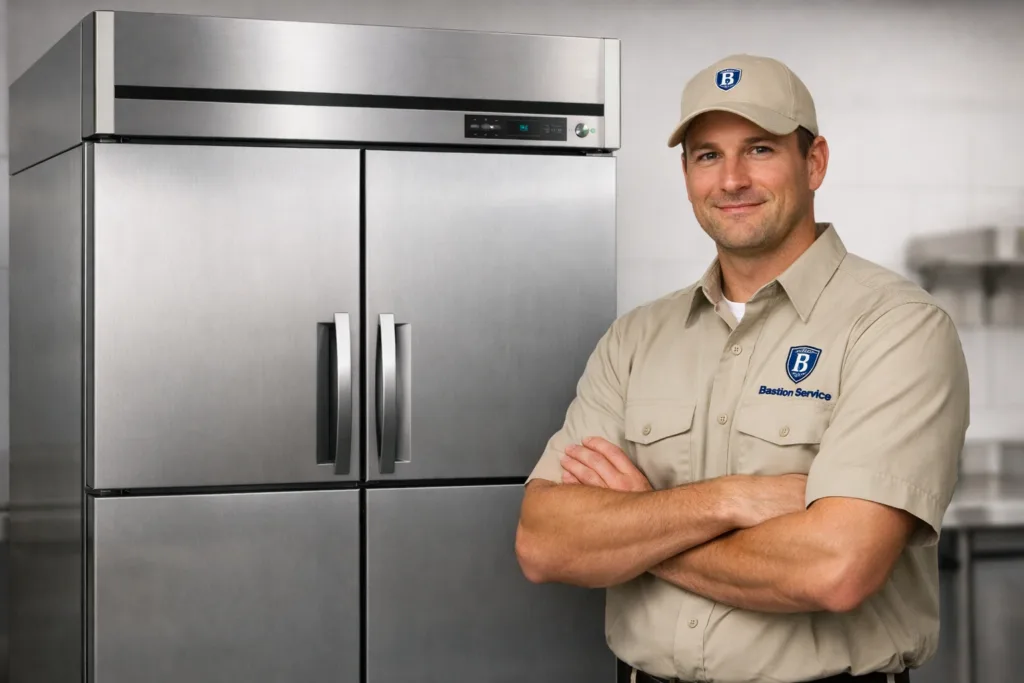




Freezer problems can disrupt prep schedules, put inventory at risk, and create avoidable pressure on staff when the unit should be supporting daily operations instead of slowing them down. For a Turbo Air freezer showing temperature drift, frost buildup, fan noise, leaks, or slow recovery in West Los Angeles, the most useful next step is service that focuses on what the equipment is actually doing, how urgent the downtime risk is, and whether repair is the right path based on the condition of the unit.
Related commercial service paths in West Los Angeles include Turbo Air Commercial Repair in West Los Angeles, Commercial Freezer Repair in West Los Angeles, and Turbo Air Fridge Repair in West Los Angeles.
Service decisions should be based on the symptom pattern
A freezer that is not freezing well does not always have the same kind of failure from one unit to the next. One cabinet may be struggling because of blocked airflow or ice on the evaporator. Another may have a door that is not sealing tightly. In other cases, the problem points to a sensor issue, fan motor problem, control fault, drain issue, or refrigeration-system weakness.
That is why service should begin with the operating symptoms rather than assumptions about which part needs to be changed. Bastion Service helps businesses in West Los Angeles narrow the problem down by looking at temperature behavior, run patterns, frost location, airflow, door condition, and overall equipment response before repair approval moves forward.
Common Turbo Air freezer symptoms and what they may mean
Not staying cold enough
If the cabinet is running but product is softening or the temperature will not pull down to the expected range, several causes are possible. Restricted airflow, dirty condenser conditions, evaporator ice, weak gaskets, failing fan motors, sensor problems, and sealed-system issues can all lead to poor freezing performance. When this happens, the freezer may run longer than normal and still fail to recover after routine door openings.
Frost buildup inside the cabinet
Frost on walls, shelves, product, or around the evaporator area often means warm air is entering where it should not, or defrost is not clearing moisture correctly. A damaged gasket, poor door alignment, incomplete door closure, defrost component failure, or drainage problem can all contribute. Heavy frost does more than look messy. It can reduce airflow, make temperatures uneven, and force the unit to work harder.
Fan noise, rattling, or unusual sounds
Buzzing, clicking, scraping, rattling, or louder-than-normal fan noise usually means something has changed mechanically or electrically. An evaporator fan may be hitting ice. A condenser fan motor may be weakening. Mounting hardware or panels may have loosened. Intermittent compressor-related noise can also signal a problem worth checking before a no-cool condition develops.
Water leaks or excess moisture
Water on the floor or moisture collecting where it should not can come from a blocked defrost drain, melting frost from poor airflow, or a door that is allowing warm humid air into the cabinet. In a working kitchen or storage area, that is not just a freezer issue. It can also create sanitation and slip concerns.
Slow recovery after door openings
Some freezers begin the day seemingly acceptable but struggle each time the door is opened during normal use. If the temperature takes too long to come back down, the problem may involve weak airflow, condenser performance, icing, gasket leakage, or declining refrigeration capacity. Slow recovery is often an early sign that the unit is operating with less margin than it should.
Why a warm freezer is not always a simple problem
Two freezers can show the same symptom and need very different repairs. A cabinet that is too warm might have a basic door-sealing issue, or it could be dealing with a failing fan circuit, a defrost problem, or low system performance. Replacing parts based only on the most obvious symptom can waste time while the real cause continues to affect operation.
A proper diagnosis helps answer questions that matter to the business:
- Is the problem related to airflow, controls, defrost, drainage, or refrigeration performance?
- Is the freezer still safe to keep in use while the repair is planned?
- Has the current problem already caused extra stress on other components?
- Is repair likely to restore stable operation, or is the unit showing broader decline?
Signs the problem is getting worse
Many freezer issues start small and become much more disruptive if they are ignored. A unit may begin with light frost or a slightly longer run time, then move into uneven freezing, constant operation, excessive ice, or complete temperature loss. Businesses in West Los Angeles often call for service after the symptoms have already affected workflow, but there are earlier warning signs that should not be overlooked.
- The compressor seems to run almost nonstop
- Ice returns quickly after manual clearing
- The door does not close firmly or pops back open
- There are warm spots in different areas of the cabinet
- The freezer restarts repeatedly or shuts down unexpectedly
- Noise levels have changed from the usual operating sound
When these symptoms appear together, the risk is not just inconvenience. Longer run times and restricted airflow can increase wear and push a repairable issue closer to a major failure.
Door gaskets, airflow, and frost problems are often connected
One of the most common repair situations on a freezer involves more than one visible symptom happening at the same time. For example, a worn gasket may let humid air into the cabinet. That added moisture can create frost around the evaporator or door opening. Once frost builds up, airflow drops. As airflow drops, temperatures become less stable and recovery slows down.
Because these issues feed into each other, it is important to identify the starting point instead of treating each symptom like a separate problem. That is especially true when staff notice both temperature inconsistency and visible ice in the same period.
When continued use may cause added damage
Some equipment can keep running in a weakened state for a while, but that does not always mean it should. If a Turbo Air freezer is running constantly, building heavy ice, showing uneven freezing, or cycling unpredictably, continued use may add stress to the compressor, fan motors, and controls. A freezer with poor airflow may also create the impression that it is still working when product protection is already slipping.
If frozen storage conditions are no longer stable, or if the cabinet is clearly operating outside normal patterns, scheduling repair sooner can help prevent a more expensive outage.
Repair or replace?
That decision depends on more than whether the freezer turns on. A structurally sound cabinet with an isolated failure involving a fan motor, gasket, sensor, control, drain, or defrost component is often a strong candidate for repair. On the other hand, repeated major breakdowns, poor cabinet condition, or signs of broader refrigeration-system decline may change the value of further investment.
For businesses in West Los Angeles, the best decision is usually the one that supports reliable operation over time rather than simply getting the unit running again for the shortest possible window.
Preparing for a service visit
Before repair is scheduled, it helps to note a few details about how the freezer has been acting. Useful observations include when the temperature problem started, whether frost appears in one location or throughout the cabinet, whether the noise is constant or intermittent, and whether the issue gets worse after heavy use. If staff have noticed recent door-closing problems, water on the floor, or product softening in specific sections, that information can make diagnosis more efficient.
It is also helpful to avoid repeated resets or improvised adjustments once the problem becomes clear. Temporary changes can mask the original symptom pattern and make the underlying fault harder to isolate.
Freezer repair focused on uptime in West Los Angeles
Turbo Air freezer repair should support operations, not add more uncertainty. When a unit starts missing temperature, forming excess frost, leaking, or making unusual noise, a service call should lead to a specific understanding of the fault and the next step needed to restore dependable performance. For businesses in West Los Angeles, timely diagnosis and repair planning can reduce downtime, protect stored product, and help keep the rest of the operation moving.


