
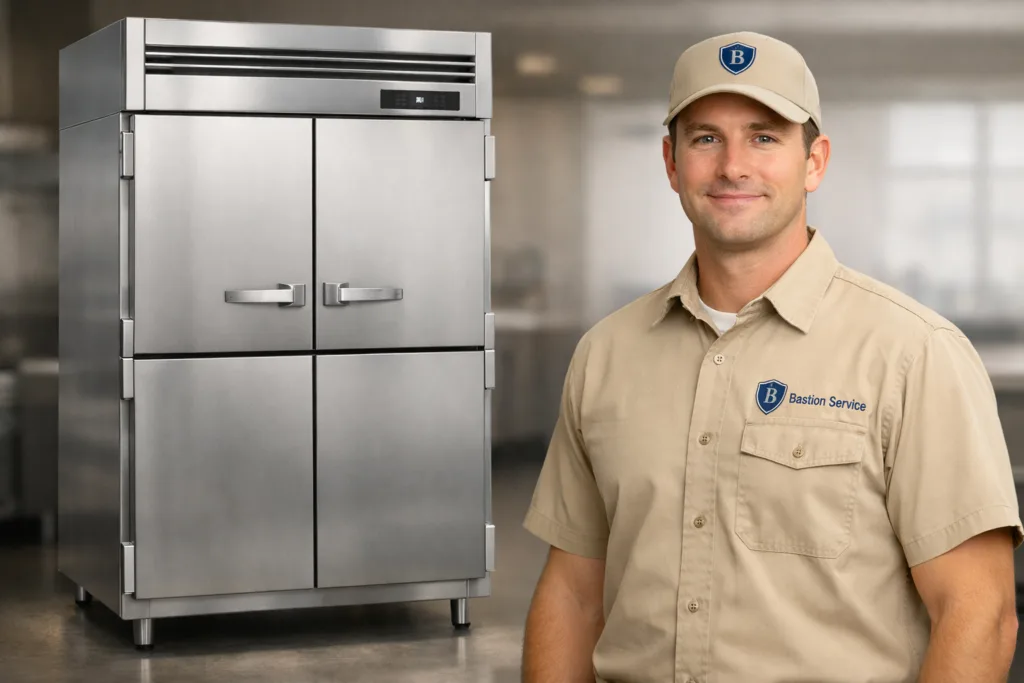




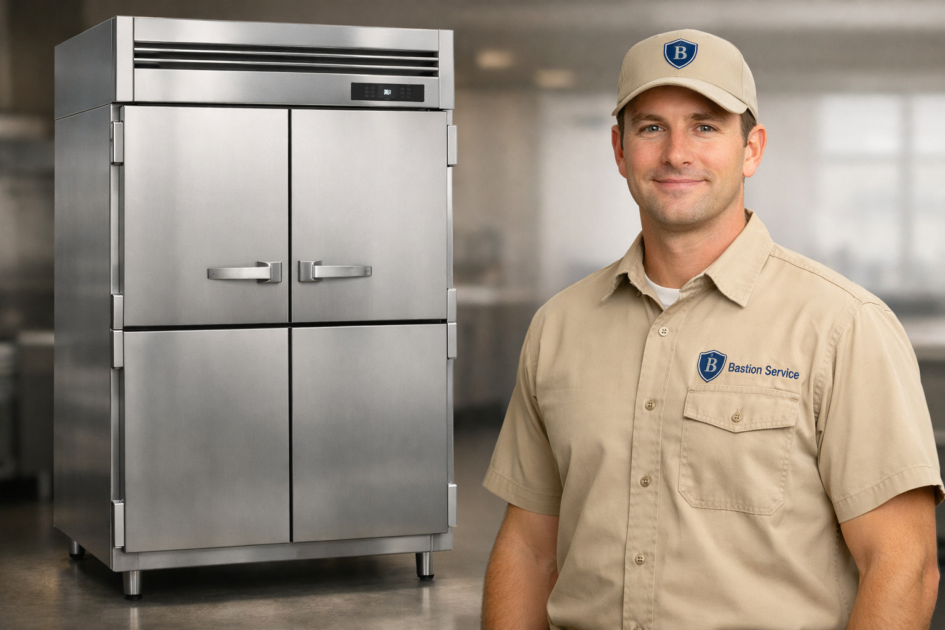
Freezer problems are easier to manage when service is scheduled around the actual symptom pattern instead of a guess. A Traulsen unit that runs warm, builds frost, leaks water, or makes unusual fan noise may have a control problem, an airflow issue, a door-sealing problem, or a refrigeration failure behind the same complaint. For businesses in West Los Angeles, the goal is to pinpoint the cause quickly so inventory protection, kitchen workflow, and daily storage reliability are not left to trial and error.
Related commercial service paths in West Los Angeles include Traulsen Commercial Repair in West Los Angeles, Commercial Freezer Repair in West Los Angeles, and Traulsen Fridge Repair in West Los Angeles.
Bastion Service provides Traulsen freezer repair in West Los Angeles by evaluating how the unit is performing under real operating conditions, checking the components most likely tied to the complaint, and helping the business understand whether the issue calls for immediate repair, short-term operational caution, or a larger equipment decision. That service-first approach matters when downtime affects staff routines and stored product at the same time.
Common Traulsen freezer symptoms and what they can mean
Traulsen freezers often show a group of symptoms rather than one simple failure. Looking at the combination of warming, frost, noise, moisture, and run pattern helps narrow the repair path more accurately.
Not freezing well or failing to hold set temperature
If the cabinet temperature drifts above the target range, the cause may involve restricted condenser airflow, weak evaporator circulation, sensor or control inaccuracies, door gasket leakage, or a refrigeration-side performance problem. Some units still seem acceptable during slow periods but fall behind once doors open more often, which usually means cooling capacity has dropped below normal operating demand.
This kind of issue should be checked early because temperature instability rarely stays isolated. Longer run times, slower recovery, and uneven storage conditions often follow.
Frost buildup inside the cabinet or around the evaporator area
Frost that keeps returning can point to failed defrost components, warm-air intrusion through worn gaskets, fan problems, or controls that are not managing defrost cycles correctly. Ice accumulation reduces usable airflow and can create temperature differences from one section of the cabinet to another.
In a busy work environment, frost is more than a visual nuisance. It can force the freezer to work harder, delay temperature pull-down, and eventually lead to broader cooling complaints.
Freezer runs constantly or starts and stops too often
A unit that seems to run all day may be compensating for heat load, poor coil condition, airflow restrictions, leaking doors, or declining refrigeration performance. Short cycling can suggest electrical faults, overheating components, or control-related shutdowns that interrupt normal operation.
Either pattern deserves attention because both can increase wear and make a freezer less predictable during the busiest parts of the day.
Fan noise, rattling, or weak airflow
Unusual fan sound may come from an evaporator fan motor issue, ice interference, loose mounting hardware, or airflow obstruction within the cabinet. Weak air movement can lead to hot and cold spots, product inconsistency, and a false impression that the unit is operating normally because one area still feels cold.
When airflow drops, the freezer may continue running without distributing temperature evenly, which is why noise and circulation complaints should not be ignored.
Water leaks, condensation, or wet areas near the unit
Moisture around a freezer can be tied to drainage problems, excess frost melt, gasket failure, or unstable cabinet temperatures that create abnormal condensation. Water on the floor also creates a practical problem for sanitation and safety in work areas where staff move quickly.
If leaking appears along with frost or warming, those symptoms are often connected and should be evaluated together.
Why symptom-based diagnosis matters
Many freezer complaints sound similar at first. A unit described as “running warm” could have a bad sensor, a fan issue, a defrost problem, or a more serious cooling-system fault. Replacing parts without identifying the actual source can add cost and leave the business with the same interruption a few days later.
A proper diagnostic process helps answer the questions that matter most: whether the issue is isolated or layered, whether continued operation is increasing risk, and what repair path makes sense for the freezer’s condition and role in daily operations.
Signs service should be scheduled promptly
- Cabinet temperature is rising above normal holding range
- Frost returns quickly after being cleared
- Recovery after door openings has become noticeably slower
- Fans are loud, inconsistent, or no longer moving air well
- Water is collecting under or inside the unit
- Alarms repeat or settings need frequent resets
- The freezer works overnight but struggles during active use
These patterns usually indicate a problem that is progressing, not correcting itself. Early service can reduce product loss, limit strain on major components, and keep a manageable repair from becoming a larger failure.
How door gaskets and airflow affect freezer performance
Door gasket wear is one of the most overlooked causes of unstable freezer operation. Even a small air leak allows moisture and heat into the cabinet, increasing frost, extending run times, and making temperature recovery slower after each opening. Over time, that added strain can affect how reliably the rest of the system performs.
Airflow matters just as much. If evaporator circulation is blocked by ice or reduced by a fan problem, the freezer may cool unevenly even though the control display appears close to normal. Businesses often notice this first when product in one section softens or when the cabinet seems cold near one area and warmer in another.
When continued use can make the problem worse
Some freezer issues become more expensive when the unit is left running without inspection. Heavy frost can block airflow further. A struggling compressor can overheat. Electrical components that cycle irregularly can fail more completely. Small gasket leaks can turn into recurring moisture and icing problems that affect both performance and surrounding work areas.
If staff are already monitoring the freezer more than usual, moving product around to find colder zones, or resetting alarms to get through the day, the equipment is already signaling that repair should not be delayed.
Repair or replacement: what businesses should weigh
Not every Traulsen freezer problem points to replacement. Many units can be restored effectively when the cabinet is still in solid condition and the failure involves serviceable parts such as fan motors, controls, defrost components, door gaskets, or other accessible items. In those cases, repair may provide the best operational value.
Replacement becomes a more realistic discussion when the freezer has a long pattern of breakdowns, persistent reliability issues after prior work, major deterioration, or repair costs that no longer match the remaining useful life of the unit. Age alone is not the only factor; repeat downtime and performance consistency often matter more.
What to expect from a useful service visit
A productive repair visit should do more than confirm that the freezer is not performing correctly. It should identify the likely failure source, check whether other components have been affected, and explain how the current condition relates to temperature control, airflow, frost development, and recovery time. That gives the business a realistic next step instead of uncertainty.
For West Los Angeles businesses, the value of service is not just in replacing a part. It is in restoring stable freezer operation with a repair plan that matches the actual problem, the urgency of the downtime, and the role the unit plays in daily workflow.


