
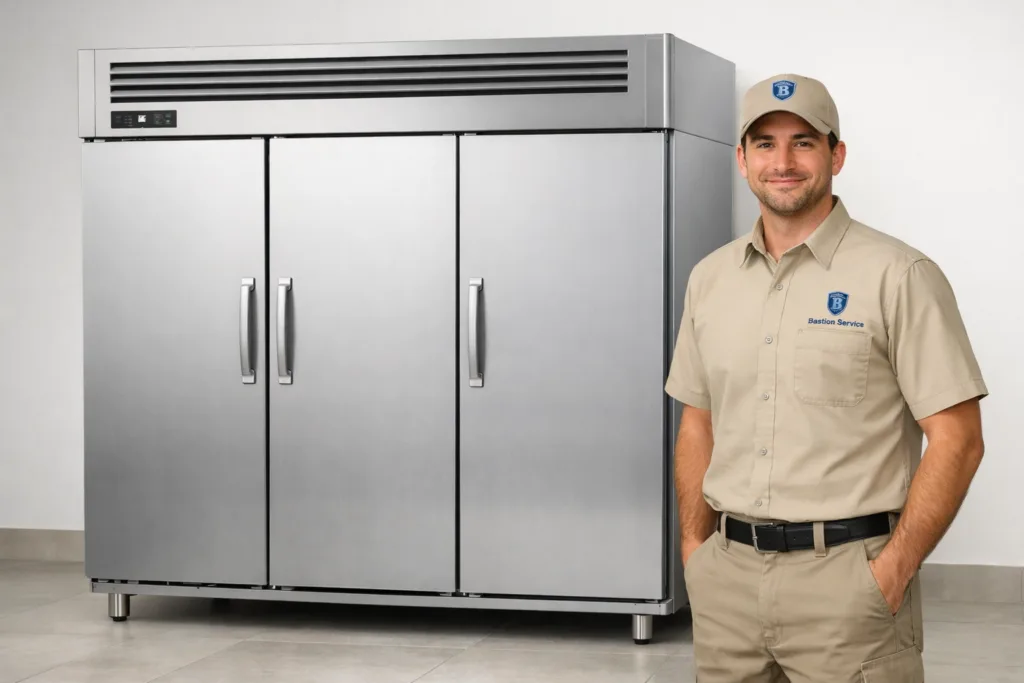




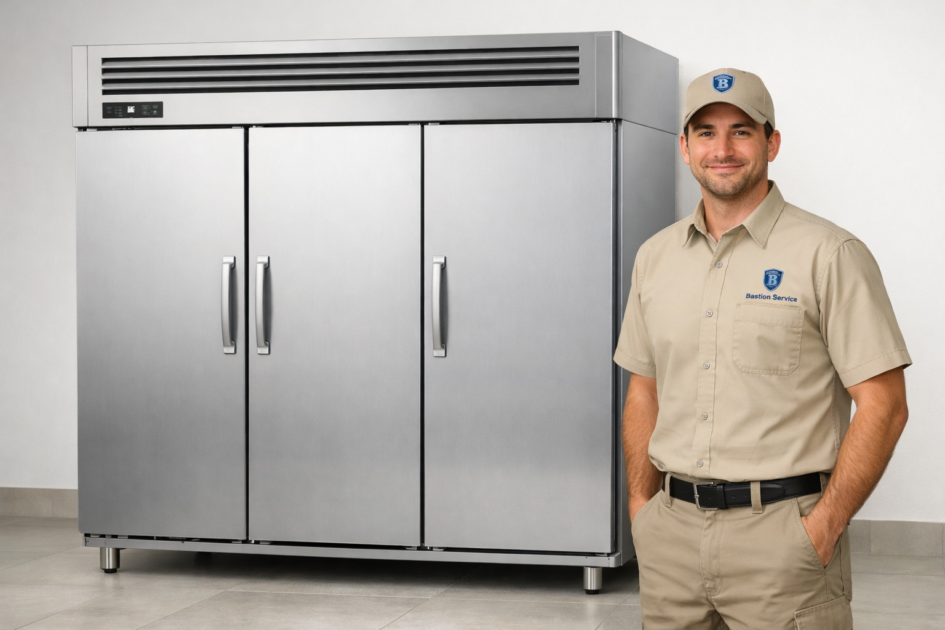
Equipment issues with a Turbo Air refrigerator or freezer can disrupt prep schedules, inventory control, and daily service long before the unit stops cooling entirely. When temperatures drift, frost spreads, or airflow drops off, the right response is to assess the symptom pattern, determine how urgently the equipment needs attention, and schedule repair based on operating risk. Bastion Service helps businesses in West Los Angeles troubleshoot Turbo Air refrigeration equipment problems and move toward repair with a service plan that fits the severity of the issue.
For specific equipment paths in West Los Angeles, review Turbo Air Fridge Repair in West Los Angeles, Turbo Air Freezer Repair in West Los Angeles, and Commercial Appliance Repair in West Los Angeles.
Turbo Air refrigerator and freezer issues that affect daily operations
Turbo Air refrigeration equipment is often expected to hold stable temperatures through repeated door openings, changing kitchen pace, and continuous use. When that stability changes, the impact is immediate: products may need to be moved, staff may spend more time checking temperatures, and managers may have to decide whether the unit can stay in service until repairs are completed.
For many West Los Angeles businesses, the biggest concern is not just that the cabinet feels warm. It is that performance becomes inconsistent. A refrigerator may cool in the morning and struggle later in the day. A freezer may maintain storage conditions overnight but recover too slowly after routine use. These patterns usually point to a repair issue that should be evaluated before it turns into a full outage.
Common Turbo Air refrigeration symptoms worth diagnosing early
Cabinet temperature running high
A refrigerator that no longer holds its target range or a freezer that softens product can have several possible causes. Airflow restrictions, evaporator frost, condenser problems, sensor or control issues, worn door seals, and refrigerant system performance loss can all lead to warm cabinet conditions. Because the symptom is shared across different faults, service decisions should be based on testing rather than guesswork.
If staff are adjusting settings more often than usual or noticing that temperatures fluctuate during normal use, that is often a sign the problem is no longer minor. Early repair can reduce the chance of product loss and help avoid a more disruptive shutdown later.
Slow temperature recovery after door openings
When a unit takes too long to pull back down after loading or routine access, it may still appear to be cooling while operating below expectations. This type of performance drop is easy to overlook at first, but it often signals declining efficiency, weak airflow, frost interference, or a control problem affecting normal cycling.
Slow recovery matters because the cabinet may spend more of the day outside the range your operation expects. That can create problems even if the unit has not yet failed completely.
Uneven cooling or weak airflow inside the cabinet
Warm zones, cold spots, or low air movement often indicate a circulation problem rather than a simple temperature setting issue. Fans, frost buildup, blocked air paths, or control-related interruptions can all change how cold air moves through the cabinet. In practical terms, this means one shelf may hold properly while another runs warm enough to create concern.
Uneven cooling is especially disruptive because it makes the equipment unreliable. Staff may not know where product can safely be stored, and rotating inventory becomes harder when cabinet conditions vary from one section to another.
Frost buildup on interior surfaces or around evaporator areas
Frost that keeps returning usually points to a system problem rather than normal operation. Defrost faults, door gasket leakage, moisture intrusion, airflow issues, and fan problems can all contribute to repeated ice accumulation. In freezers, heavy frost can limit airflow and reduce cooling performance. In refrigerators, it can interfere with normal operation and lead to additional stress on components.
If frost is building fast enough to affect storage space, fan movement, or door closing, the unit should be evaluated soon. What begins as a manageable frost issue can turn into a no-cool condition if airflow becomes restricted enough.
Water leaks or standing moisture
Water around the base of the unit or pooling inside the cabinet often points to drainage or condensation problems. A blocked drain line, defrost drainage issue, freezing where water should be clearing normally, or excess moisture entering the cabinet can all lead to visible leaking. This is not only a refrigeration concern; it can also create slip hazards and affect nearby flooring or equipment.
Leak problems are worth addressing early because they often continue alongside cooling performance issues. If the same unit is leaking and struggling with temperature control, the combined symptoms usually suggest the need for a thorough inspection rather than a surface-level fix.
Constant running, short cycling, or unusual noise
A Turbo Air unit that seems to run without stopping, cycles on and off too frequently, or becomes noticeably louder than normal is telling you something has changed in its operating pattern. Fans, compressor-related issues, mounting problems, ice interference, or control faults may all change how the unit sounds and how long it runs.
Noise by itself does not confirm the exact failure, but a change in sound combined with weaker cooling, frost, or temperature drift is often a strong sign that repair should be scheduled before the equipment becomes harder to keep in service.
How refrigerator and freezer symptom patterns differ
Refrigerator problems often show up first as inconsistent holding temperature, moisture, product temperature variation, or extended run times. Because refrigerators operate in a narrower range that is frequently opened and loaded, even modest airflow or door-seal problems can create noticeable instability.
Freezer issues more often become obvious through frost buildup, slow recovery, soft product, door sealing trouble, or heavy ice that interferes with airflow. A freezer may still appear cold while failing to recover properly, which is why symptom-based inspection matters. The unit may not be down yet, but it may no longer be operating in a way your business can rely on.
When to keep the unit in use and when to pull it from service
Some equipment can remain in limited use while waiting for repair, but that depends on the actual symptom and how stable the temperatures are. If a unit is only showing minor noise changes or an early-stage airflow issue, a technician may determine that short-term continued use is reasonable with careful monitoring. If temperatures cannot be stabilized, frost is choking airflow, or water leakage is creating a work-area problem, continued use may carry too much risk.
Businesses in West Los Angeles often need help making that call quickly. The key question is not simply whether the unit still turns on. It is whether it can perform consistently enough to support daily operations without increasing product, safety, or downtime exposure.
Repair planning based on urgency and operating impact
The most effective repair scheduling usually starts with the symptoms that affect operations first. A unit that is warm but still running may need urgent attention because inventory is at risk. A unit with repeated frost buildup may need service before airflow is blocked enough to shut the cabinet down. A leak may seem secondary at first, but it can point to a larger operating problem and create immediate conditions that need correction.
Service planning should account for:
- Whether the refrigerator or freezer is maintaining usable temperature
- How quickly performance is getting worse
- Whether the problem affects one cabinet zone or the entire unit
- Whether staff can safely continue using the equipment during the wait for repair
- How much disruption a longer failure would cause to inventory and workflow
Repair versus replacement decisions for Turbo Air equipment
Not every cooling problem means the unit should be replaced. Many Turbo Air issues involve serviceable components such as fan systems, controls, sensors, drainage parts, defrost-related parts, and other repairable faults. In those cases, repair may restore stable operation without the added cost and disruption of replacement.
Replacement becomes a more serious consideration when the equipment has repeated breakdowns, a broader history of reliability problems, or a repair scope that no longer makes sense for the age and condition of the unit. For businesses in West Los Angeles, that decision is usually based on a mix of repair cost, downtime exposure, and how critical the equipment is to the daily flow of work.
What to have ready when scheduling service
Providing a clear description of the symptoms helps move repair forward faster. Before scheduling, it helps to note whether the issue is affecting a refrigerator or freezer, whether the cabinet is warm all the time or only at certain points in the day, whether frost or leaking is present, and whether the sound or cycling pattern has changed. If staff have already moved product or reduced use of the unit, that information is also helpful because it shows how the problem is affecting operations in real time.
Even simple observations can help narrow the service path. A freezer that is icing up heavily and losing airflow presents a different repair picture than a refrigerator that is cooling unevenly with no visible frost. The more accurate the symptom description, the easier it is to prioritize the visit and evaluate the likely next steps.
Service support for West Los Angeles businesses
Turbo Air refrigeration problems are easier to manage when repair decisions are made before the equipment reaches a full failure point. If your refrigerator or freezer is showing warm cabinet conditions, airflow problems, recurring frost, water leakage, or unstable cycling, scheduling service is the practical next step. A symptom-based diagnosis helps determine what is failing, whether the unit can remain in use, and what repair path makes the most sense for your operation in West Los Angeles.


