
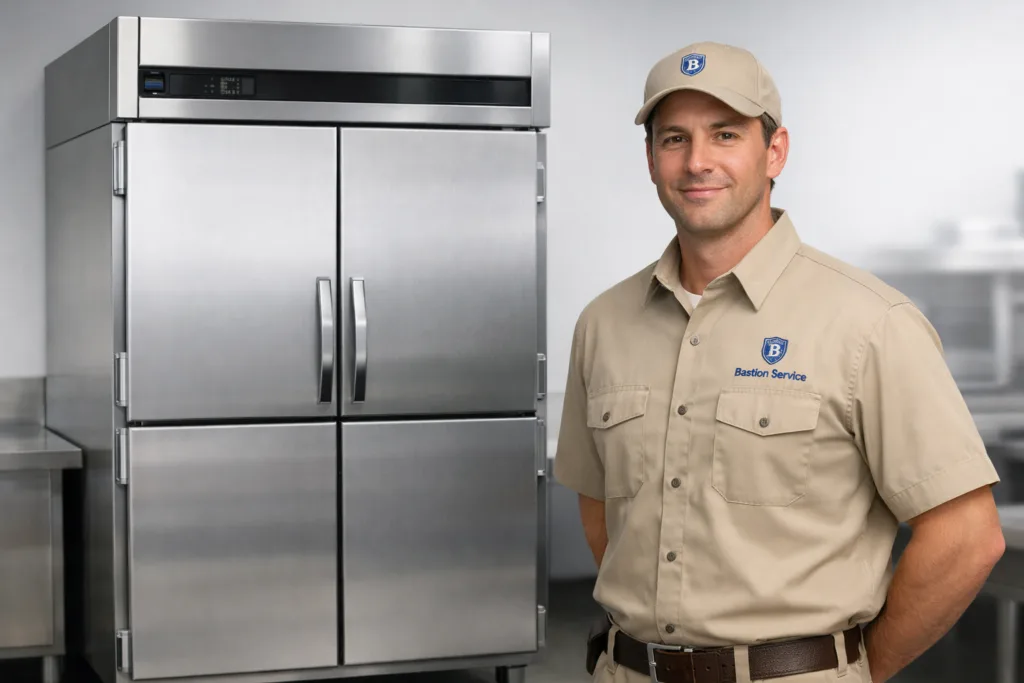




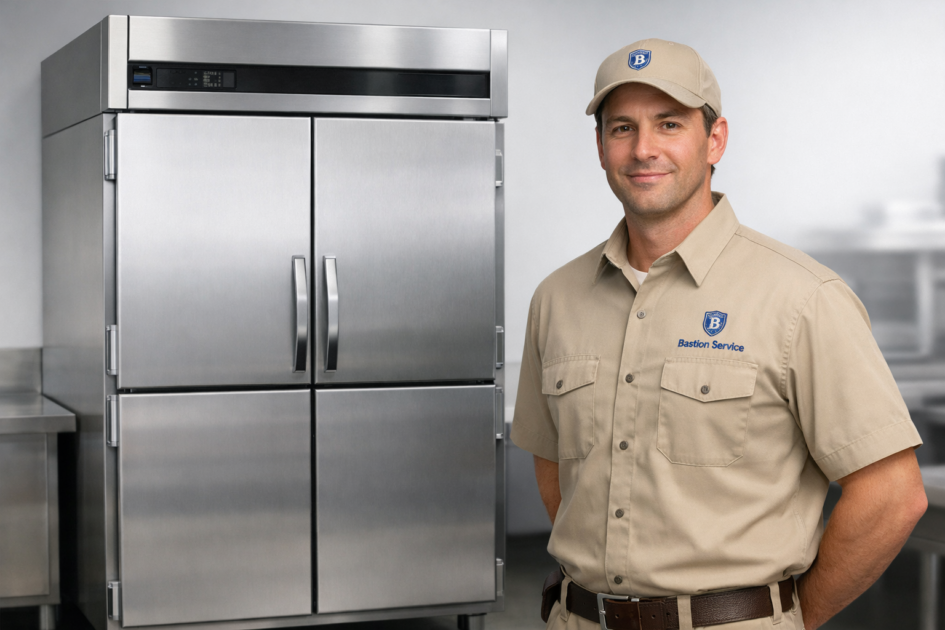
When a Traulsen freezer begins running warm, building frost, leaking, or making unusual fan noise during the workday, the most important next step is service that identifies the actual cause before inventory loss and equipment strain increase. For businesses in West Hollywood, freezer problems affect storage planning, staff workflow, and daily reliability, so repair scheduling should be based on the symptom pattern, operating condition, and how urgently the unit needs to stay in service.
Related commercial service paths in West Hollywood include Traulsen Commercial Repair in West Hollywood, Commercial Freezer Repair in West Hollywood, and Traulsen Refrigerator Repair in West Hollywood.
Bastion Service works with West Hollywood businesses to diagnose Traulsen freezer issues tied to temperature control, airflow, defrost performance, door sealing, controls, and component failure. A service visit should help determine whether the issue calls for a targeted repair, whether use should be limited until parts are replaced, and whether continued operation could lead to a more expensive breakdown.
Common Traulsen Freezer Problems
Freezer not staying cold enough
If the cabinet temperature is rising or product is softening, possible causes include restricted condenser airflow, evaporator fan failure, ice on the coil, sensor problems, control faults, refrigerant issues, or a compressor-related problem. In many cases, the freezer may still appear to run continuously, but that does not mean it is cooling correctly. Slow pull-down and poor temperature recovery are strong signs that service should be scheduled promptly.
Frost buildup inside the cabinet
Heavy frost often points to warm air entering the cabinet, a damaged door gasket, a door that is misaligned, a defrost system problem, or poor internal airflow. Frost is more than a cosmetic issue. It can block circulation, reduce usable storage space, interfere with door closure, and make the refrigeration system work harder than normal.
Water leaks or ice where it should not be
Water around the unit or ice forming in unusual areas can indicate defrost drainage issues, excess condensation from poor sealing, or ice accumulation that is melting during off cycles. Leaks should be checked early because they often appear alongside airflow or frost problems and can signal that the freezer is no longer managing moisture the way it should.
Loud fan noise or unusual operation sounds
Buzzing, rattling, scraping, clicking, or fan noise that has become noticeably louder can point to a failing fan motor, ice contacting the fan blade, loose components, or compressor start issues. Sound changes are useful diagnostic clues because they often appear before a full cooling failure. If the noise is new and temperature performance is also slipping, those two symptoms together usually justify a repair call.
Unit running constantly or cycling the wrong way
A freezer that rarely shuts off may be struggling with heat removal, sensing, airflow, or frost accumulation. A unit that starts and stops too frequently may have electrical, control, or compressor-start issues. Either pattern can shorten component life and increase operating costs, especially if staff are compensating by adjusting settings or limiting door openings to keep product cold.
Why Is My Traulsen Freezer Not Staying Cold Enough?
This symptom can come from several different failures, which is why testing matters more than guessing. A Traulsen freezer that is not staying cold enough may have a dirty condenser, weak fan performance, a defective temperature sensor, a control issue, a defrost problem causing coil ice, or a sealed-system problem affecting cooling capacity. The display temperature alone does not confirm which one is happening.
In business settings, the pattern around the temperature problem helps narrow the cause. If the freezer starts cold in the morning and drifts warm later, airflow or condenser performance may be part of the issue. If temperatures swing after door openings and recovery is very slow, fan, frost, or refrigeration performance may be involved. If one section of the cabinet stays colder than another, internal circulation problems are often worth checking first.
Symptom Patterns That Help Guide Repair Decisions
Many freezer failures begin with smaller warning signs before turning into a full shutdown. Watching for these patterns can help businesses in West Hollywood decide when the unit needs immediate service and when it may still be safe to use only in a limited way until diagnosis is completed.
- Soft product with no alarm: can indicate gradual cooling loss, sensor drift, or airflow restriction.
- Frost near the door opening: often suggests gasket wear, alignment problems, or repeated warm air intrusion.
- Heavy ice behind interior panels: may point to defrost failure or reduced airflow across the evaporator.
- Warm cabinet with loud fan noise: can mean ice is interfering with the fan or the motor is failing.
- Clicking at startup: may involve electrical supply, relays, or compressor-start components.
- Slow recovery after loading: can reflect reduced cooling capacity, blocked airflow, or a control-related issue.
These symptom combinations are useful because they connect visible problems to likely test paths. That makes it easier to decide whether the freezer can remain in rotation briefly or whether continued operation creates too much risk.
When Service Should Be Scheduled Right Away
Schedule Traulsen freezer repair as soon as you notice repeated temperature drift, unexplained alarms, increasing frost, water around the unit, abnormal fan sounds, or recovery times that are clearly getting worse. Waiting too long can turn a smaller repair into spoilage, downtime, or additional component damage.
Immediate attention is especially important if the freezer is outside normal holding range, the compressor is overheating, the door will not close properly, breakers are tripping, or the unit is no longer maintaining reliable product temperature even though the display seems normal. In those situations, continued use may cause more stress on the system and make the final repair more involved.
What a Service Visit Should Check
A useful repair appointment should not stop at the most visible symptom. On a Traulsen freezer, a complete diagnosis often includes checking temperature performance, evaporator and condenser airflow, frost pattern, defrost operation, door gasket condition, control response, fan motors, electrical components, and whether the freezer is recovering correctly after normal use.
That process matters because different failures can create the same complaint. A warm cabinet could be caused by airflow restriction, controls, ice buildup, or refrigeration performance. Excess frost could come from a bad gasket, a defrost issue, or a fan problem. Accurate testing helps avoid replacing parts that do not solve the root problem.
Repair or Replacement?
Many Traulsen freezer issues are worth repairing when the cabinet is still in solid condition and the failure is limited to parts such as fan motors, sensors, controls, defrost components, door hardware, or gaskets. In those cases, restoring proper temperature control and airflow can return the unit to dependable service without the disruption of replacement.
Replacement becomes a more serious consideration when the freezer has a long history of recurring cooling problems, major cabinet wear, repeated high-cost repairs, or a larger system failure combined with age and heavy daily use. The decision should take into account repair cost, downtime impact, parts exposure, and how much confidence the business needs from the unit going forward.
Preparing for a Repair Appointment
Before service arrives, it helps to note the current cabinet temperature, any alarms or code behavior, how long the issue has been happening, whether the problem is constant or intermittent, and whether staff have seen frost, leaks, or sound changes. If the unit cools differently at different times of day, that detail is also useful. Good symptom history can shorten diagnosis time and help clarify whether the issue is operational, electrical, or refrigeration-related.
If product temperatures are already unreliable, the safest next step is to protect inventory first and then schedule repair as soon as possible. For businesses in West Hollywood, the goal is not just getting the freezer running again, but restoring stable operation with the least disruption to daily workflow and avoiding a repeat problem that returns after a temporary fix.


