
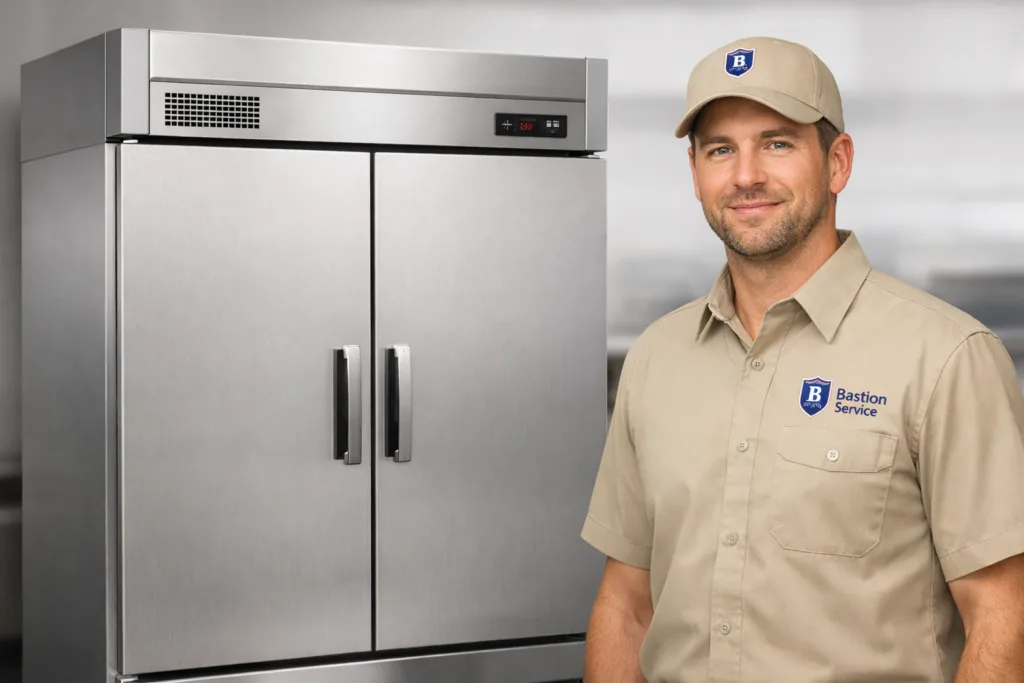




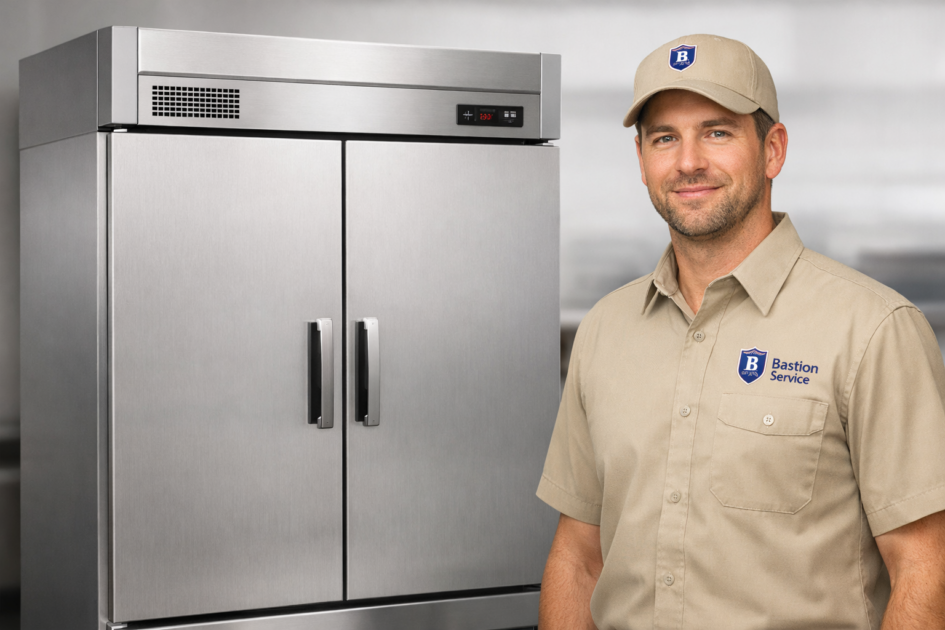
Freezer problems rarely stay small for long when the unit supports daily production, storage, or service. If a Beverage-Air freezer starts running warm, building frost, leaking, or making unusual noise, the most useful next step is a service visit built around the exact symptom pattern. Bastion Service works with businesses in West Hollywood to identify the fault, explain what is affecting performance, and help schedule repair before downtime spreads into inventory loss or workflow disruption.
Related commercial service paths in West Hollywood include Beverage-Air Repair in West Hollywood, Commercial Freezer Repair in West Hollywood, and Beverage-Air Fridge Repair in West Hollywood.
What the symptom pattern usually tells you
Most freezer failures begin with subtle changes rather than a full shutdown. Staff may notice softer product, longer pull-down times, thicker frost on the interior, louder fan operation, or a cabinet that seems slow to recover after the door is opened. Those details matter because similar symptoms can come from very different causes, including airflow restriction, a defrost problem, a door seal issue, a control fault, or declining refrigeration performance.
A service-oriented diagnosis looks at how the freezer is cycling, whether air is moving correctly through the cabinet, how the evaporator area is behaving, and whether the temperature issue is constant or intermittent. That makes it easier to decide whether the repair is likely to involve a fan motor, sensor, heater, gasket, control component, compressor-related issue, or another failing part.
Why is my Beverage-Air freezer not staying cold enough?
When a Beverage-Air freezer cannot hold the right temperature, the cause is not always the sealed system. In many cases, the freezer is losing performance because cold air is not circulating properly, warm air is entering around the door, frost is blocking the evaporator area, or the controls are not reading conditions accurately.
Common causes of poor holding temperature include:
- Dirty or restricted condenser airflow
- Evaporator fan motor failure or weak airflow
- Defrost system malfunction leading to ice buildup
- Worn or damaged door gaskets
- Sensor, thermostat, or control board faults
- Low refrigeration performance or compressor stress
If the freezer is drifting warmer during busy hours, recovering slowly, or forcing repeated setpoint changes, it should be checked before the issue becomes a full cooling failure.
Frost buildup is often a sign of a repairable fault
Heavy frost or ice inside a Beverage-Air freezer usually points to moisture entering the cabinet or a defrost-related problem. A torn gasket, misaligned door, weak door closure, blocked drain path, or failed defrost component can all lead to frost accumulation that keeps getting worse.
As frost thickens, airflow drops and cooling becomes less even. That can create warm spots, overwork fans, and keep the freezer running longer without reaching target temperature. In business settings, this often shows up as inconsistent product condition, hard-to-close doors, or interior panels covered in ice.
Warning signs that frost buildup needs prompt service include:
- Ice around the evaporator cover or fan area
- Frost returning soon after manual clearing
- Doors not sealing cleanly
- Uneven cabinet temperature from top to bottom
- Long run times with weak freezing performance
What fan noise, buzzing, or clicking can mean
Unusual sound is often one of the first signs that a freezer is operating under strain. Fan blades can start hitting ice, motors can wear out, mounting hardware can loosen, and compressors can begin sounding rough during start-up or extended run cycles. Clicking may point to a start problem, while rattling can suggest vibration from loose panels or a motor assembly issue.
Noise should be taken seriously when it appears alongside temperature swings, frost buildup, or intermittent operation. A sound that seems minor at first can be the clue that helps narrow down the actual failure point before a more expensive component is affected.
Leaks, moisture, and drain-related issues
Water around a freezer is not always a plumbing issue. In many cases, pooling water or interior moisture is connected to blocked drains, defrost trouble, excessive frost melt, poor door sealing, or airflow conditions that create condensation where it should not be forming.
If the floor around the unit is getting wet, the concern is not only performance. Moisture can affect safety, contribute to ice formation, and signal that the freezer is no longer managing normal defrost and cabinet conditions correctly. A repair visit can determine whether the problem is isolated to drainage or tied to a larger cooling or airflow fault.
When slow recovery points to a bigger problem
A freezer that eventually gets cold but takes too long to recover after normal door openings is often already outside normal operating behavior. Slow recovery may mean the cabinet is losing cold air too quickly, the evaporator is restricted by frost, the condenser side is struggling to reject heat, or the refrigeration system is no longer performing efficiently under load.
This matters in busy operations because the freezer may seem acceptable during quiet periods while falling behind during peak use. That pattern can lead to repeated temperature concerns even though the unit never fully stops. Diagnosing recovery performance early can prevent a situation where the freezer becomes unreliable during the hours you need it most.
When continued use can make freezer damage worse
Operators sometimes try to buy time by lowering the setpoint, scraping away ice, or shifting inventory to colder areas of the cabinet. Those workarounds can mask the real issue while increasing stress on motors, controls, and compressor components. If the freezer is running nearly nonstop, icing over repeatedly, or failing to maintain consistent product temperature, continued use may turn a manageable repair into a more disruptive one.
Service should move up in priority when you notice any of the following:
- The cabinet is no longer freezing product consistently
- The compressor seems to run constantly
- The evaporator area keeps icing over
- The door does not close or seal correctly
- The freezer restarts unpredictably or trips power
- Staff are adjusting settings often just to keep it usable
Repair decisions should be based on the actual failure, not just the symptom
One visible symptom does not always point to one obvious part. A warm cabinet may be caused by airflow loss instead of refrigerant loss. Frost may be a door problem rather than a failed heater. Fan noise may come from ice obstruction rather than a bad motor alone. That is why repair approval should follow testing, not guesswork.
For businesses in West Hollywood, that approach helps answer the questions that matter most: what failed, whether anything else has been affected, how urgent the repair is, and whether the freezer can stay in limited use until service is completed. It also helps avoid repeat calls caused by replacing a part that was not the root issue.
Repair versus replacement
Many Beverage-Air freezer issues are worth repairing when the cabinet is structurally sound and the fault is tied to serviceable components such as fans, controls, gaskets, sensors, defrost parts, or door hardware. Replacement becomes more likely when the freezer has a history of major recurring failures, poor overall reliability, or a larger system problem that does not make sense relative to the unit’s condition and role in the operation.
The right decision usually depends on several factors at once:
- How stable the temperature has been over time
- Whether recent failures are isolated or recurring
- The age and workload of the freezer
- The scope of the current repair
- The operational impact of another interruption
Preparing for service in West Hollywood
Before the technician arrives, it helps to note the set temperature, actual temperature readings, when the problem is most noticeable, any recent noise changes, and whether frost, leaks, or door issues have appeared at the same time. If the freezer has become unreliable during specific parts of the day, that pattern can also help narrow the diagnosis.
If your Beverage-Air freezer in West Hollywood is showing signs of cooling loss, airflow trouble, frost buildup, leaks, or unstable operation, the best next step is to schedule repair based on the current symptoms rather than wait for a complete breakdown. Early service can protect product, reduce disruption, and make the repair path more straightforward.


