
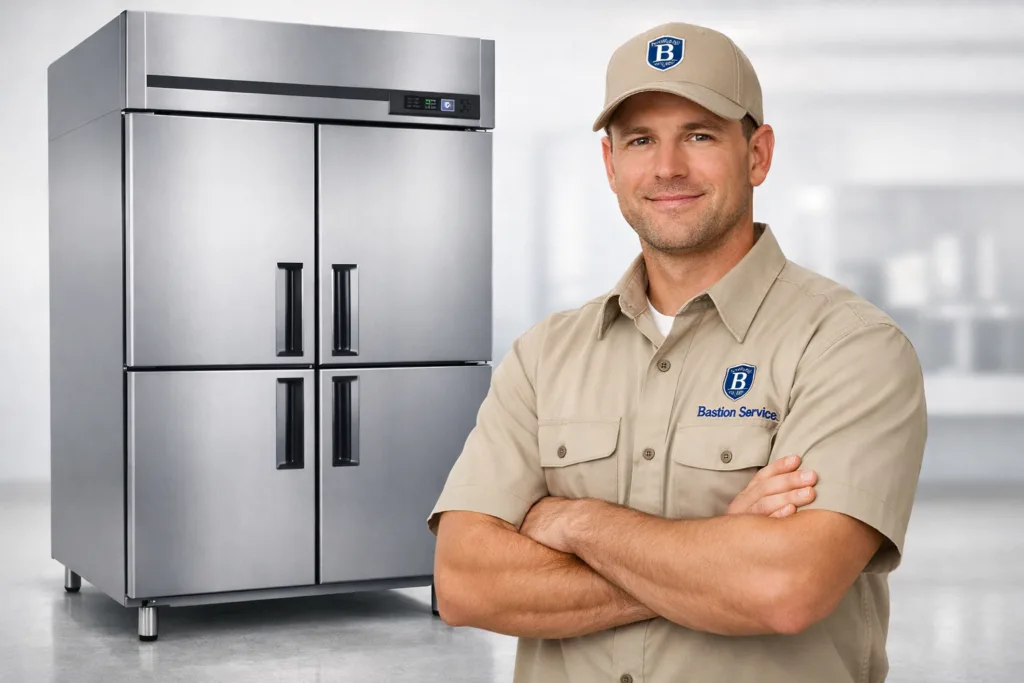




Freezer failures are rarely just temperature problems. On a Turbo Air unit, warm product, frost buildup, fan noise, or long run times can all point to different underlying faults, and the right repair path depends on which system is actually failing. For businesses in Santa Monica, service is most useful when it starts with the symptom pattern, the operating conditions, and how the equipment is affecting daily workflow. Bastion Service provides Turbo Air freezer repair with that service-first approach so scheduling, diagnosis, and repair decisions are based on what the unit is doing in the field.
Related commercial service paths in Santa Monica include Turbo Air Commercial Repair in Santa Monica, Commercial Freezer Repair in Santa Monica, and Turbo Air Refrigerator Repair in Santa Monica.
If a freezer is still running but struggling, that does not mean it is safe to ignore. A unit that barely holds temperature, freezes unevenly, or builds ice around the evaporator can quickly move from a manageable repair into product loss, added strain on major components, or an unplanned shutdown. Early service often helps limit downtime and prevents a smaller issue from turning into a larger refrigeration failure.
Common Turbo Air Freezer Symptoms and What They May Mean
Not staying cold enough
When a Turbo Air freezer is not holding the set temperature, the cause may involve restricted airflow, frost-covered coils, fan motor problems, sensor or control faults, dirty condenser conditions, or declining sealed-system performance. A cabinet that feels only slightly warm can still be outside safe storage range, especially during busy door-open periods. This is one of the most important symptoms to diagnose quickly because several different faults can produce the same warming complaint.
Frost buildup inside the cabinet
Heavy frost usually means moisture is getting where it should not, or the defrost process is not completing correctly. Common causes include door gasket leakage, a door not closing fully, sensor issues, heater or defrost component failure, or airflow problems that allow ice to build across the evaporator area. As frost increases, airflow drops, recovery slows, and the freezer may run longer without restoring stable temperature.
Temperature swings or slow recovery
If the freezer pulls down slowly after door openings or swings between colder and warmer periods, the problem may be tied to control response, fan operation, coil condition, or weak cooling capacity under load. Slow recovery matters in business settings because the unit may appear normal during light use but fall behind when the kitchen, storage area, or prep schedule becomes more demanding.
Constant running or short cycling
A freezer that runs nearly all the time may be fighting dirty heat exchange surfaces, poor door sealing, airflow restrictions, or a refrigeration issue that keeps it from reaching target temperature. Short cycling can point to a control or electrical fault, overheating, or protection-related shutdown behavior. Either condition increases wear and should be checked before it leads to a no-cooling call.
Fan noise, buzzing, or vibration
Changes in sound are often an early warning sign. Scraping can suggest ice interference. Rattling may come from loose panels or mounting wear. Intermittent fan noise can indicate a motor problem or blade obstruction. Buzzing tied to weak cooling performance may point to compressor strain or an electrical issue. Noise alone does not confirm a major failure, but noise combined with temperature complaints usually deserves prompt inspection.
Water leaks or ice in unusual areas
Water on the floor, interior dripping, or ice forming away from the main coil area can indicate drain blockage, defrost issues, gasket leakage, or warm-air infiltration. These symptoms often start small, then lead to sanitation concerns, slip hazards, and recurring moisture problems that affect surrounding components.
Why Symptom-Based Diagnosis Matters
Two Turbo Air freezers can show the same outward complaint and need very different repairs. A warm cabinet might be caused by iced-over airflow rather than a compressor problem. Repeated frost may begin with a door-closing issue rather than a failed defrost heater. A unit that runs constantly may be dealing with condenser restriction instead of refrigerant loss. That is why replacing parts based on a guess often adds cost without solving the real issue.
A proper evaluation usually includes temperature behavior, evaporator condition, condenser condition, fan performance, control response, door seal condition, defrost operation, and overall cooling load. Looking at the unit as a working system helps determine whether the repair is straightforward, whether the freezer should stay in limited use, and whether continued operation risks inventory or additional equipment damage.
Signs the Freezer Should Be Scheduled for Service Soon
- Product is softening or cabinet temperature is drifting upward.
- Frost returns soon after being cleared.
- The freezer takes too long to recover after normal door openings.
- The evaporator area looks blocked with ice.
- The door does not seal tightly or pops back open.
- Fan noise has changed or airflow seems weak.
- Water is collecting around or inside the unit.
- The freezer is running constantly or cycling abnormally.
In many cases, these warning signs appear before a complete cooling failure. Addressing them early can reduce disruption and improve the chance of a more contained repair.
What Often Causes Turbo Air Freezer Performance Problems
Airflow restrictions
Blocked coils, product loading that interferes with circulation, and evaporator ice can all reduce airflow. Once air movement drops, the freezer may struggle to keep temperature even if other components are still operating.
Door and gasket problems
A damaged gasket, misaligned door, or hinge issue lets warm, humid air enter the cabinet. That added moisture contributes to frost, longer run times, and unstable temperature.
Defrost system faults
When defrost components do not operate correctly, ice can accumulate on the evaporator and choke off airflow. The result often looks like a cooling issue even though the primary fault is in the defrost circuit or control logic.
Fan motor or control issues
Evaporator and condenser fans play a major role in heat transfer and air circulation. If a motor is weak, intermittent, or obstructed, the freezer may cool unevenly, run longer, or produce unusual sounds. Sensor and control problems can create similar symptoms by causing the unit to operate at the wrong times or for the wrong duration.
Condenser and compressor strain
Dirty condenser surfaces, poor ventilation, electrical irregularities, and prolonged heavy run conditions can all increase compressor load. If left unresolved, that strain can shorten component life and lead to more serious refrigeration trouble.
Repair or Replace?
Many Turbo Air freezer problems are repairable without replacing the equipment. Fan motors, controls, defrost components, gaskets, drains, and several electrical faults are often more practical to address than replacing the entire unit. The key question is whether the repair resolves the root cause and returns the freezer to stable operation for your business.
Replacement becomes a more serious consideration when the cabinet condition is poor, major failures are repeating, or the cost of restoring the refrigeration system is high compared with the overall condition of the freezer. A good service visit helps clarify that decision by identifying what failed, what supporting components show wear, and what result the repair is realistically expected to deliver.
How to Prepare for a Service Visit
Before scheduling, it helps to note what the freezer is doing and when the issue appears. Useful details include whether the problem started suddenly or gradually, whether frost keeps returning, whether the noise is constant or intermittent, and whether temperature problems get worse during busy periods. If available, recent temperature readings and any alarm behavior can also help narrow the diagnosis faster.
If the freezer is no longer protecting product, is heavily iced over, or is showing obvious electrical or compressor-related distress, it should be evaluated as soon as possible. In Santa Monica, businesses often need repair decisions that balance speed with equipment condition, inventory risk, and the cost of letting a struggling unit continue to run.
Turbo Air Freezer Repair for Santa Monica Businesses
Restaurants, hotels, food-service businesses, and other businesses in Santa Monica rely on freezer performance that stays consistent through daily demand. When a Turbo Air freezer starts running warm, leaking, icing up, or making new noises, the next step should be service focused on the actual fault, the likely repair scope, and how quickly the unit needs attention. The most effective outcome is not just getting the freezer running again, but restoring dependable operation with a repair plan that fits the urgency of your business.


