
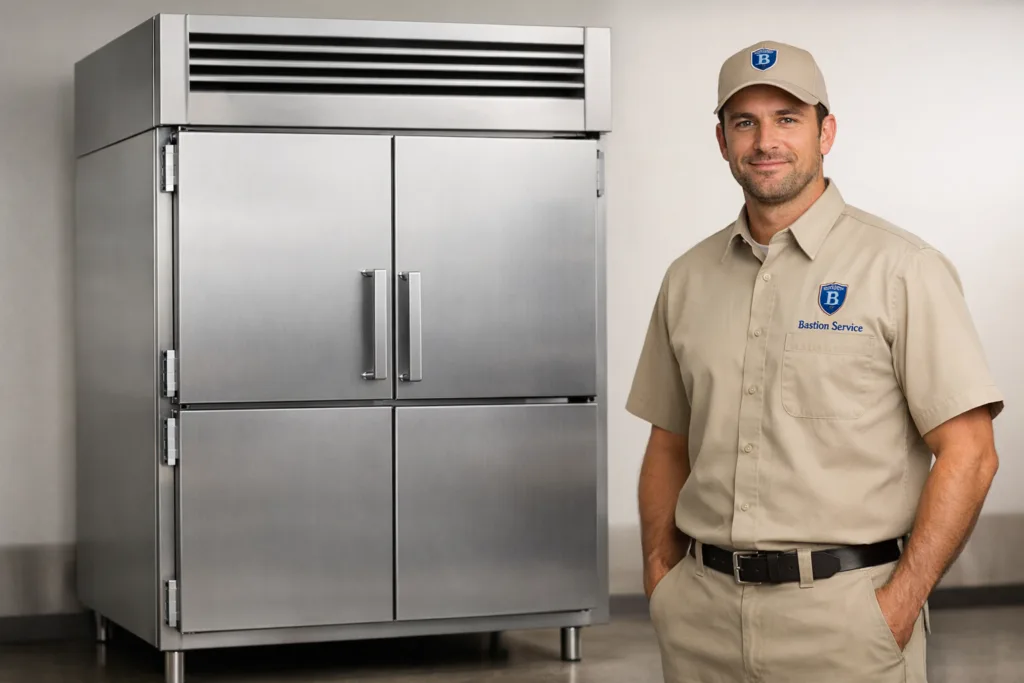




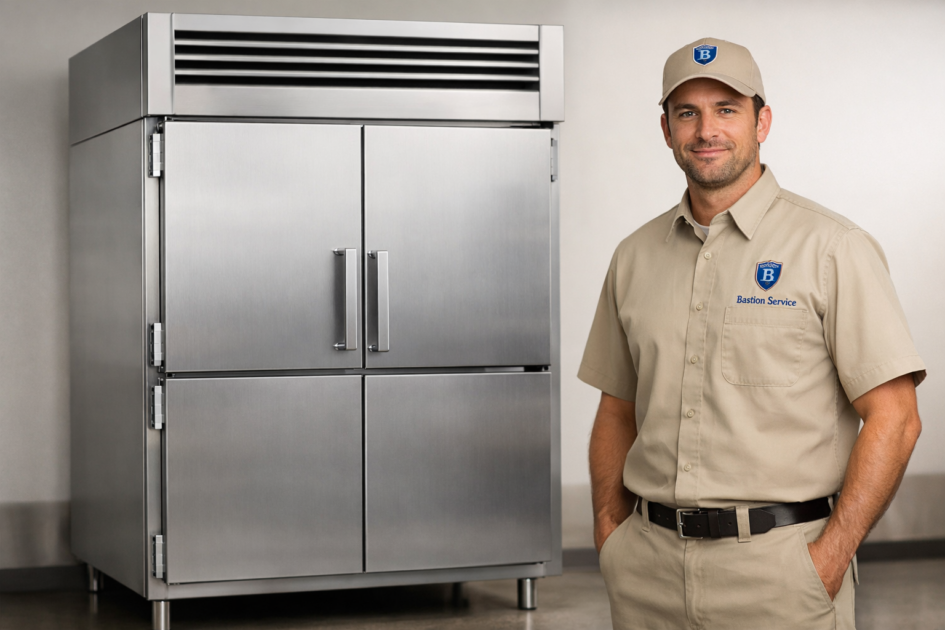
When a Traulsen freezer starts warming, frosting unevenly, or running far longer than normal, the priority is protecting product and restoring stable operation without losing more time. For businesses in Santa Monica, freezer repair is most effective when the visit is built around the exact symptom pattern, how the unit has been behaving during daily use, and whether the issue points to airflow, defrost, controls, door sealing, or refrigeration-system performance. Bastion Service works with that service-focused approach so the next step is based on the condition of the freezer rather than guesswork.
Related commercial service paths in Santa Monica include Traulsen Commercial Repair in Santa Monica, Commercial Freezer Repair in Santa Monica, and Traulsen Refrigerator Repair in Santa Monica.
How freezer problems usually show up in day-to-day operation
Many Traulsen freezer failures do not begin with a complete shutdown. They often appear first as slower pull-down, soft product near the door, heavier frost around one section, new alarm activity, fan noise, or a cabinet that seems cold at one time of day and weak later on. Those details matter because the same complaint of “not freezing well” can come from very different causes.
In busy kitchens, hospitality settings, and other food-service environments in Santa Monica, even a partially working freezer can create real disruption. Staff may start moving inventory, lowering setpoints repeatedly, or opening the cabinet less often just to keep temperatures under control. Once that happens, the problem has usually moved beyond routine upkeep and into repair territory.
Why a Traulsen freezer may not stay cold enough
If the cabinet temperature rises above normal or recovery becomes slow after door openings, the cause may be as simple as restricted condenser airflow or as involved as a failing refrigeration component. Common possibilities include:
- Dirty condenser coils reducing heat transfer
- Weak or failed evaporator fan operation limiting cold-air circulation
- Door gasket leaks allowing warm air and moisture into the cabinet
- Sensor or control faults causing incorrect temperature response
- Defrost problems that leave the evaporator packed with ice
- Low cooling capacity from a sealed-system issue
A freezer that is warm everywhere usually points in a different direction than one that has frozen sections and soft sections at the same time. Uneven holding temperatures often suggest airflow or ice restriction, while total loss of freezing performance can indicate a more serious cooling failure.
Frost buildup, ice accumulation, and airflow restriction
Frost is one of the most useful clues during freezer diagnosis. A light, normal frost pattern is not the same as thick ice buildup on interior panels, around the door opening, or across the evaporator section. Excess frost often means moisture is entering the cabinet or defrost is not completing properly.
Typical causes include:
- Damaged or loose door gaskets
- Doors not closing fully because of alignment or hinge wear
- Frequent warm-air intrusion during heavy use
- Defrost heater, control, or termination problems
- Drain or moisture-management issues leading to repeated icing
Once ice begins blocking evaporator airflow, overall performance can drop quickly. The freezer may still seem to run, but cold air no longer moves through the cabinet as intended. That can lead to longer run times, temperature inconsistency, and extra stress on fans and other components.
What nonstop running or short cycling can mean
A Traulsen freezer that runs almost constantly is often trying to compensate for heat gain, weak airflow, frost blockage, or declining cooling output. A unit that starts and stops too frequently may point to a control issue, sensor problem, electrical fault, or protective shutdown behavior. Both patterns deserve attention because they can increase wear while hiding the real cause behind the temperature complaint.
If the freezer used to recover normally and now struggles after routine door openings, that change is important. Slow recovery is often one of the earliest signs that the system is losing efficiency somewhere in the cooling process.
Door and gasket problems that lead to bigger cooling issues
Door-related problems are easy to overlook because the freezer may still appear to be operating. But a torn gasket, sagging door, worn hinge, or poor latch can create a constant source of warm-air infiltration. In practice, that often shows up as frost near the opening, longer run times, moisture around the frame, and temperature instability during busy periods.
On a Traulsen freezer, correcting a sealing problem can be an important part of solving a broader cooling complaint. If the cabinet cannot stay sealed, other parts of the system may end up working harder than they should.
Noise changes that should not be ignored
New sounds can help narrow down the source of the problem. Fan scraping may indicate ice contact or motor wear. Rattling can point to loose panels or mounting issues. Buzzing or changes in compressor sound may suggest a refrigeration or electrical concern. Noise alone does not define the repair, but when it appears alongside warming, frost, or poor recovery, it becomes a useful diagnostic clue.
When to schedule repair instead of continuing to push the unit
Service should be scheduled when the freezer is no longer holding temperature reliably, when frost keeps returning, when water appears during abnormal defrost behavior, or when staff are having to compensate for poor performance during routine use. Waiting can turn a manageable repair into a more disruptive outage.
It is especially important to act when the unit is still partly operational but clearly struggling. Continued operation under those conditions can increase compressor strain, worsen ice buildup, and raise the risk of inventory loss. If safe holding conditions are in question, reducing load and limiting door openings while arranging repair is usually the smarter move.
Repair or replace: how the decision is usually made
Not every Traulsen freezer problem calls for replacement. Many failures involve parts that can be serviced or replaced, including gaskets, fan motors, controls, sensors, defrost components, hinges, and certain drainage-related items. In those cases, repair may restore stable operation without the disruption of replacing the entire unit.
Replacement becomes a more serious consideration when there is a pattern of recurring major cooling failure, poor temperature stability after prior repairs, significant age-related wear, or repair costs that no longer match the freezer’s remaining useful life. The best decision depends on the exact fault, cabinet condition, refrigeration-system health, and how critical the unit is to daily workflow.
What to have ready before a service visit
Useful information can speed up diagnosis and help the repair plan stay focused. Before scheduling, it helps to note:
- Current cabinet temperature or the most recent temperature change
- Whether the problem is constant or appears at certain times of day
- Where frost or ice is forming
- Any alarms, error codes, or unusual sounds
- Whether the door is sealing and closing normally
- Recent cleaning, loading, or operating changes
That information can make it easier to distinguish between a door-sealing issue, an airflow restriction, a defrost failure, or a more significant refrigeration problem.
Service-focused next steps for Santa Monica businesses
For businesses in Santa Monica, the most useful next step is to schedule freezer repair when the symptom is still specific enough to diagnose rather than waiting for a full loss of cooling. A targeted service visit can identify whether the issue is tied to airflow, frost, controls, door sealing, or deeper system performance and help you decide whether repair is the right move now. When a Traulsen freezer is affecting uptime, product protection, or staff workflow, prompt diagnosis is usually the fastest path back to stable operation.


