





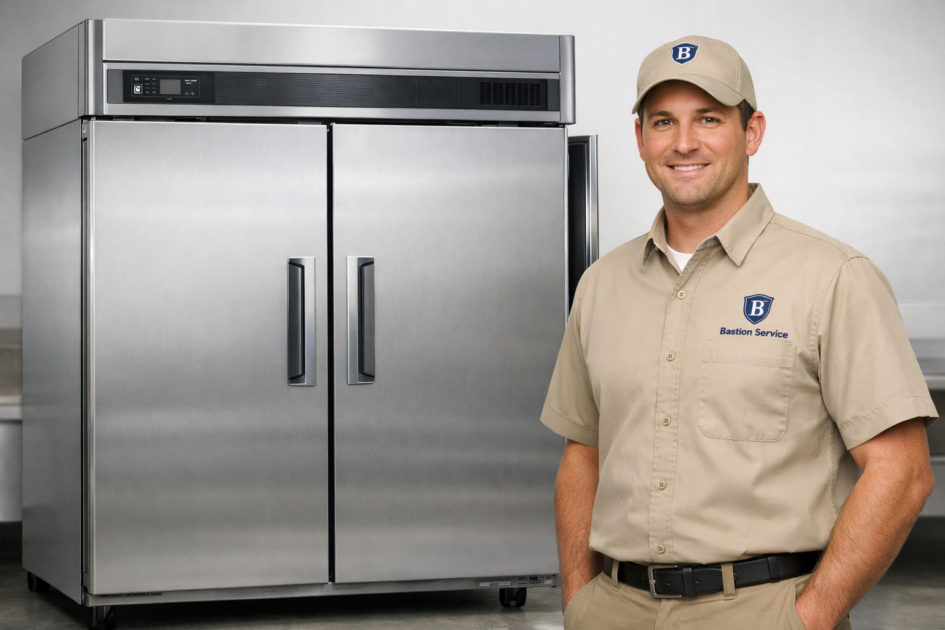
Freezer problems can disrupt prep, storage, and inventory protection quickly, especially when staff start noticing soft product, uneven temperatures, or frost that keeps coming back. For businesses in Mid-City, the most useful first step is to isolate the actual fault before approving parts or trying to force the unit through another day of service. Bastion Service handles Turbo Air freezer repair with attention to symptom patterns, equipment condition, repair timing, and the practical next step for keeping operations moving.
Related commercial service paths in Mid-City include Turbo Air Commercial Repair in Mid-City, Commercial Freezer Repair in Mid-City, and Turbo Air Refrigerator Repair in Mid-City.
Turbo Air freezer problems that usually need service
Many freezer complaints start with one visible symptom, but the root cause may be somewhere else in the system. A cabinet that seems warm may have an airflow problem. A noisy unit may actually be struggling to maintain temperature. A frosted evaporator may look like a cooling failure when the real issue is in the defrost cycle or door sealing. That is why symptom-based diagnosis matters.
Freezer not staying cold enough
If a Turbo Air freezer is not holding its set temperature, common causes include dirty condenser coils, restricted airflow, evaporator fan problems, frost blocking circulation, control faults, sensor issues, weak door sealing, or a refrigeration-system failure. In a busy kitchen or storage area, even a small temperature drift can affect product quality and force staff to shift inventory around the cabinet to find colder zones.
Units that recover slowly after the door closes also deserve attention. Slow pull-down can point to a system under strain rather than a simple setting issue, especially if the freezer runs longer than normal or never seems to cycle off.
Frost buildup that keeps returning
Heavy frost on interior panels, around the evaporator area, or near the door opening often means moisture is repeatedly entering the cabinet or the defrost system is not doing its job. Worn gaskets, doors that do not close squarely, damaged hinges, and defrost component failures are all common reasons.
Once frost builds up enough to restrict airflow, the freezer may begin showing other symptoms at the same time, including warmer temperatures, fan noise, and poor recovery during normal use. In that situation, removing ice alone does not solve the underlying problem.
Fan noise, rattling, or nonstop running
A Turbo Air freezer that suddenly gets louder should not be ignored. Whining, scraping, buzzing, or rattling can come from fan motors, loose panels, ice contacting a fan blade, or compressor-related stress. If the freezer also seems to run constantly, that often means it is working harder to overcome another issue such as blocked airflow, dirty heat rejection surfaces, or a failing component.
Continuous operation usually increases wear on major parts and can turn a manageable repair into a larger failure if the unit stays in service too long without evaluation.
Water leaks or moisture around the unit
Water on the floor, interior pooling, or unusual condensation can point to drain restrictions, defrost drainage problems, gasket failure, or cabinet sweating caused by warm air infiltration. Even if the freezer still appears to cool, those moisture symptoms may be an early warning sign that temperature control or airflow is no longer stable.
Why the same symptom can come from different failures
Freezer diagnosis is often less obvious than it looks from the outside. Two units can both be “not freezing well” while needing completely different repairs. One may have an evaporator fan issue. Another may have a door that is leaking air. Another may be dealing with a defrost fault that has iced over the coil and cut down circulation. Replacing parts based on guesswork wastes time and does not help uptime.
A service visit should separate simple correction from larger mechanical concerns by checking operating temperature, airflow, frost pattern, fan operation, control response, compressor behavior, door condition, and overall cabinet wear. That process helps businesses in Mid-City make a sound repair decision instead of reacting only to the most visible symptom.
Signs a Turbo Air freezer should be scheduled soon
Some problems can be planned around briefly, but others should be addressed as soon as they appear. It is smart to schedule service when you notice:
- Cabinet temperature rising above normal holding range
- Product softening or freezing unevenly
- Repeated frost returning after manual clearing
- Doors not sealing or closing correctly
- Fans getting louder or airflow seeming weak
- Water leaks, sweating, or interior moisture buildup
- Long run times or a unit that rarely cycles off
- Poor recovery after loading or normal door openings
Waiting is risky when staff are compensating by changing settings, opening the cabinet less often, or moving product to different shelves to find colder spots. Those workarounds can hide the real problem while performance continues to decline.
Common repair paths based on symptom pattern
While every unit needs inspection before parts are recommended, certain symptom combinations often point technicians in a specific direction.
Warm cabinet plus heavy ice
This often suggests a defrost-related problem, airflow restriction, or moisture intrusion through the door opening. The freezer may still run, but cold air cannot circulate the way it should.
Warm cabinet plus weak or no fan movement
This can indicate an evaporator fan issue, electrical problem, control failure, or ice interference. When circulation drops, cabinet temperatures become uneven fast.
Constant running plus poor temperature recovery
This pattern can be tied to condenser problems, door leakage, sensor or control issues, or more serious refrigeration-system performance loss. A unit that never catches up usually needs prompt evaluation.
Leak symptoms plus frost or sweating
Drain issues, defrost water handling problems, and door seal failures often overlap. Moisture complaints should be treated as part of the cooling diagnosis, not as a separate housekeeping issue.
Repair or replace: how businesses usually decide
Not every Turbo Air freezer problem points toward replacement. Many units remain good candidates for repair when the cabinet is structurally sound and the issue is limited to fans, controls, sensors, defrost components, gaskets, hinges, or similar serviceable parts.
Replacement becomes more likely when the freezer has a pattern of major breakdowns, poor overall condition, declining reliability, or repair needs that no longer make sense for the age and role of the equipment. The key is to base the decision on actual condition and business impact, not frustration from the latest failure alone.
For businesses in Mid-City, that usually means asking a few practical questions:
- Is this an isolated fault or part of a recurring pattern?
- Is the cabinet still worth investing in?
- Will the repair restore stable operation or only buy limited time?
- How much downtime risk is acceptable for this position in the workflow?
How to prepare before a freezer repair visit
A little preparation can speed up diagnosis and help reduce disruption. If possible before service arrives, note when the problem started, whether it happens all day or only during peak use, and whether alarms, noises, leaks, or frost appeared first. It also helps to identify whether product temperatures have been affected and whether the issue changes after a defrost or after the doors stay closed for a period of time.
Staff can also be ready to point out:
- Recent changes in loading patterns
- Door-closing problems or damaged gaskets
- Any recent tripped breakers or power interruptions
- Whether the unit has needed repeated manual ice clearing
- How long recovery takes after normal use
That information often shortens the path to an accurate diagnosis and helps determine whether the freezer can stay in limited use or should be taken out of service.
What a service visit should help you decide
A useful repair call should do more than confirm that the freezer is warm. It should identify the likely cause, explain how that fault connects to the symptoms you are seeing, and clarify whether continued operation is reasonable while repairs are arranged. For a Turbo Air freezer used in daily business operations, that guidance matters just as much as the part replacement itself.
If your unit in Mid-City is struggling with temperature swings, frost buildup, fan noise, leaks, or slow recovery, the best next move is to schedule service before the problem grows into inventory loss or a full shutdown. A focused diagnosis gives you a clearer repair path, better scheduling decisions, and a more realistic plan for protecting uptime.


