
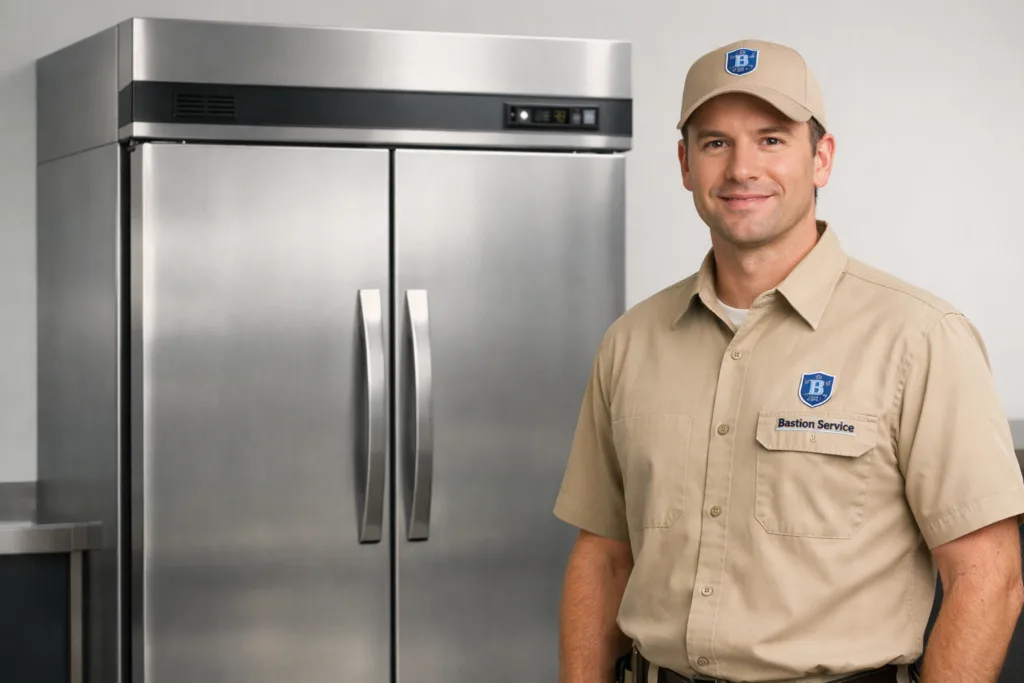




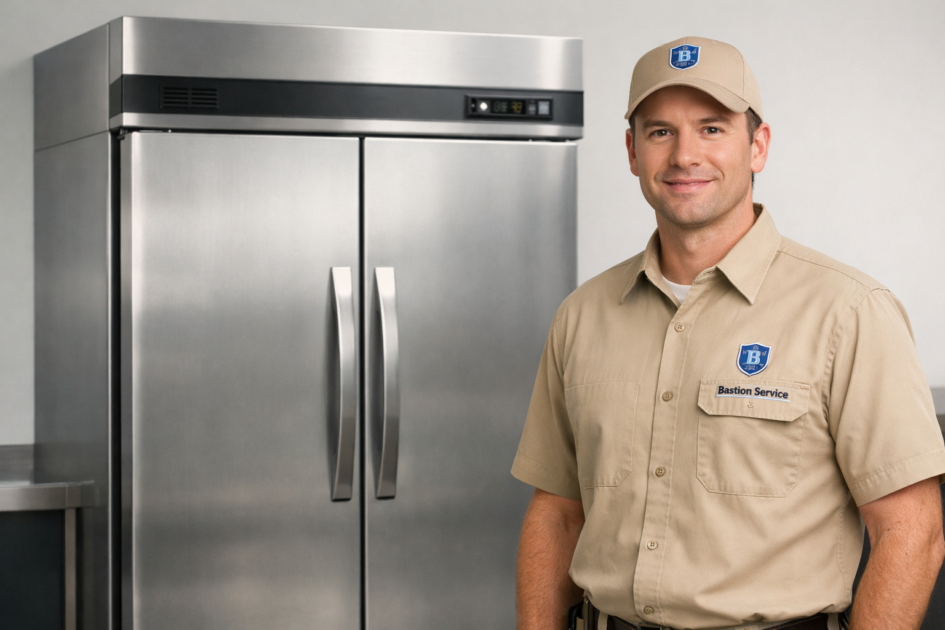
Temperature instability, frost, leaking water, and irregular cycling can disrupt storage, prep, and service very quickly when a Turbo Air refrigerator is part of daily operations in Mid-City. The most useful next step is to schedule service based on the actual symptom pattern, because the same warm-cabinet complaint can come from airflow restriction, sensor error, door sealing problems, fan failure, control issues, or compressor-related stress. Bastion Service helps businesses in Mid-City sort out those differences so repair decisions are based on how the unit is performing, not guesswork.
Related commercial service paths in Mid-City include Turbo Air Commercial Repair in Mid-City, Commercial Refrigerator Repair in Mid-City, and Turbo Air Freezer Repair in Mid-City.
Common Turbo Air refrigerator symptoms and what they may mean
Cabinet not holding temperature
If a refrigerator is running but not maintaining a steady holding temperature, several faults are possible. Dirty condenser coils, weak condenser airflow, evaporator fan issues, thermostat or sensor problems, control faults, low cooling capacity, or a compressor that is struggling under load can all produce similar symptoms. In a busy kitchen, market, bar, or back-of-house storage area, even small temperature swings can become a product-loss problem if recovery times keep getting longer.
Frost buildup or blocked airflow
Frost on panels, near the evaporator section, or around the door opening usually points to a condition that is allowing excess moisture into the cabinet or preventing normal air movement. That may include a defrost problem, worn gaskets, door alignment issues, loading patterns that choke airflow, or fans that are no longer moving air correctly. Once ice starts restricting circulation, the refrigerator often has to run longer to achieve less cooling.
Water inside the cabinet or on the floor
Water leaks can come from clogged drains, frozen drain lines, condensation from poor sealing, or abnormal defrost behavior. In addition to the slip risk, pooling water often signals that the refrigerator is no longer managing moisture the way it should. If the leak appears alongside frost or temperature complaints, those symptoms should be evaluated together rather than treated as separate problems.
Loud operation, clicking, or nonstop running
New noises are often an early warning sign. Fan motors, loose mounting points, vibrating panels, relays, or compressor components can all create unusual sound. A unit that seems to run almost constantly may be compensating for dirty coils, high heat around the cabinet, poor door sealing, or reduced refrigeration performance. Constant run time raises wear and can turn a manageable issue into a more expensive one.
Display problems or inconsistent readings
If the display is flashing, showing alarms, or reporting temperatures that do not match actual cabinet conditions, the issue may involve sensors, wiring, controls, or intermittent power problems. On Turbo Air equipment, accurate diagnosis matters because a visible error does not always identify the root cause. The cabinet may be reacting to an airflow or cooling fault that is causing the control system to report secondary symptoms.
Why Turbo Air diagnosis should be symptom-based
Turbo Air refrigerators can show the same outward complaint for very different reasons. A warm cabinet may be caused by poor airflow on one unit, a failing fan circuit on another, and a deeper refrigeration issue on a third. That is why service should focus on cabinet temperatures, coil condition, airflow, fan operation, door seal performance, control response, and recovery after normal door openings.
For businesses in Mid-City, this matters because downtime affects more than the refrigerator itself. It can delay prep, force product transfers, create hot spots in workflow, and add pressure to staff during service hours. A repair visit should answer two practical questions: what is causing the current failure, and is the recommended repair likely to restore reliable operation for the way the unit is actually used.
When to schedule repair instead of waiting
It is smart to book service when the refrigerator is still cooling somewhat but showing clear signs of decline. Waiting often allows more stress to build on major components.
- Cabinet temperature rises during normal use
- Recovery after door openings becomes slow
- Frost returns after being cleared
- Water keeps appearing inside or beneath the unit
- The compressor starts and stops unusually often
- Fans become noisy or airflow feels weak
- The door does not close or seal consistently
- The display shows alarms without stable cooling performance
Service becomes more urgent when staff are moving product out of warm zones, adjusting controls repeatedly, manually clearing ice, or changing routines just to keep the refrigerator usable. Those workarounds usually mean the fault is advancing.
When continued use can make the problem worse
A Turbo Air refrigerator that is failing to hold temperature, icing over heavily, or struggling to restart should not be pushed indefinitely through the workday. Continued operation in that condition can strain fans, controls, and compressor components while also making the original fault harder to isolate. In some cases, the unit appears to recover temporarily, but that short improvement only delays needed repair and increases the risk of a full cooling failure.
If the cabinet is constantly running, developing repeated frost, or leaking after each defrost cycle, it is usually better to stop relying on temporary fixes and have the unit evaluated before additional parts are affected.
Repair versus replacement considerations
Not every problem points to replacement, and not every repair is the right long-term choice. The decision usually depends on the age of the refrigerator, its service history, the condition of the cabinet and doors, the severity of the current fault, and how important that unit is to daily operation.
Repair is often reasonable when the issue is limited to components such as sensors, controls, fan motors, gaskets, drains, or other accessible parts and the refrigerator has otherwise been stable. Replacement becomes a stronger consideration when there is a pattern of repeat failures, unstable temperatures after prior service, significant system wear, or repair costs that no longer make sense for the role the unit plays in the business.
What a focused service visit should accomplish
A productive repair call should do more than identify one failed part. It should verify actual box temperature, review how the refrigerator behaves under load, inspect condenser and evaporator airflow, check fan operation, evaluate door closure and gasket condition, look at drain and defrost function where applicable, and determine whether the symptom is isolated or part of a broader decline in performance.
That kind of service gives Mid-City businesses a practical next step: move ahead with repair, correct contributing operating conditions, monitor the unit after service, or begin planning for replacement if reliability has clearly fallen off.
Service priorities for businesses in Mid-City
For restaurants, bars, markets, hotels, and other businesses in Mid-City, refrigerator service is usually about protecting product, restoring stable holding temperatures, and reducing avoidable interruptions during the day. When a Turbo Air refrigerator starts running differently, early diagnosis is often the most efficient way to limit downtime and keep a small issue from becoming a larger equipment failure.
If your unit is warming up, icing over, leaking, or running in a way that no longer seems normal, scheduling repair promptly is usually the best move. A symptom-based evaluation helps determine what failed, what can be corrected, and whether the refrigerator is a good candidate for repair before the problem affects more of the operation.


