
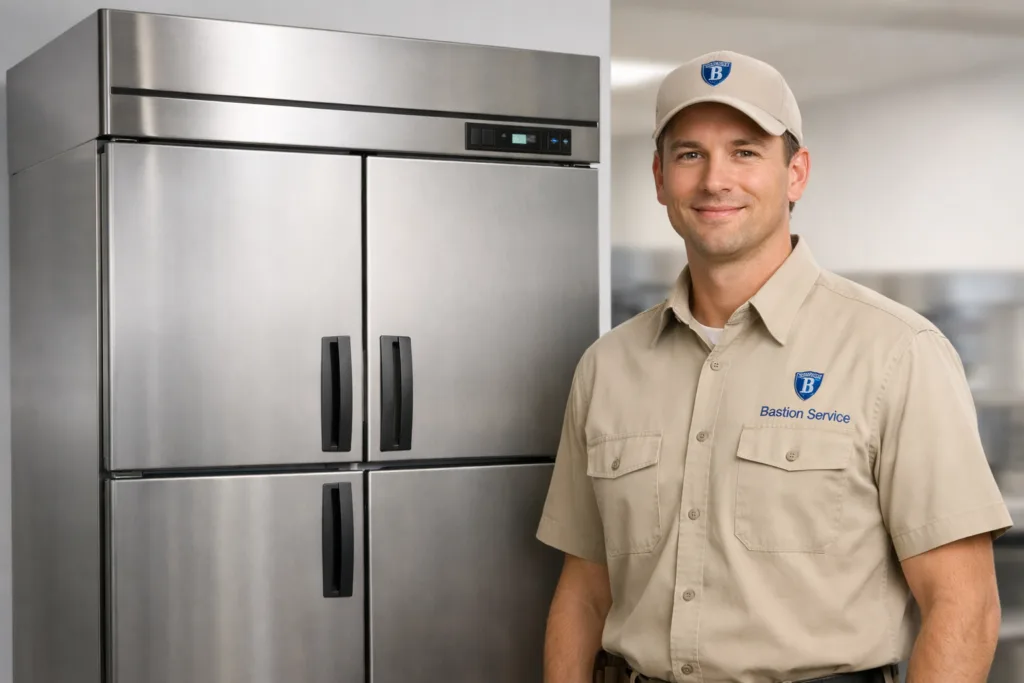




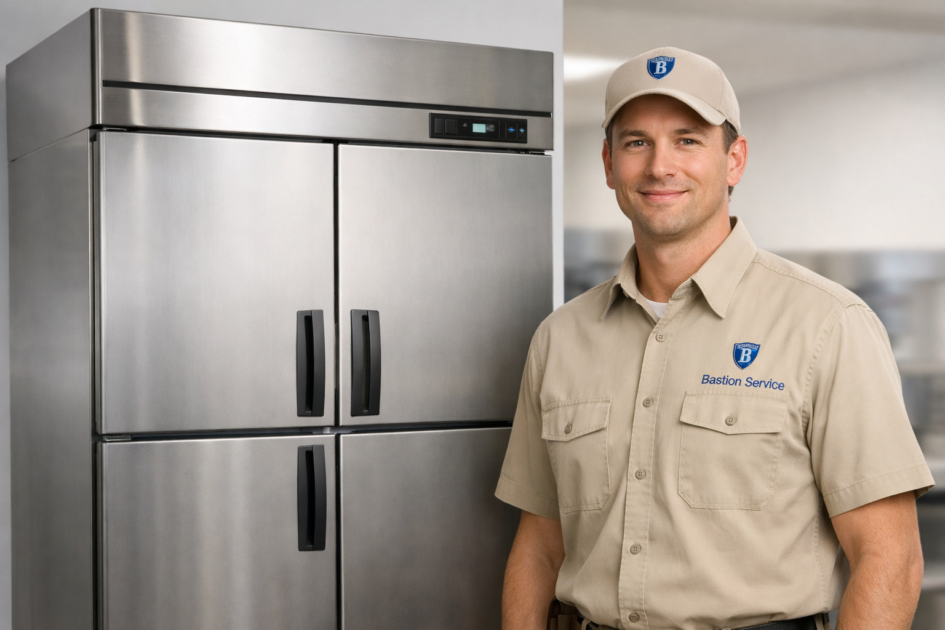
Freezer trouble usually shows up first as a workflow problem: product softening, staff moving inventory around to compensate, or a unit that suddenly needs constant attention. For businesses in Mid-City, Hoshizaki freezer service should begin with symptom-based testing that identifies whether the issue is related to airflow, defrost, controls, door sealing, fans, drainage, or cooling-system performance. Bastion Service handles these calls with the goal of helping businesses understand what is failing, how urgent it is, and what repair path makes the most sense before downtime spreads into a larger operations issue.
Related commercial service paths in Mid-City include Hoshizaki Commercial Repair in Mid-City, Commercial Freezer Repair in Mid-City, and Hoshizaki Refrigerator Repair in Mid-City.
Common Hoshizaki freezer symptoms that point to repair needs
Many freezer failures do not begin with a total shutdown. A unit may still run while losing consistency, struggling to recover after door openings, or building frost that gradually restricts airflow. Looking at the full symptom pattern is often the fastest way to narrow down the cause.
Not staying cold enough
If a Hoshizaki freezer is running but not holding proper temperature, the problem may involve dirty condenser coils, weak evaporator airflow, a failing fan motor, a control or sensor issue, a door gasket leak, or declining sealed-system performance. In daily operations, this often appears as soft product at certain shelves, long recovery times, or a cabinet that seems cold sometimes but cannot keep up during busy periods.
Frost buildup inside the cabinet
Heavy frost on interior panels, around the evaporator area, or near the door opening usually means moisture is entering where it should not, or defrost operation is not clearing ice as designed. A bad gasket, misaligned door, defrost component problem, or sensor issue can all create this pattern. As frost builds, airflow drops, run time increases, and freezing performance becomes less stable.
Freezer runs constantly
A unit that rarely cycles off is often compensating for another fault. Common causes include poor airflow, dirty coils, a warm-air leak at the door, control issues, or a refrigeration problem that prevents the cabinet from reaching target temperature efficiently. Constant operation raises utility use and can add strain to compressors and motors.
Water leaks or excess condensation
Moisture around a freezer may come from a blocked or frozen drain, door sealing problems, excess frost melting in the wrong place, or intermittent defrost issues. Even when cooling is still present, water where it does not belong is a warning sign that the operating cycle is no longer balanced correctly.
Fan noise, rattling, or scraping sounds
Noise changes matter because they often show up before major cooling loss. Scraping can indicate ice interference around a fan. Rattling may point to loose hardware or vibrating panels. A buzzing or laboring sound can suggest motor wear or compressor strain. When sound changes appear along with temperature inconsistency, service should not be delayed.
Control problems or random shutdowns
Erratic display behavior, repeated alarms, inconsistent setpoint response, or a freezer that stops and restarts unexpectedly may involve sensors, wiring, boards, switches, or power-related faults. Intermittent electrical issues are easier to address early, before they become full no-cool conditions.
Why symptom patterns matter on Hoshizaki freezer calls
Two freezers can have the same complaint and require entirely different repairs. A warm cabinet might be caused by a simple door-seal failure, but it could also trace back to an iced evaporator, weak fan operation, faulty defrost controls, or a deeper refrigeration issue. That is why repair decisions should be based on how the freezer behaves across a full operating cycle, not just one temperature reading or one visible symptom.
For businesses in Mid-City, this matters because partial performance can be misleading. A freezer that still feels cold may be failing during recovery, overnight, or under normal door traffic. Service is most useful when it identifies whether the problem is isolated and repairable, or whether continued use is likely to increase stress on other components.
Signs the problem is getting worse
Some warning signs suggest the freezer is moving from minor performance drift into a more disruptive failure:
- Temperature swings are becoming more frequent
- Frost returns quickly after manual clearing
- The cabinet takes much longer to pull down after loading
- Doors no longer close or seal as firmly as before
- Fans sound weaker, louder, or intermittent
- Water or condensation appears repeatedly around the unit
- Alarms or error codes are becoming more common
When these symptoms are allowed to continue, a repair that might have stayed limited can turn into fan damage, heavier icing, product loss, or broader wear on the cooling system.
When to schedule service instead of waiting
It is time to schedule freezer repair when the unit stops holding temperature consistently, frost starts affecting airflow, the compressor seems to run without enough rest, or the cabinet cannot recover normally after routine use. Waiting is especially risky when inventory quality depends on stable frozen holding and staff are already adjusting operations around the equipment.
Prompt service is usually the right move when:
- Stored items are no longer staying fully frozen
- The freezer is warm in one section and colder in another
- Ice buildup is interfering with fans, shelves, or door movement
- The unit leaks water or develops condensation repeatedly
- The display shows alarms, faults, or irregular readings
- The freezer shuts off unexpectedly or trips power protection
What a service visit should evaluate
A useful Hoshizaki freezer repair visit is not just about swapping a likely part. It should evaluate the actual operating condition of the cabinet and confirm what is causing the symptom pattern. That typically includes temperature behavior, airflow, evaporator condition, condenser condition, fan operation, gasket sealing, drainage, defrost function, and control response.
This approach helps answer the questions businesses actually care about: whether the freezer can stay in service safely, whether the repair is likely to restore stable operation, and whether the current issue is isolated or part of a larger decline in equipment reliability.
Repair or replace?
Repair is often the better option when the issue is tied to serviceable components such as fan motors, gaskets, controls, sensors, switches, defrost parts, or drainage-related faults, and the cabinet itself remains in solid condition. Replacement becomes a more serious consideration when the freezer has repeated major failures, significant wear, or repair costs that no longer support dependable remaining life.
The right decision usually comes down to whether the recommended repair is likely to restore predictable temperature control and normal workflow without setting up another interruption soon after.
Preparing for Hoshizaki freezer repair in Mid-City
Before service, it helps to note the main symptom, when it started, whether the problem is constant or intermittent, and whether frost, leaks, alarms, or noise changed along with the temperature issue. If possible, businesses should also avoid repeatedly opening the door to check conditions, since that can make diagnosis less clear and increase temperature loss.
If your Hoshizaki freezer in Mid-City is showing early warning signs or active cooling problems, scheduling service before the unit drops into a full failure is usually the most practical next step. Fast attention to temperature loss, frost buildup, airflow trouble, or erratic operation can reduce downtime, protect inventory, and give you a more confident repair decision.


