




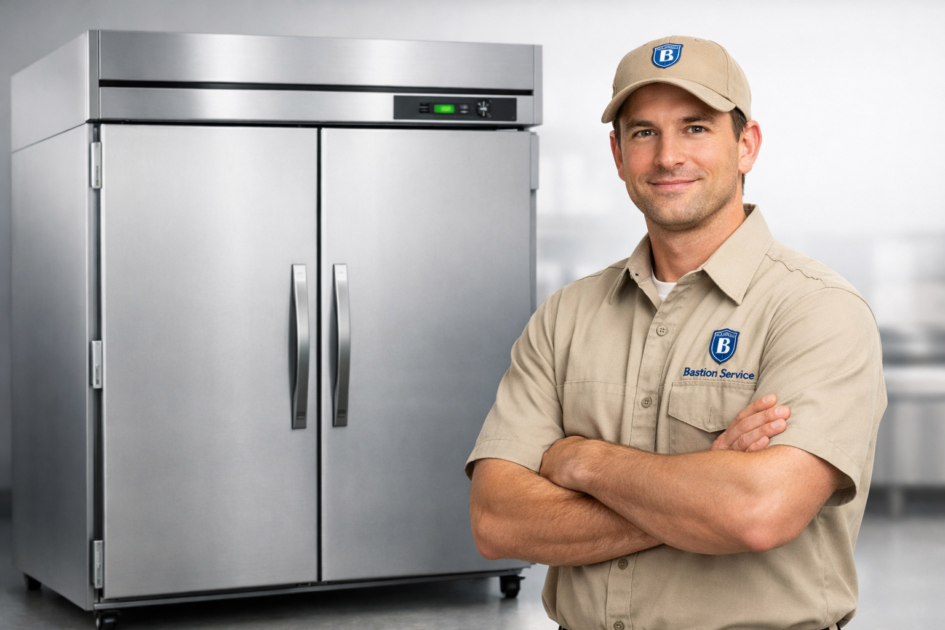
Freezer problems can escalate quickly when inventory, prep timing, and daily workflow depend on stable low temperatures. When a Beverage-Air unit starts running warm, icing over, leaking, or making unusual noise, the most useful next step is service based on the actual symptom pattern rather than guesswork. Bastion Service helps businesses in Brentwood identify the cause, understand the repair scope, and schedule the work before an unstable freezer turns into a full outage.
Related commercial service paths in Brentwood include Beverage-Air Commercial Repair in Brentwood, Commercial Freezer Repair in Brentwood, and Beverage-Air Refrigerator Repair in Brentwood.
If the unit is still operating, it helps to protect product, reduce unnecessary door openings, and pay attention to whether the problem is constant or intermittent. Those details often point toward airflow restrictions, defrost faults, control issues, door seal problems, fan failure, or a deeper refrigeration problem that needs prompt repair.
Common Beverage-Air freezer problems and what they can indicate
Freezer not staying cold enough
When a freezer cannot hold set temperature, the issue may involve restricted airflow, a weak evaporator fan motor, dirty condenser conditions, sensor or control error, door gasket leakage, or poor refrigeration performance. A unit that is only a few degrees off can still struggle during busy periods, especially after normal door openings or product loading. Slow recovery is often an early warning sign that the system is losing efficiency.
Frost buildup on panels, product, or the evaporator area
Heavy frost usually means moisture is entering the cabinet or the defrost system is not clearing ice as it should. Common causes include torn gaskets, doors that do not close squarely, failed heaters, sensor faults, or a control issue that leaves ice accumulating around the coil. As frost builds, airflow drops, temperatures become less consistent, and the freezer may start running longer than normal.
Unit runs all the time or cycles unpredictably
A freezer that rarely shuts off may be trying to overcome warm air infiltration, poor heat rejection, or blocked airflow. Short cycling can point to controls, electrical faults, or compressor-related stress. Either pattern deserves attention because it often appears before a complete cooling failure and can increase wear on major components.
Fan noise, rattling, or vibration
Buzzing, scraping, rattling, or louder-than-usual operation can come from fan blade interference, ice around the evaporator fan, loose hardware, worn motors, or mounting issues. Noise on its own may not stop operation immediately, but when it appears alongside temperature swings or frost, it often means the freezer needs inspection soon.
Water around the cabinet or interior ice sheets
Water under the unit or ice forming on the floor of the cabinet can signal a drain restriction, defrost issue, door sealing problem, or repeated freeze-thaw cycling. Besides creating a mess, this symptom can hide a larger cooling problem and should not be treated as a simple housekeeping issue.
Why a Beverage-Air freezer may stop staying cold
Many businesses notice the same top-level complaint first: the freezer is not cold enough. The underlying cause can vary quite a bit. Airflow may be blocked by ice or product placement, the evaporator fan may not be moving air correctly, the condenser may be struggling to release heat, or controls may be reading temperature inaccurately.
Door-related problems are also common. A damaged gasket or misaligned door allows warm air into the cabinet, which increases frost, lengthens run time, and makes temperature recovery slower after each opening. In other cases, the issue points to defrost components not operating correctly, allowing ice to build until airflow is choked off.
When cooling loss is more serious, the problem may involve compressor performance or the refrigeration circuit. That is why symptom-based diagnosis matters: the same warm-cabinet complaint can lead to very different repair decisions depending on what the freezer is actually doing.
Signs the problem is getting worse
Freezer issues rarely improve on their own. Scheduling service sooner is usually the better choice if staff notice any of the following:
- Temperature drift that keeps returning after settings are adjusted
- Product softening or inconsistent freezing from shelf to shelf
- Frost repeatedly building back after manual clearing
- Long run times with poor recovery after routine door openings
- Fans that sound weak, noisy, or obstructed by ice
- Water leaks, interior ice sheets, or signs of defrost drainage trouble
- Compressor attempts to start without normal cooling performance
These symptoms often mean the freezer is operating under stress. Continued use can widen the repair scope, especially if restricted airflow or control problems are forcing the system to work harder than it should.
Why diagnosis should come before parts replacement
Warm temperatures, frost, noise, and leaking can overlap across several different failures. Replacing a part based only on the most obvious symptom can waste time and still leave the real cause unresolved. For example, a freezer that runs constantly might have a fan issue, a gasket problem, a defrost failure, a dirty condenser, or a refrigeration-side problem. The repair path depends on what testing shows, not just what the cabinet looks like from the outside.
Accurate diagnosis also helps businesses in Brentwood plan around downtime. If the issue is minor and isolated, repair may be straightforward. If there are signs of broader system stress, it may be smarter to protect inventory, adjust operations temporarily, and address the fault before the freezer drops into a no-cool condition.
When continued operation may risk bigger damage
Some freezer problems create more than inconvenience. A unit that is running with severe frost buildup, poor condenser airflow, unstable controls, or leaking door seals may place extra strain on the compressor and keep temperatures less predictable throughout the day. That can raise energy use while reducing equipment life.
If airflow is blocked by ice, the evaporator section may stop distributing cold air correctly even though the machine still sounds like it is running. That often leads to uneven freezing, slow pull-down, and a growing gap between the displayed temperature and actual product condition. Once a freezer becomes unreliable, it is better to have it checked before the problem expands.
Repair or replace: how the decision is usually made
Many Beverage-Air freezer issues are repairable. Fan motors, controls, door gaskets, defrost components, drainage faults, electrical problems, and maintenance-related cooling restrictions are common examples. When the cabinet is otherwise in good condition and the freezer still fits the business’s needs, repair is often the practical option.
Replacement becomes a more serious consideration when there are repeated major failures, clear age-related deterioration, or larger refrigeration problems combined with declining reliability. The best decision usually comes down to current condition, expected repair scope, downtime risk, and whether the unit can return to stable operation after service.
What to have ready before service
A few details can make a freezer service visit more efficient. If possible, have staff note:
- The current cabinet temperature or the range it has been showing
- How long the issue has been happening
- Whether the problem is constant or appears only at certain times
- Any recent frost, alarms, leaking, noise, or slow recovery
- Whether settings were changed or the door has had trouble sealing
- Whether product loading changed shortly before the problem started
These details help narrow the fault faster and reduce the chance of chasing symptoms that only tell part of the story.
Service focused on uptime and product protection
For businesses in Brentwood, Beverage-Air freezer repair is really about restoring stable holding temperatures, reducing disruption, and preventing avoidable product loss. Whether the problem points to airflow, defrost, controls, door sealing, fan operation, or cooling failure, timely service helps turn an uncertain situation into a repair plan with clear next steps. If the freezer is no longer performing predictably, scheduling diagnosis early is usually the most practical way to protect uptime and keep daily operations moving.