
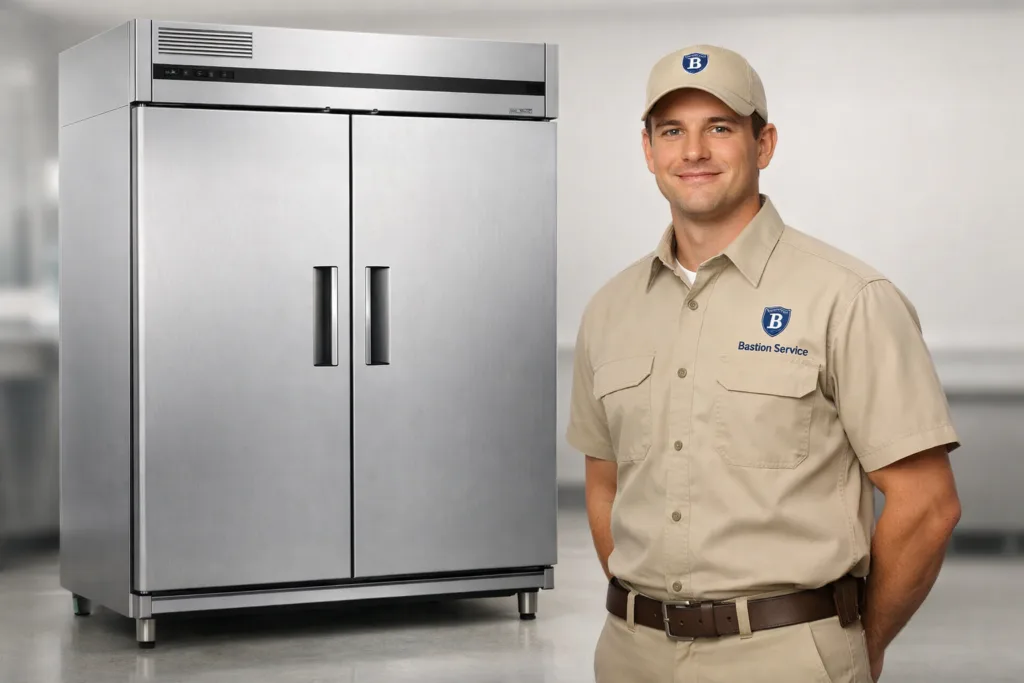




True freezer problems can interrupt storage, prep timing, and daily workflow fast when frozen product is part of normal operations. For businesses in Sawtelle, service is most useful when it focuses on the actual symptom pattern, how urgently the equipment is failing, and what repair steps are needed to stabilize temperatures and reduce downtime. Bastion Service handles True freezer repair with attention to fault isolation, repair scheduling, and the operating impact of a unit that is no longer holding conditions the way it should.
Related commercial service paths in Sawtelle include True Commercial Repair in Sawtelle, Commercial Freezer Repair in Sawtelle, and True Refrigerator Repair in Sawtelle.
How True freezer problems usually show up in day-to-day use
Many freezer failures start with small changes that staff notice before a full breakdown happens. Product may seem slightly softer than usual, interior frost may build faster, the cabinet may run longer between shutdowns, or recovery after door openings may become slow. In other cases, the issue is more obvious: rising temperature, fan noise, water on the floor, a door that no longer seals well, or a unit that seems to run constantly without getting fully cold.
What matters is that these symptoms do not all point to the same repair. Similar complaints can come from airflow restriction, evaporator icing, defrost problems, door gasket wear, control faults, fan motor failure, condenser issues, or more serious refrigeration-system trouble. That is why symptom-based diagnosis matters before parts are replaced or the freezer is pushed harder than it should be.
Common symptom groups and what they may indicate
Not freezing hard enough or drifting warmer than normal
If a True freezer is operating but not holding a stable low temperature, several systems may need attention. Restricted condenser airflow, weak evaporator airflow, an iced evaporator coil, faulty sensors, control issues, door leaks, or sealed-system performance problems can all reduce freezing ability. A unit that looks close to normal but cannot keep product fully frozen should be treated seriously, especially if the problem is getting worse during busy periods.
Slow pull-down after restocking or frequent door openings can also reveal an equipment problem. If the freezer no longer recovers the way it used to, that may point to declining airflow, reduced cooling capacity, or warm air intrusion that is forcing longer run times.
Heavy frost, ice accumulation, or blocked airflow
Frost is one of the most useful clues on a freezer service call. Ice around the door frame often suggests gasket wear, door alignment issues, or repeated warm air infiltration. Thick frost deeper inside the cabinet can indicate a defrost failure, evaporator fan problem, or moisture entering the box and freezing where it should not.
Once frost starts affecting airflow, cooling performance usually drops quickly. The freezer may still sound like it is working, but product temperature can drift because cold air is no longer moving properly through the cabinet. That is often when businesses notice uneven freezing, long run times, or a cabinet that feels colder in one section than another.
Water leaks, condensation, or wet floor areas
Water around a freezer is never just a cosmetic problem. It can be related to blocked drains, defrost issues, melting ice buildup, damaged seals, or internal temperature problems that create excess condensation. In addition to the performance concern, leaks can create cleanup issues and safety risks for staff working around the unit.
When leak symptoms appear alongside frost buildup or warmer product, the freezer usually needs more than surface cleanup. The source of the moisture needs to be identified so the underlying cooling or drainage issue can be corrected.
Fan noise, buzzing, clicking, or repeated restarting
Unusual sound often helps narrow down where the failure is developing. Rattling or scraping can come from fan blades hitting ice or worn motor components. Buzzing or repeated clicking may point to hard-start conditions, electrical component failure, or a compressor that is struggling to run normally. If the freezer starts and stops over and over, the equipment may be under stress even if the cabinet still feels somewhat cold.
Noise that appears together with temperature loss, frost, or poor recovery should not be ignored. Those combined symptoms often mean the freezer is working harder while delivering less cooling.
Why a True freezer may stop staying cold enough
A True freezer that will not stay cold enough usually has a problem in one of a few key areas: air movement, heat rejection, defrost function, temperature control, door sealing, or the refrigeration system itself. Dirty condenser conditions can trap heat and force long run times. Evaporator icing can choke off airflow. Failed fans can prevent cold air from circulating where it needs to go. Worn gaskets and door-closing issues let warm, humid air enter the cabinet and create both frost and temperature instability.
In some cases, the controls may not be reading temperature correctly or may not be cycling the system as intended. In others, the freezer may have a deeper refrigeration issue that reduces cooling capacity even though the unit still powers on and appears active. The important point is that “running” does not always mean “cooling correctly.”
When waiting can make the repair more expensive
Freezer issues tend to spread. A door leak can turn into heavy frost. Heavy frost can turn into blocked airflow. Blocked airflow can lead to longer run times and added strain on motors and other components. A unit that is short cycling or failing to recover may continue to operate for a while, but the extra stress can narrow the repair window before a more serious failure develops.
Scheduling service sooner is usually the better move when staff notice any of the following:
- Product softening or inconsistent holding temperature
- Frost building faster than normal
- The freezer running almost constantly
- Repeated alarms or warning conditions
- Water near the cabinet
- Loud fan, clicking, or buzzing noise
- Slow recovery after loading or routine door openings
These symptoms rarely correct themselves, and temporary workarounds usually do not solve the root cause.
What technicians look at during diagnosis
A good service visit should connect the complaint to the system causing it. That usually means reviewing box temperature behavior, checking airflow, inspecting frost patterns, looking at door gaskets and alignment, confirming whether fans are operating correctly, and evaluating whether the freezer is defrosting as it should. Depending on the symptom, electrical and refrigeration performance may also need to be tested.
This process helps answer the practical questions businesses actually need answered: Is this a localized repair or a bigger system issue? Is continued operation likely to cause more damage? Is the problem causing product risk right now? Can the freezer be returned to stable operation with a targeted repair, or is the scope becoming large enough to reconsider the unit overall?
Repair versus replacement considerations
Many True freezer problems are repairable when the fault is tied to components such as fan motors, sensors, controls, gaskets, door hardware, defrost parts, or drainage-related issues. Repair decisions become more complex when the unit has repeated breakdowns, severe cabinet wear, major refrigeration-system failure, or a pattern of downtime that keeps disrupting operations.
The best choice depends on the specific fault, the condition of the freezer, and how critical the equipment is to the business. A useful diagnosis should not just identify what is wrong today. It should also help clarify whether the repair makes sense in light of reliability, urgency, and ongoing operating demands.
Preparing for a service visit
Before service is scheduled, it helps to note the symptoms staff are actually seeing rather than guessing at the cause. Useful details include when temperatures started changing, whether frost is concentrated in one area or spread throughout the cabinet, whether the issue gets worse at certain times of day, what noises are present, and whether water, alarms, or door-closing problems are also involved.
If possible, businesses should also be ready to describe whether the freezer is failing all the time or only under load, after frequent access, or after restocking. Those patterns can make diagnosis faster and help determine how urgent the repair is.
Service decisions that support uptime in Sawtelle
For businesses in Sawtelle, the right next step is usually to schedule repair once a True freezer shows signs of unstable temperature, worsening frost, poor airflow, leaks, or abnormal noise. A service-focused visit should identify the fault, explain the repair path, and help you decide how to manage the equipment until work is completed. When a freezer is no longer holding conditions consistently, prompt diagnosis is the most practical way to limit downtime, protect stored product, and move toward a repair decision with confidence.


