
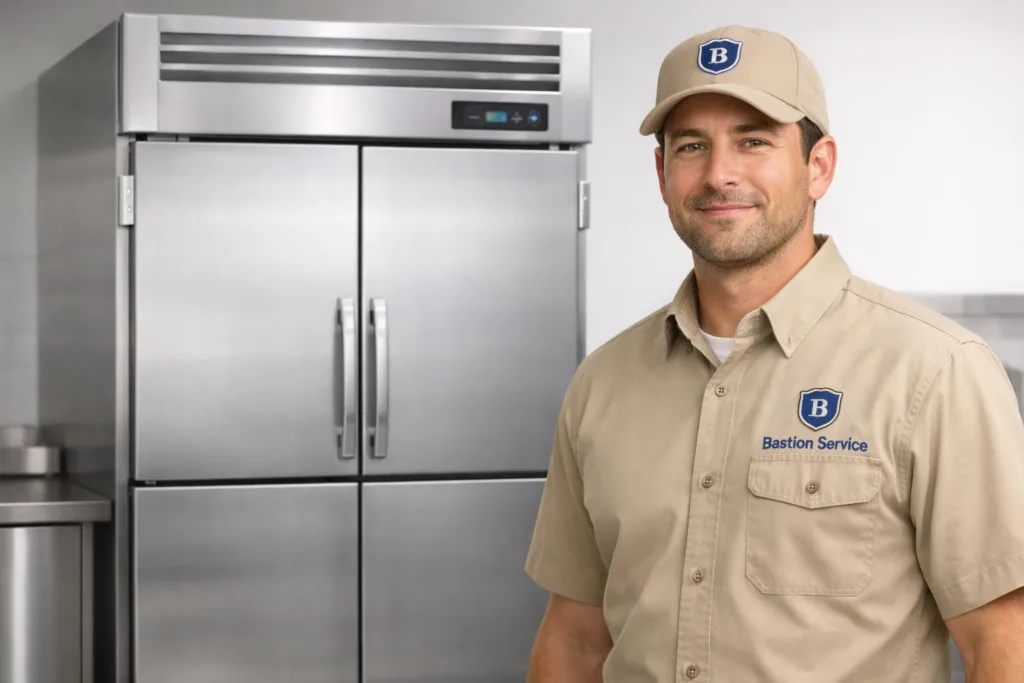





When a Traulsen refrigerator begins running warm, building frost, leaking, or cycling abnormally, the priority is to identify the failure before downtime spreads to product loss or workflow disruption. Similar symptoms can come from very different causes, including restricted condenser airflow, evaporator icing, fan motor problems, sensor drift, control faults, gasket leakage, or sealed-system trouble. For businesses in Pico-Robertson, the most useful service path is one that connects the symptom pattern to repair decisions, urgency, and whether the unit can remain in use safely until service is completed.
Related commercial service paths in Pico-Robertson include Traulsen Commercial Repair in Pico-Robertson, Commercial Fridge Repair in Pico-Robertson, and Traulsen Freezer Repair in Pico-Robertson.
Bastion Service handles Traulsen refrigerator issues with troubleshooting focused on the actual operating condition of the cabinet, not assumptions based on one visible symptom. That matters in kitchens, markets, healthcare spaces, and other business settings where refrigeration problems affect inventory protection, prep timing, and staff routines. A well-planned repair visit helps determine what is failing, how serious it is, and what steps make sense next.
Common Traulsen Refrigerator Symptoms and What They May Indicate
Cabinet temperature is too warm or keeps drifting
If the cabinet is not holding temperature, the problem may involve poor condenser airflow, a weak evaporator fan, sensor or control issues, door seal leakage, or a refrigeration system fault. In daily operation, this often shows up as slow recovery after door openings, uneven temperatures from top to bottom, or product that feels warmer than expected even when the display appears normal.
This symptom should be taken seriously because temperature drift rarely stays minor for long. A unit that struggles during busy periods is often already working harder than it should, which can increase wear on major components.
Frost buildup, ice formation, or blocked interior airflow
Ice around the evaporator section or frost buildup inside the cabinet usually points to a defrost issue, airflow problem, moisture intrusion, or a door that is not sealing correctly. Once frost begins to interfere with air movement, the refrigerator may still run, but cooling becomes uneven and runtime increases.
- Items near one section freeze while others run warm
- The fan sounds strained or airflow feels weak
- Interior panels show visible ice accumulation
- The unit runs longer but cools less effectively
These patterns often mean the problem has moved beyond a simple nuisance and needs service before a secondary failure develops.
Water leaks or excess condensation
Water on the floor or pooled inside the cabinet can come from a blocked drain, excessive frost melt, gasket gaps, sweating surfaces, or operating conditions that allow too much moisture into the box. Leaks are easy to dismiss at first, but they often signal a larger cooling or defrost problem.
In a business setting, leaks also create avoidable cleanup, slip risk, and recurring interruptions. If moisture keeps returning after wiping down the area, the underlying cause should be inspected rather than managed day to day.
Constant running, clicking, buzzing, or unusual fan noise
A Traulsen refrigerator that seems to run continuously or makes unfamiliar sounds may be dealing with a fan issue, loose component, relay problem, restricted airflow, or a larger refrigeration-system fault. Clicking at startup, rattling panels, or loud fan noise can each point to different repair paths, so the sound pattern matters.
Long runtimes are especially important because they often mean the refrigerator is compensating for another hidden problem. The cabinet may still be cooling for now, but the equipment is usually under more strain than normal.
Why a Temperature Problem Is Not Always the Same Repair
One of the most common mistakes with refrigeration equipment is treating all warm-cabinet complaints as compressor failure. In reality, a refrigerator that is not holding temperature may have an airflow restriction, an iced evaporator, a weak fan motor, a control problem, or a door-sealing issue. The same is true in reverse: what looks like a simple gasket issue can sometimes be tied to a broader defrost or circulation failure.
That is why symptom-based diagnosis matters. It helps determine whether the issue is isolated to one component, whether multiple faults are interacting, and whether repair is likely to restore stable operation. It also helps a business decide how urgently product should be moved and whether the unit should stay online at all.
Signs You Should Schedule Service Promptly
Some refrigeration problems can wait until a convenient service window. Others should be addressed as soon as they appear because the unit is already trending toward a larger failure. Schedule service promptly if you notice any of the following:
- Repeated temperature alarms or unexplained warm readings
- Frost that keeps returning after it is cleared
- Water leaking onto the floor or collecting inside the cabinet
- Slow temperature recovery after normal door openings
- Uneven cooling across shelves or storage zones
- Fans that stop intermittently or sound abnormal
- A refrigerator that runs almost nonstop during normal use
These symptoms often mean the equipment is no longer operating efficiently. Waiting too long can turn a manageable repair into a more disruptive outage.
How Pico-Robertson Businesses Can Prepare for a Service Visit
A little preparation can make refrigerator diagnosis faster and more useful. Before the appointment, it helps to note when the issue began, whether it happens all day or only during heavy use, and whether staff have observed ice, leaks, alarms, or unusual sounds. If temperature problems are affecting only part of the cabinet, that detail can be especially helpful.
You can also prepare by:
- Clearing enough access to the unit for inspection
- Keeping recent temperature logs if your team tracks them
- Noting any recent power interruptions or cleaning changes
- Recording whether the issue is constant or intermittent
- Identifying whether stored product has already been relocated
This kind of information helps connect the symptom to the likely source and can shorten the path to a repair decision.
Repair or Replace?
Not every Traulsen refrigerator with a cooling problem needs to be replaced, and not every older unit is the right candidate for continued repair. The better question is whether the present fault is repairable in a way that restores reliable operation for the demands of the business.
Repair is often the right choice when the cabinet is structurally sound and the failure is limited to identifiable components such as fans, controls, sensors, drains, gaskets, or defrost-related parts. Replacement becomes more likely when there are repeated breakdowns, major refrigeration-system issues, multiple failing components, or a history of unstable performance that keeps disrupting operations.
For businesses in Pico-Robertson, the decision should be based on reliability after repair, not just whether the unit can be made to run again temporarily.
Service Focused on Downtime, Product Protection, and Daily Use
Refrigerator problems affect more than one appliance. They can interrupt prep schedules, force product transfers, reduce available storage, and pull staff away from normal responsibilities. A useful repair visit should do more than identify a failed part. It should clarify the operating risk, the likely scope of repair, and whether the unit can support normal use once service is completed.
That is especially important when the refrigerator is part of a busy daily routine. A cabinet that appears to recover overnight but loses ground during active hours may have a very different issue than one that stays warm all day. Looking at how the unit behaves under actual use is often what makes the diagnosis meaningful.
What to Do Next if the Refrigerator Is Acting Up
If your Traulsen refrigerator is showing unstable temperatures, airflow problems, frost buildup, leaks, or unusual noise in Pico-Robertson, the next step is to schedule service based on the specific symptom pattern and how much the issue is affecting operations. Early evaluation can help prevent a minor fault from turning into inventory loss or a full cooling failure. The goal is to confirm what is wrong, determine whether repair is the best path, and get the equipment back to dependable use with as little disruption as possible.


