
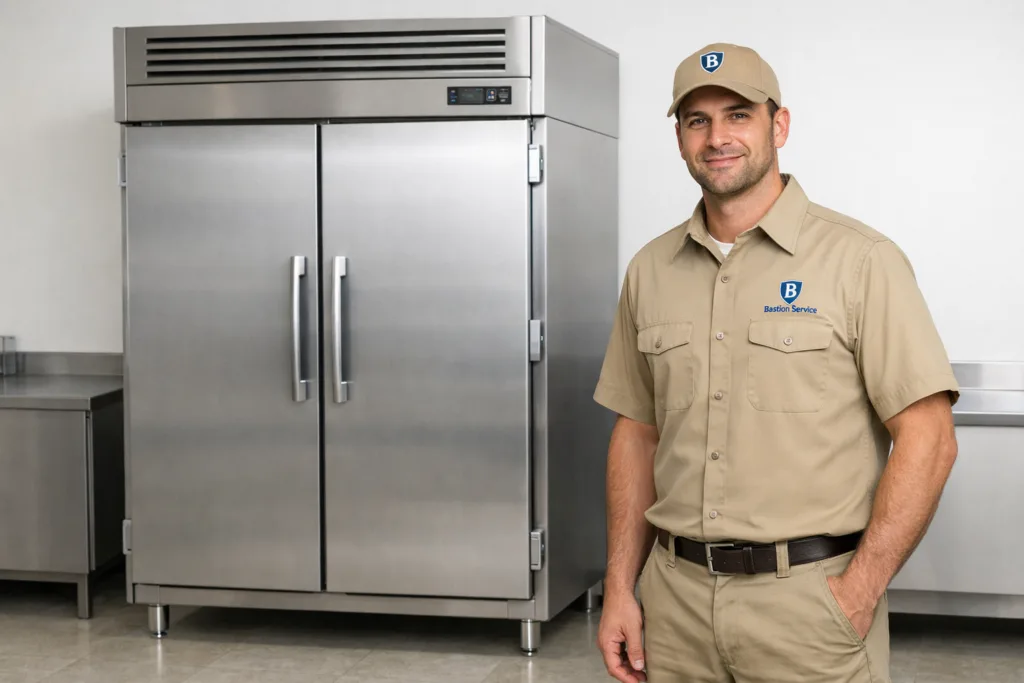







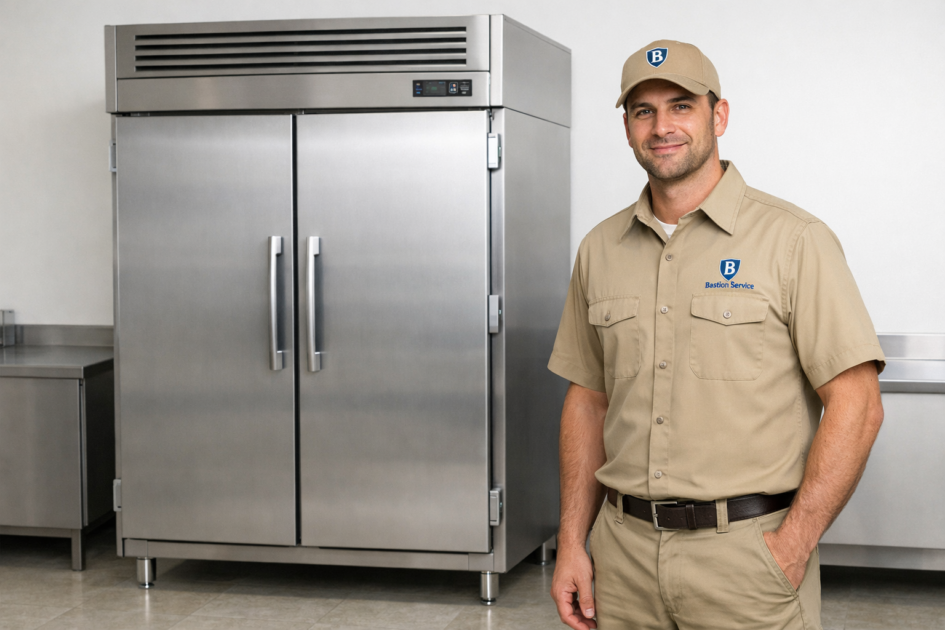
When a Traulsen refrigerator or freezer starts missing temperature, building frost, or showing uneven airflow, the issue can quickly affect product protection, prep timing, and day-to-day operations. For businesses in Pico-Robertson, the most useful service approach is to identify the actual failure pattern first, then decide whether the unit can stay in use, needs limited operation, or should be scheduled for repair without delay. Bastion Service works with local businesses to troubleshoot refrigeration equipment problems, explain likely causes, and set repair scheduling around downtime concerns.
For specific equipment paths in Pico-Robertson, review Traulsen Refrigerator Repair in Pico-Robertson, Traulsen Freezer Repair in Pico-Robertson, and Commercial Appliance Repair in Pico-Robertson.
Traulsen Refrigeration Equipment Problems That Disrupt Daily Operations
Refrigeration equipment problems rarely stay small for long. A refrigerator that seems only slightly warm can turn into a stock-loss issue by the next shift, while a freezer with growing ice buildup may begin restricting airflow and overworking key components. Symptom-based diagnosis helps determine whether the problem is tied to controls, sensors, fans, door sealing, defrost operation, drainage, or a deeper cooling-system fault.
Warm Cabinets and Temperature Drift
If a Traulsen refrigerator is no longer holding steady temperature, or a freezer is softening product, several different failures may be involved. Common causes include weak evaporator airflow, dirty condenser conditions, control or sensor issues, failing fan motors, door gasket leakage, or sealed-system trouble. Because those problems do not carry the same repair scope, it is important to verify the cause before deciding whether the unit can be monitored temporarily or needs immediate attention.
Warning signs often include:
- Cabinet temperatures that rise during normal use
- Long run times without full recovery
- Hot or warm spots in certain sections of the cabinet
- Products reaching unsafe holding conditions sooner than expected
- Repeated staff adjustments to settings with no lasting improvement
Airflow Problems and Uneven Cooling
Poor airflow inside a refrigerator or freezer can make one shelf feel cold while another section runs noticeably warmer. In business-use equipment, that inconsistency creates uncertainty about holding conditions and slows recovery after door openings. Airflow problems may be caused by evaporator fan issues, ice accumulation, blocked internal passages, damaged panels, or loading patterns that reveal an underlying mechanical fault.
When airflow is restricted, the equipment may still appear to be running, but performance becomes less predictable. That is often when businesses in Pico-Robertson start noticing gradual cooling complaints rather than a complete shutdown. A service visit helps separate true mechanical problems from access, loading, or circulation issues that are adding stress to the cabinet.
Frost Buildup and Ice Formation
Frost around doors, interior panels, evaporator areas, or stored product usually points to a condition that needs correction rather than simple cleanup. On Traulsen freezer equipment, ice buildup can interfere with normal airflow, reduce storage usability, and increase runtime. On refrigerator equipment, moisture and light frost may point to sealing, airflow, or control-related trouble.
Common frost-related causes include:
- Worn or damaged door gaskets
- Doors not closing or sealing properly
- Defrost system problems
- Moisture intrusion from frequent openings
- Air circulation issues that allow localized icing
If ice buildup is interfering with door closure, fan movement, or usable storage space, repair should be scheduled before the unit falls further behind or develops additional component strain.
Leaks, Condensation, and Drain Issues
Water near refrigeration equipment is not just a nuisance. In a working kitchen or storage area, leaks can create slip hazards, sanitation concerns, and hidden damage around the unit. Moisture may come from a blocked drain, thawing ice, excess condensation, defrost trouble, or temperature problems that are changing how water forms and exits the cabinet.
A proper diagnosis helps determine whether the leak is a straightforward drainage issue or a symptom of a larger cooling or airflow problem. That distinction matters, especially when the unit is also showing temperature instability or frost at the same time.
Refrigerator and Freezer Symptoms Often Point to Different Repair Paths
Although refrigerators and freezers share many components, the symptom pattern often changes the repair decision. A refrigerator problem may show up first as inconsistent holding temperature, sweating, or frequent cycling. A freezer problem is more likely to appear as frost accumulation, slow pull-down, poor recovery after door openings, or product softening even while the unit still sounds active.
That is why repair planning should not be based on one visible symptom alone. For example, a warm refrigerator with no frost may involve controls or condenser-side issues, while a freezer with heavy ice and weak circulation may require attention to defrost components, fan operation, or door sealing. Grouping all cooling complaints together can lead to incorrect assumptions and unnecessary delay.
Signs Continued Use May Make the Problem Worse
Some refrigeration problems allow brief monitored operation, but others can escalate quickly if the unit remains in use. A refrigerator or freezer that runs constantly, short cycles, struggles to recover, triggers alarms, or shows repeat temperature drift should be evaluated before the condition spreads to additional parts.
Continued use may increase risk when you notice:
- Cabinet temperatures that no longer match the control setting
- Rapid frost return after manual clearing
- Persistent fan noise changes or weak internal air movement
- Water pooling combined with cooling loss
- Repeated warming during normal service hours
For many Pico-Robertson businesses, the immediate question is not only what failed, but whether the equipment should stay in service until repair is completed. That answer depends on actual cabinet conditions, how fast the symptom is progressing, and whether safe holding can still be maintained.
How Repair Planning Helps Protect Uptime
Repair planning is about more than replacing a part that appears to have failed. It also helps determine whether the current problem is isolated, tied to maintenance conditions, or part of a broader wear pattern that affects reliability. That matters when a unit is older, when multiple symptoms are happening at once, or when the equipment supports essential storage during peak operating hours.
In some cases, the repair may be relatively contained, such as a gasket, fan, or drainage correction. In other cases, repeated cooling loss, ongoing frost issues, and excessive runtime may justify a broader review of system condition and likely near-term needs. Good repair planning gives managers a realistic sense of downtime impact, next steps, and whether follow-up work is likely.
When to Schedule Service for Traulsen Equipment in Pico-Robertson
Early scheduling usually provides more options than waiting for a complete outage. If staff are noticing warm sections, recurring alarms, excess frost, leaks, slow freezer recovery, or unusual performance changes, it makes sense to arrange service before normal operation is affected further. Delayed attention can turn a manageable issue into lost product, emergency work, or a longer interruption.
For businesses in Pico-Robertson using Traulsen refrigeration equipment, the best next step is to schedule service when cooling performance, airflow, frost, or moisture problems begin interfering with normal use. A focused repair visit can identify the fault, explain whether limited operation is still reasonable, and help set repair timing around the demands of the business.


