





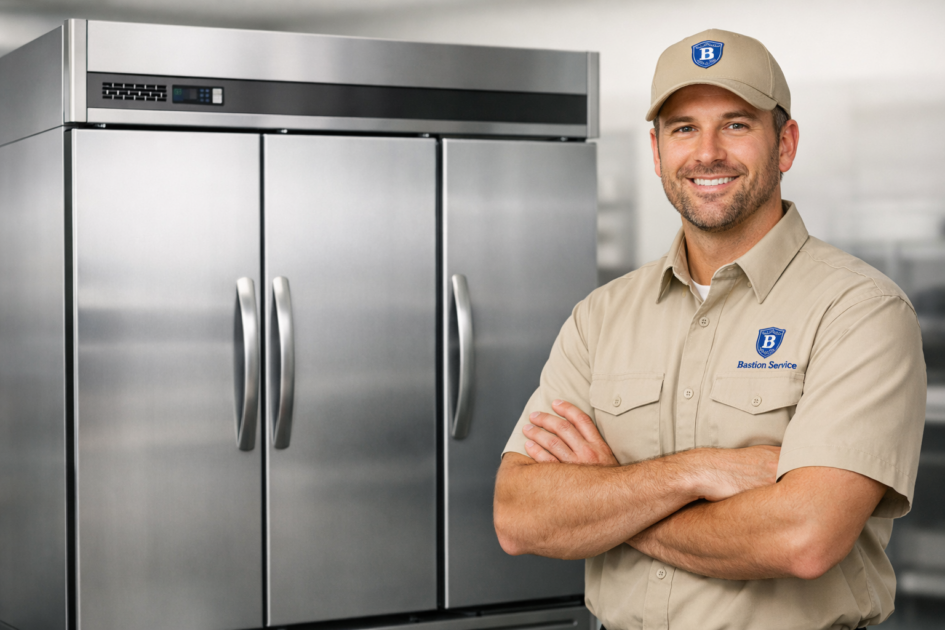
Turbo Air refrigerator problems can disrupt storage, prep timing, and product protection fast, especially when a unit begins running warm, icing up, leaking, or cycling unpredictably. For businesses in Pico-Robertson, the most useful service visit is one that connects the symptom pattern to the likely failure point so repair decisions are based on actual operating conditions, not guesswork. Bastion Service handles Turbo Air refrigerator issues with that service-first approach, helping businesses understand what is failing, how urgent it is, and what to do next.
Related commercial service paths in Pico-Robertson include Turbo Air Commercial Repair in Pico-Robertson, Commercial Fridge Repair in Pico-Robertson, and Turbo Air Freezer Repair in Pico-Robertson.
Common Turbo Air refrigerator symptoms and what they often indicate
Temperature is drifting above the set point
If the cabinet is not holding temperature, the cause is not always the same from one unit to the next. A warm interior can result from clogged condenser coils, weak evaporator airflow, worn door gaskets, control problems, sensor issues, or a deeper cooling-system failure. In busy kitchens and other workspaces, frequent door openings and overloaded shelves can also expose an existing weakness that was easier to miss during lighter use.
This is why a temperature complaint should be evaluated by looking at actual box temperature, recovery time, airflow strength, frost pattern, and compressor behavior rather than assuming a single failed part. A refrigerator that is slightly warm all day may have a different problem than one that starts cold and rises later in the shift.
Frost buildup keeps returning
Frost on the evaporator cover, product, or interior walls often points to a defrost issue, airflow restriction, door leakage, or moisture entering the cabinet too often. As frost builds, air circulation becomes less effective, and that can create hot and cold zones inside the box. Staff may notice one shelf freezing product while another shelf no longer stays cold enough.
Repeated frost is a sign that the refrigerator needs more than a temporary reset. If the underlying cause is not corrected, ice buildup can continue reducing airflow until cooling performance drops sharply.
Water is leaking inside or onto the floor
Leaks can come from a blocked drain line, excess ice melt, condensation caused by warm air infiltration, or poor door sealing. Water around the unit can also appear when a refrigerator is not draining properly during defrost or when frost accumulation is melting unpredictably.
Beyond the equipment problem itself, water around refrigeration equipment can create sanitation concerns and slip hazards. If leaks are recurring, service should focus on both the source of the moisture and the reason the cabinet is producing it.
The refrigerator runs constantly or cycles too often
A Turbo Air refrigerator that rarely shuts off may be fighting heat because of dirty coils, restricted ventilation, a poor gasket seal, or declining cooling performance. A unit that starts and stops too frequently may have control issues, electrical faults, overheating components, or compressor-start problems.
Both patterns matter because they increase wear. A unit that is forced to run under stress day after day can move from a manageable repair into a more expensive failure if the condition is ignored.
Fans, compressor, or controls sound unusual
Clicking, buzzing, rattling, hard starts, fan rubbing, or intermittent alarms can all point to specific faults, but they should be judged in context. A loud fan may indicate ice interference or motor wear. Repeated clicking may suggest trouble in the starting circuit. A refrigerator that sounds normal at first but becomes noisy as it runs may be showing signs of overheating or strain.
Unusual sound combined with weak cooling, frost, or temperature swings is a strong reason to schedule service before the unit stops cooling altogether.
Why a Turbo Air refrigerator may not be holding temperature
When a Turbo Air refrigerator is not holding temperature, several systems need to be considered together. Airflow is one of the first. If condenser coils are blocked with dust and grease, the refrigerator cannot reject heat efficiently. If evaporator airflow is reduced, cold air may not circulate evenly through the cabinet. Even if the compressor is running, poor airflow can make the box act like it is underpowered.
Door sealing is another common factor. Torn, loose, or compressed gaskets allow warm air and moisture to enter, which increases run time, contributes to frost, and makes temperature recovery slower after each opening. A door that is out of alignment can create the same problem even if the gasket itself is not badly damaged.
Controls and sensors also matter. If the control is reading temperature incorrectly or not responding properly, the refrigerator may cycle at the wrong times or fail to maintain a stable range. In other cases, the cooling system itself may be weakening, especially when the unit runs heavily but still cannot pull product temperature down as expected.
What a service diagnosis should check
A useful repair visit should help determine whether the issue is isolated and repairable or part of a larger reliability problem. That evaluation typically includes a combination of symptom review, operating checks, and component inspection.
- Actual cabinet temperature compared with set temperature
- Condition of condenser and evaporator airflow
- Frost pattern and defrost performance
- Door gasket seal and door alignment
- Fan motor operation and airflow consistency
- Sensor, thermostat, and control response
- Compressor run behavior and start components
- Drain condition and cause of any water leakage
- General wear based on age, use, and service history
This kind of symptom-based inspection helps separate issues that only look similar on the surface. A warm cabinet caused by airflow restriction is a very different repair path from one caused by a failing cooling system.
When service should be scheduled right away
Some problems should not be left for a later opening in the schedule. If the refrigerator is staying above its intended holding range, losing temperature during normal use, building heavy frost quickly, or leaking repeatedly, the issue is already affecting reliability. The same is true if staff are constantly adjusting controls, moving product to different shelves to find colder spots, or noticing that the box takes much longer than normal to recover after the door is closed.
Prompt service is also important when the compressor sounds strained, the unit is short cycling, or alarms are appearing without a clear reason. In many cases, early intervention helps prevent added stress on major components and reduces the chance of a full breakdown during operating hours.
Situations where continued use can make the repair worse
Continuing to run a struggling refrigerator is risky when airflow is blocked by ice, when the cabinet is consistently too warm, or when electrical and compressor components are cycling abnormally. These conditions can increase strain, extend run times, and turn a smaller issue into a broader failure.
If the unit is overheating, failing to recover after routine door openings, or producing repeated hard-start noises, it should be inspected before being relied on for regular storage. The same applies to a refrigerator with persistent leaks or a door that no longer seals well enough to keep moisture out.
Repair versus replacement for an aging unit
Not every Turbo Air refrigerator with a cooling complaint needs to be replaced. Many issues involving gaskets, drains, fans, controls, sensors, or defrost components can be worth repairing when the cabinet is otherwise in solid condition. If the unit has been reliable and the current problem is limited in scope, repair is often the sensible path.
Replacement becomes a more serious consideration when the refrigerator has repeated major cooling failures, significant compressor-related concerns, chronic corrosion, or a pattern of downtime that keeps disrupting operations. For businesses in Pico-Robertson, the right decision is usually the one that balances current repair cost against the likelihood of stable performance after the work is completed.
How to prepare for a refrigerator repair visit
Before service, it helps to note the exact symptom rather than only the general complaint. Useful details include whether the box is always warm or only during certain hours, whether frost appears in one section first, whether leaks happen during defrost or all day, and whether unusual sounds occur at startup or during long run cycles. If staff have noticed recent changes in loading, cleaning, ventilation, or door use, that information can also help narrow the diagnosis.
Product temperature readings, alarm history, and a rough timeline of when the problem started can make the visit more efficient. The better the symptom history, the easier it is to identify whether the problem is airflow, controls, defrost, sealing, drainage, or cooling performance.
Service support for Pico-Robertson businesses
Turbo Air refrigerator repair in Pico-Robertson is most useful when the service process is tied directly to downtime risk, equipment condition, and the real symptom affecting daily operations. Whether the issue shows up as warm storage, frost buildup, water leakage, unstable cycling, or noise, the goal is to move quickly from symptom to repair plan so the unit can be evaluated, scheduled, and addressed with minimal disruption to the business.


