
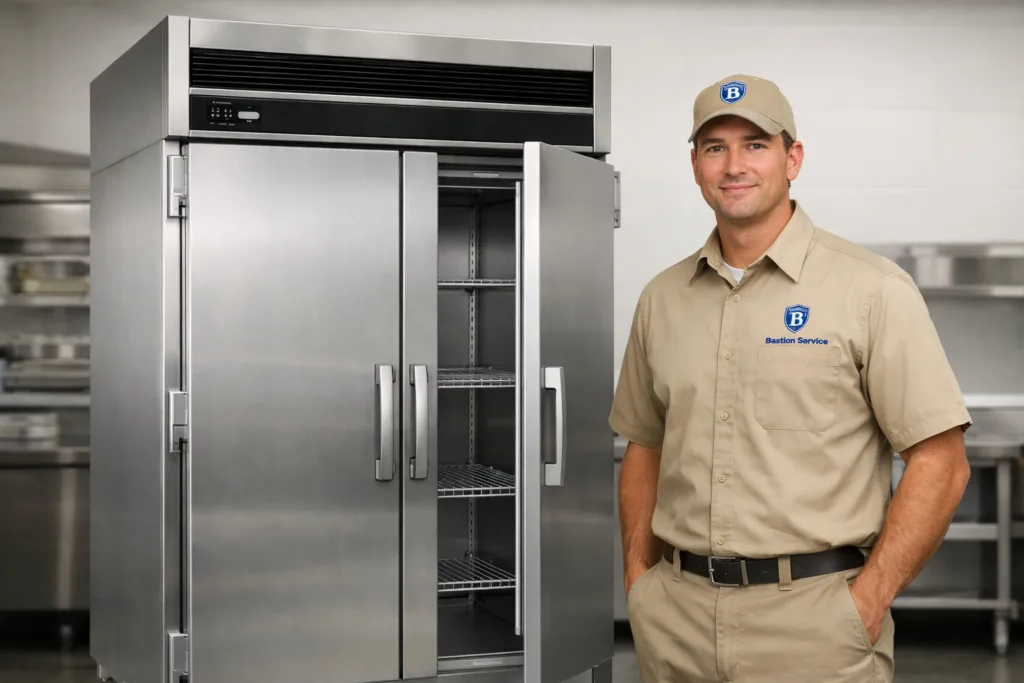




Freezer problems rarely stay minor for long when inventory, prep schedules, and staff workflow depend on stable holding temperatures. For a Traulsen unit showing warming, frost, leaks, fan noise, or erratic cycling, service is most useful when the symptom is tied to what the equipment is actually doing under load. Bastion Service helps Los Angeles businesses evaluate the failure pattern, schedule repair based on urgency, and reduce avoidable downtime before a small refrigeration issue turns into a larger interruption.
Related commercial service paths in Los Angeles include Traulsen Commercial Repair in Los Angeles, Commercial Freezer Repair in Los Angeles, and Traulsen Refrigerator Repair in Los Angeles.
What Traulsen Freezer Issues Usually Point To
Many freezer complaints start with the same few signs: the cabinet is not holding temperature, ice keeps forming, the door does not seem to seal correctly, or the unit sounds different than normal. Those symptoms can come from several different causes, so the best repair decision depends on what is happening inside the cabinet, at the evaporator, across the condenser, and at the controls.
On a busy Los Angeles site, freezer performance is also affected by how often the door opens, how quickly product is loaded, the heat around the equipment, and whether airflow has been restricted. That is why a symptom-based service call is often the fastest way to sort out whether the issue involves airflow, defrost, sensors, fan motors, door hardware, or sealed-system components.
Common Traulsen Freezer Problems
Not staying cold enough
If the cabinet temperature is drifting upward, struggling after door openings, or taking too long to recover, the problem may be tied to dirty condenser coils, weak fan operation, evaporator frost, a failing sensor, control issues, refrigerant loss, or a door that is allowing warm air inside. A freezer that is “almost cold enough” still needs attention because marginal cooling can quickly become a no-cooling failure during peak hours.
Frost buildup that keeps returning
Heavy frost on interior panels, around the evaporator section, or near the door opening usually means moisture is getting in or defrost is not working correctly. Worn gaskets, door alignment problems, frequent infiltration, failed heaters, sensor faults, or control problems can all contribute. Once frost builds up enough to block airflow, temperature stability usually starts to suffer as well.
Water leaks or ice around the cabinet
Leaks can come from defrost drainage issues, blocked drain lines, ice accumulation that later melts, or door seal problems that allow excessive condensation. In kitchens and storage areas, that is more than a nuisance. It can create slip hazards, hide a developing defrost problem, and signal that the freezer is no longer managing moisture the way it should.
Fan noise, rattling, or reduced airflow
Changes in sound often show up before a complete breakdown. A rattling or grinding noise may point to an evaporator or condenser fan issue, vibration from loose panels, or ice interfering with moving parts. If airflow seems weaker than usual, product is freezing unevenly, or one area of the cabinet feels warmer, fan-related service should be scheduled before airflow loss creates a larger cooling problem.
Short cycling or running all the time
A Traulsen freezer that runs constantly may be compensating for heat gain, dirty heat exchange surfaces, poor door sealing, ice restriction, or declining refrigeration performance. A unit that starts and stops too often may indicate electrical wear, control instability, sensor trouble, or overheating protection. Neither pattern should be ignored because both can increase stress on major components.
Alarms, fault codes, or intermittent shutdowns
When alarms appear, disappear, and return later, the issue may be temperature-related, sensor-related, or tied to communication and control faults. Intermittent failures are especially important in freezer service because the equipment may look normal when checked briefly, then fail again during recovery, defrost, or high-demand periods. Good service depends on matching the alarm history with the operating pattern.
Why a Warm Freezer Does Not Always Mean a Major Failure
One of the most common repair mistakes is assuming the most expensive part must be the cause. A warm cabinet does not automatically mean compressor failure, just as ice buildup does not automatically mean only a defrost heater issue. In many cases, the root problem is a smaller but critical fault such as a fan motor, temperature sensor, gasket leak, restricted airflow path, or control problem.
That matters because replacing parts based on guesswork can add cost and extend downtime without restoring reliable freezing performance. A symptom-first diagnosis helps determine whether the repair is straightforward, whether multiple conditions are contributing, or whether the unit is showing broader reliability concerns.
Signs Service Should Be Scheduled Soon
It is usually time to schedule repair when the freezer shows any of the following:
- Cabinet temperature will not stay within the expected range
- Frost returns soon after being removed
- Door gaskets look loose, cracked, or no longer seal evenly
- The unit takes much longer to recover after normal use
- Fan noise becomes louder or airflow sounds different
- Water appears around the base or inside the cabinet
- Alarms repeat or the unit shuts down intermittently
- The freezer runs nonstop during periods when it normally cycles
These are early warnings that often appear before a full loss of cooling. Addressing them promptly can help protect stored product and avoid service at a more disruptive time.
When Continued Use Can Make the Repair Bigger
Some freezers continue operating even while performance is getting worse. That can create the impression that service can wait, but ongoing operation under poor airflow, heavy frost, or unstable temperature conditions can add wear to other components. A weak door seal can keep feeding moisture into the cabinet. A failing fan can create uneven cooling and longer run times. Restricted condenser airflow can raise operating temperatures and increase system stress.
If the freezer is clearly warming, icing heavily, or repeatedly alarming, continued use may increase the chance of inventory loss and a more involved repair. In many business settings, acting before complete failure is the less costly option.
Repair or Replace: How the Decision Usually Gets Made
Repair is often the better path when the cabinet is structurally sound and the failure is isolated to components such as fans, controls, sensors, gaskets, door hardware, defrost parts, or specific refrigeration-related items. Replacement becomes a stronger consideration when the unit has recurring major failures, severe cabinet deterioration, repeated downtime, or repair costs that no longer make sense for the equipment’s overall condition.
For a Traulsen freezer in Los Angeles, the decision is usually based on more than age. Service history, current failure type, parts involved, cabinet condition, and the impact of downtime all matter. The goal is to restore dependable operation, not just get the unit running briefly.
How to Prepare for a Traulsen Freezer Service Visit
A few details can make diagnosis faster and more accurate. Before service, it helps to note:
- Whether the freezer is always warm or only during certain periods
- Any recent alarms, temperature swings, or shutdowns
- Where frost or leaking is appearing
- Whether fan noise, buzzing, or rattling has changed
- If the issue started after cleaning, loading changes, or a power interruption
- How often the door is opened during normal operation
If product has already been moved or the unit has been manually defrosted, that information is still helpful because it can explain why the symptom looks different by the time the technician arrives.
Service Priorities for Los Angeles Businesses
Freezer repair in Los Angeles is often about keeping daily operations moving while minimizing disruption to storage, prep, and staffing. High ambient heat, frequent access, and tight back-of-house layouts can all influence how a Traulsen freezer behaves and how quickly a minor problem becomes urgent. A service-focused approach looks at the failure itself, the surrounding operating conditions, and the most sensible next step for uptime.
If your Traulsen freezer is warming, frosting, leaking, cycling abnormally, or making new fan noise, the next step is to schedule diagnosis before the problem affects more inventory or turns into a longer outage. Timely repair helps clarify what failed, what can still be protected, and whether the unit is a good candidate for targeted repair or a broader equipment decision.


