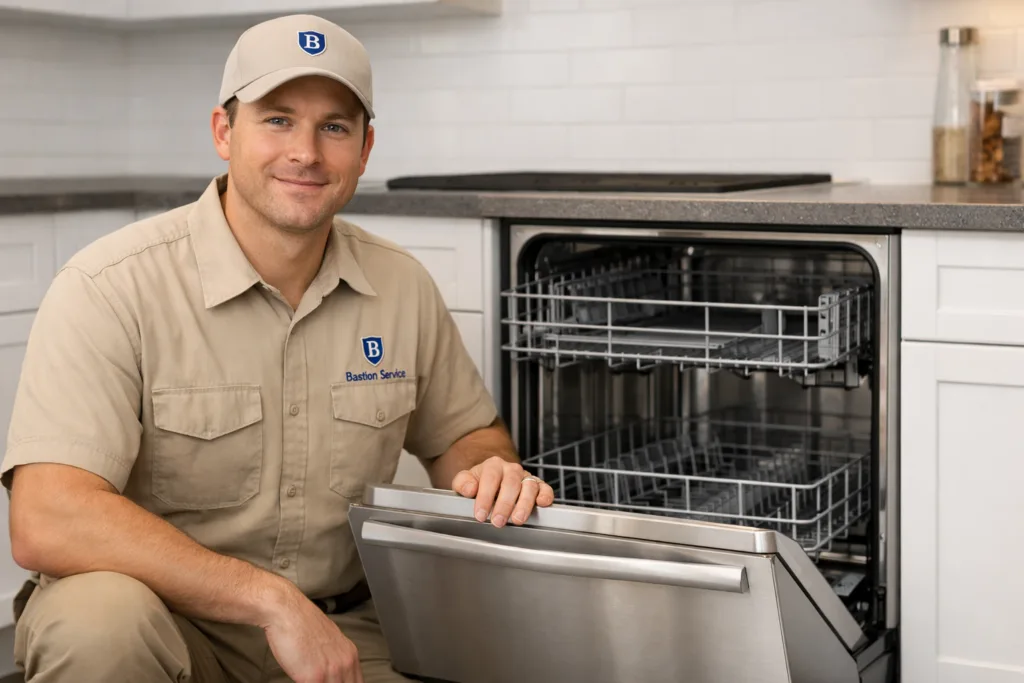
Dacor dishwashers usually fail in ways that follow a pattern. One load may come out cloudy, the next may stop with water still in the tub, and then a leak shows up near the toe kick. Looking at that sequence matters because the visible symptom is not always the failed part. A dishwasher that seems to have a drain problem may actually be struggling with wash circulation, overheating, or a control issue that prevents the cycle from finishing correctly.
How Dacor dishwasher problems usually show up
Most dishwasher faults affect one of five basic functions: filling, washing, heating, draining, or drying. When one stage breaks down, the next stage often suffers too. That is why poor wash results, long cycles, and wet dishes can all be related even if they seem like separate complaints.
In Rancho Park homes, the most useful starting point is to note what the machine is doing consistently. Does it fill but not wash? Does it wash but not drain? Does it complete the cycle but leave dishes cold and wet? Those details help narrow the issue faster than replacing parts based on guesswork.
Common symptoms and what they can mean
Water left in the tub after the cycle
Standing water often points to a clogged filter area, blocked drain path, failing drain pump, or a hose issue. It can also happen when the cycle never reaches the proper drain stage because of another fault. If the dishwasher is repeatedly run without draining fully, odors, residue, and overflow risk can get worse.
Dishes are still dirty after a full cycle
If plates come out with food residue, grit, or cloudy film, the cause may be low water fill, blocked spray arms, weak circulation pressure, detergent delivery problems, or poor wash temperature. When cleaning performance drops gradually, homeowners often assume it is a loading issue, but repeated poor results usually mean the wash system is no longer working as intended.
Dishwasher leaks during use
Leaks can start at the door seal, lower spray pattern, sump area, pump seals, or internal hoses. Some leaks only appear during certain parts of the cycle, which is why timing matters. A leak during fill can point in one direction, while a leak during wash or drain can point in another. If water is reaching flooring, cabinets, or trim, it is best to stop using the appliance until the source is identified.
Unit will not start
A Dacor dishwasher that does nothing when started may have a latch problem, interface issue, power supply fault, or control failure. In some cases the panel lights respond but the machine will not engage the cycle, which can indicate the door is not being recognized as fully closed or that a safety input is not being satisfied.
Cycle stops halfway through
Mid-cycle failure often suggests a heating problem, control issue, sensor fault, drainage interruption, or intermittent electrical problem. If the machine starts normally and then shuts down at roughly the same point each time, that repeatable pattern is valuable. It usually means the failure is tied to a specific function the dishwasher reaches during that stage.
Grinding, buzzing, or humming noises
Noise complaints often come from debris in the pump area, a worn motor, a failing drain pump, or spray arm interference. A brief hum at the start of drain may not mean the same thing as a harsh grinding noise during wash. Noises that increase over time are worth addressing early because the machine may still run while internal wear is getting worse.
Dishes stay wet and cool at the end
Drying problems can come from low final rinse temperature, heating circuit faults, rinse aid issues, or a broader control problem. If drying performance changes at the same time cleaning results decline, the problem may involve more than the dry cycle alone.
Why the same symptom can have different causes
Dishwashers are sequential machines. They fill, circulate water, heat, drain, and dry in order. If one step is weak or incomplete, the final result can look misleading. For example, a machine that leaves soap residue may not have a detergent problem at all. It may be underfilling, washing with weak pressure, or draining too slowly to complete the cycle properly.
That overlap is why diagnosis matters before choosing a repair path. Replacing a drain pump will not solve a cycle interruption caused by a control fault, and changing a seal will not help if the real problem is spray deflection from a wash-system issue inside the tub.
Signs the dishwasher should not keep running
Some problems are inconvenient but manageable for a short time. Others are strong signals to stop using the appliance until it is checked. Continued operation can turn a contained repair into floor damage, cabinet damage, or a larger component failure.
- Water is leaking onto the floor or into surrounding cabinetry
- The dishwasher hums, grinds, or makes sharp mechanical noise
- The door does not latch securely or pops open
- The machine stops unpredictably and must be reset
- Standing water remains in the tub after repeated cycles
- The unit shows electrical inconsistency such as tripping power or losing panel response
What helps determine whether repair makes sense
Many Dacor dishwasher problems are repairable when the fault is isolated and the rest of the appliance is still performing well. Issues involving a drain pump, circulation component, latch, seal, or drain blockage are often worth addressing if the dishwasher has otherwise been reliable and fits the kitchen layout well.
Replacement becomes a more serious consideration when several systems are failing at once, when leak damage has already affected the surrounding area, or when control, heating, and pump-related problems combine into a larger repair total. The appliance’s overall condition matters just as much as the current symptom.
What Rancho Park homeowners can observe before service
Before scheduling service, it helps to note a few basic details: whether the machine fills with water, whether spray sounds seem normal, whether the cycle always stops at the same point, and whether the dishes are hot or cool at the end. Even simple observations like “it drains sometimes but not always” or “the leak starts after several minutes” can make troubleshooting more efficient.
It is also helpful to check for obvious loading interference, loose items near the filter area, or visible residue buildup. These observations do not replace service, but they can help distinguish a simple use issue from a mechanical fault.
Service that stays focused on the actual complaint
Households usually want the same answers: is the dishwasher safe to use, will it wash and drain normally again, and is the repair worth doing. Bastion Service helps Rancho Park homeowners work through Dacor dishwasher problems with a practical repair plan based on the symptom pattern, appliance condition, and likely repair path.
When a Dacor dishwasher begins leaking, stops mid-cycle, leaves residue on dishes, or fails to drain, the best next step is to identify which system is actually failing rather than treating every symptom as a separate problem.