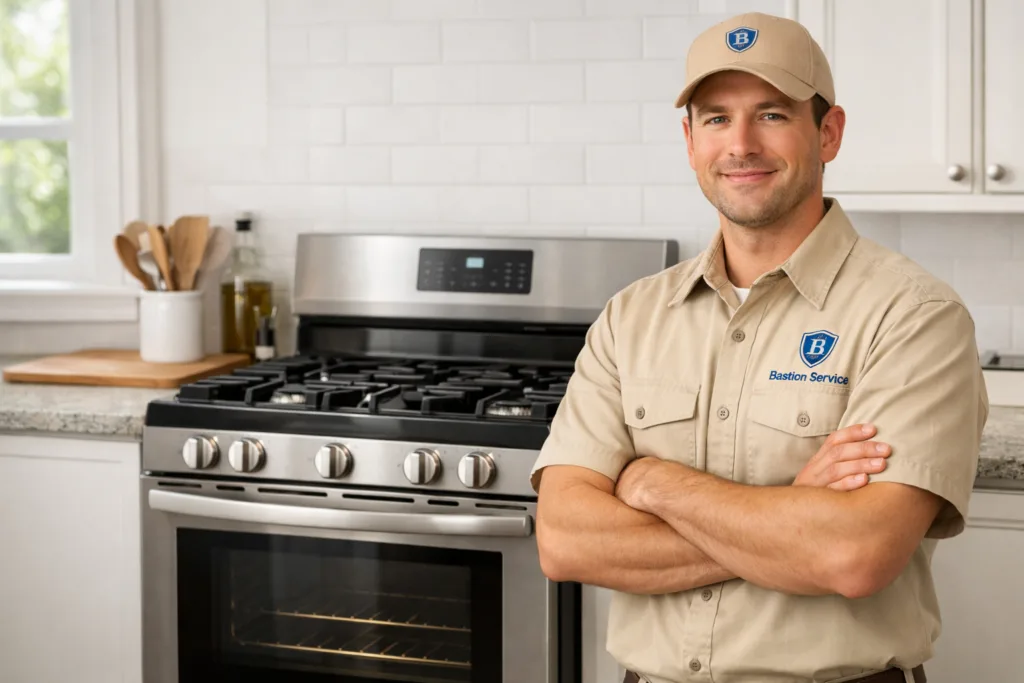
Burner and heating problems usually start as small annoyances, then become hard to ignore. A surface element may heat weakly, a gas burner may click several times before lighting, or one side of the stovetop may cook much faster than the other. In many homes, these symptoms are caused by different underlying faults even when they seem similar at first, which is why testing the burner, switch, igniter, receptacle, wiring, and controls matters before any part is replaced.
Common stove problems homeowners notice first
One of the most frequent complaints is a burner that will not turn on at all. On electric stoves, that can point to a failed element, a worn receptacle, a damaged infinite switch, or a wiring issue beneath the top. On gas stoves, the problem may involve the spark igniter, burner head alignment, clogged ports, or a faulty valve. If the problem is limited to the top cooking surface rather than the full appliance, related diagnosis may overlap with Cooktop Repair in Del Rey.
Uneven heat is another common issue. Pans may develop hot spots, simmer settings may run too hot, or a burner may cycle incorrectly and make everyday cooking unpredictable. In some cases, the burner itself is failing. In others, the control is no longer regulating output properly, which can make a simple meal take much longer than it should.
Homeowners also call when a stove clicks continuously, gives off a faint burning smell, trips a breaker, or shuts down during normal use. Those symptoms should not be ignored. Repeated clicking may be moisture or debris around the ignition system, but it can also signal a failing spark module or switch. Breaker trips and scorch marks can indicate electrical stress that needs prompt attention.
What different symptoms can mean
A burner will not heat
If only one burner is affected, the issue is often localized. Electric models may have a bad element or socket, while gas models may have a blocked burner port, weak igniter, or ignition switch problem. When multiple burners stop working at the same time, the cause is more likely connected to incoming power, shared wiring, or the main control system.
The stove heats, but not correctly
A stove that runs too hot or not hot enough can be frustrating because it still appears to work. This often points to a failing switch, inconsistent voltage to the burner, sensor-related control problems, or wear within the burner assembly itself. If the temperature complaint is really coming from baking or broiling performance rather than the cooktop, the better fit may be Oven Repair in Del Rey.
Ignition is delayed or inconsistent
Gas stoves that click without lighting right away may have dirty burner parts, moisture around the igniter, poor flame carryover, or a worn ignition component. Delayed ignition should be checked sooner rather than later because gas buildup before ignition is not something to dismiss as normal. A burner that lights only after several tries is already showing a fault condition.
The appliance works partly, but not as a whole
Many household cooking units combine surface burners and oven functions in one appliance. When symptoms affect both areas, the problem may go beyond a single burner and involve the appliance as a complete Range Repair in Del Rey. Looking at the full cooking system helps separate a surface issue from a broader power, control, or safety-related failure.
Why diagnosis matters before repair
Stove problems are easy to misread. A burner that seems dead may actually have power but a failed switch. A burner that glows may still be defective if it cannot regulate heat correctly. A clicking gas burner may not need a major part, but instead cleaning, realignment, or correction of a moisture-related ignition issue. Proper diagnosis helps avoid replacing the wrong component and gives a clearer sense of whether the appliance is safe to keep using.
This matters even more when symptoms suggest electrical or gas-related risk. If there is visible sparking, a gas odor, repeated breaker trips, melted plastic near a control, or signs of overheating, it is best to stop using the stove until it has been evaluated. Continued use can turn an isolated fault into wiring damage, control failure, or added burner damage.
When service is worth scheduling
It is usually time to schedule service when the stove is no longer dependable for normal household cooking. That includes burners that heat unpredictably, controls that do not respond consistently, ignition that has become unreliable, or temperature output that keeps changing from one use to the next. Intermittent problems often get worse with time, especially when switches, wiring, and ignition parts are already wearing out.
Service is also worth scheduling when the problem is difficult to isolate. For example, some homeowners believe the stove is failing when the actual issue is coming from the oven portion of the appliance or from a separate built-in unit. If the concern is centered on a built-in baking appliance rather than the stovetop, that points more toward Wall Oven Repair in Del Rey.
Repair or replacement?
Repair is often the practical choice when the problem is limited to a burner element, igniter, switch, valve, receptacle, or another accessible component and the rest of the stove is in solid condition. Many common faults can be corrected without replacing the whole appliance, especially when the frame, cooktop, and controls are otherwise in good shape.
Replacement becomes a more serious consideration when there are multiple failing systems, repeated electrical issues, heavy wear, or repair costs that no longer make sense for the age and condition of the unit. The most useful decision is usually based on the specific failed part, the overall condition of the stove, and whether repair is likely to restore safe, consistent everyday use.
What homeowners in Del Rey should watch for
- Burners that stay cold or heat only on one setting
- Gas burners that click repeatedly or ignite late
- Uneven flame or inconsistent electric element glow
- Controls that feel loose, stick, or respond unpredictably
- Burning odors, arcing sounds, or visible scorch marks
- Breaker trips during preheat or surface cooking
For homeowners in Del Rey, the goal is not just getting the stove to turn back on. It is making sure the appliance heats safely, responds correctly, and can handle regular cooking without guesswork. A well-diagnosed repair gives you a better understanding of what failed, what should be fixed now, and whether the stove is worth keeping in service.