
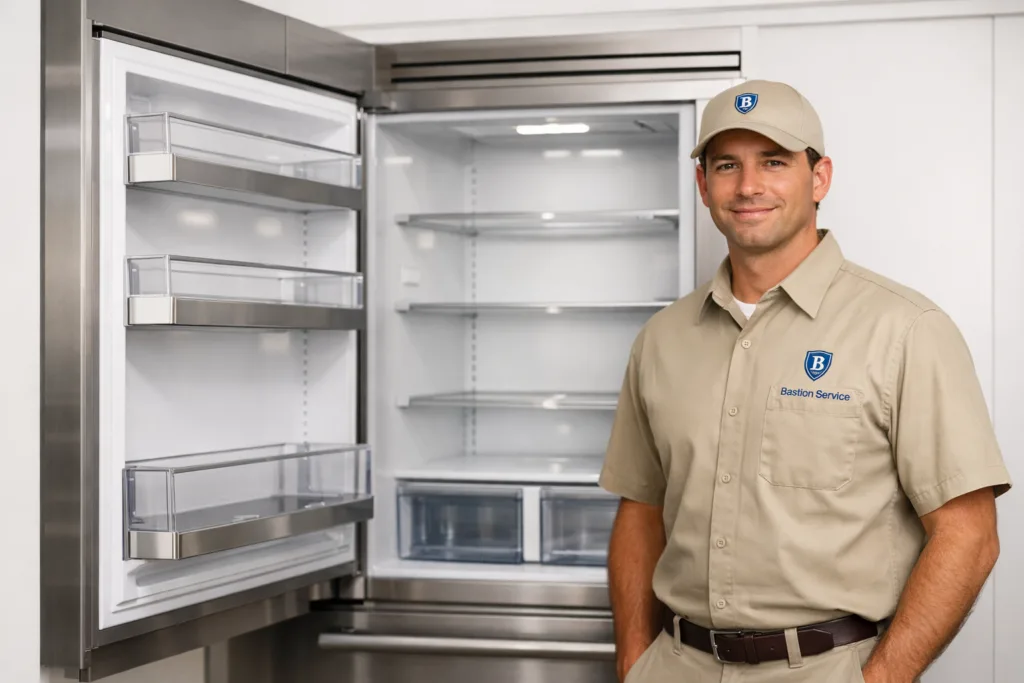




Temperature loss, frost buildup, leaking water, or a sudden change in operating sound usually means the appliance is no longer working the way it should. With True units, the visible symptom is only part of the story. A compartment that feels warm might be dealing with airflow restriction, a sensor issue, a fan problem, a defrost fault, or a more serious cooling-system concern. Sorting that out early helps protect food, flooring, and the appliance itself.
For specific True appliance paths in Del Rey, review True Refrigerator Repair in Del Rey, True Freezer Repair in Del Rey, and True Ice Maker Repair in Del Rey.
Start with the symptom, not the part
One of the most common repair mistakes is assuming a single symptom always points to one failed component. That is rarely the case. A refrigerator that runs all day without getting cold enough can have a dirty condenser area, poor air movement, a door-seal issue, or an electronic control problem. A freezer covered in frost may have a defrost failure, but it can also be pulling in warm air through a gasket or door alignment problem.
For homeowners in Del Rey, the practical question is usually whether the appliance can keep being used safely while service is arranged. If food temperatures are drifting, water is collecting under the unit, or ice is building up quickly, continued use can make the outcome worse.
Common True appliance symptoms and what they often suggest
Warm temperatures or poor cooling
If a refrigerator is not holding temperature, produce may spoil faster, dairy may feel soft, and items near the back or top shelves may cool unevenly. In a freezer, the first signs may be soft ice cream, clumping frozen food, or thawing around the door side. In a wine cooler, temperature drift is often noticed when the cabinet no longer matches the setting or swings more than usual.
Possible causes include:
- Restricted airflow inside the cabinet
- Condenser coil buildup or poor ventilation
- Evaporator or condenser fan problems
- Faulty thermistors or temperature controls
- Defrost system failure
- Compressor or sealed-system issues
If the appliance is clearly warming, do not assume it will recover on its own. Intermittent cooling problems often become full failures.
Frost, ice accumulation, or condensation
Frost in the wrong place is a useful clue. A light pattern in a freezer can be normal, but heavy buildup on interior panels, around drawers, or near vents usually is not. Condensation on shelves or around the door opening often points to warm air entering the cabinet or moisture not being managed correctly.
These symptoms commonly relate to:
- Worn or dirty door gaskets
- Doors not closing fully or sitting level
- Defrost heater, thermostat, or control issues
- Airflow imbalances
- Drain restrictions causing moisture to collect and refreeze
In Del Rey homes, this kind of problem often starts gradually and gets easier to ignore than it should. Once frost begins blocking panels or vents, cooling performance usually drops next.
Water leaks and ice maker trouble
A True refrigerator or ice maker that leaks, slows production, or stops making ice may be dealing with a water supply issue, frozen fill path, blocked drain, valve problem, or a temperature condition that interrupts the ice-making cycle. Small cubes, hollow cubes, or intermittent batches can all point to different causes.
Watch for signs such as:
- Water under or behind the appliance
- Ice forming in unusual places
- No ice production despite a working water line
- Very slow production
- Misshapen or cloudy cubes
Leaks deserve prompt attention because they can damage nearby surfaces and may indicate internal icing or drainage trouble that will continue to worsen.
New noises or unusual run times
Most refrigeration appliances make some noise during normal operation, but a change in sound matters more than the sound itself. Clicking, buzzing, rattling, squealing fan noise, or a compressor that seems to start and stop too often can all signal developing trouble.
Long run times are also important. If the appliance rarely seems to shut off, is noticeably hotter around the machine compartment, or cycles more often than before, it may be struggling to maintain the target temperature. That extra strain can accelerate wear on fans, controls, and cooling components.
How these issues show up by appliance type
True refrigerator problems
Refrigerators usually announce trouble quickly because they affect everyday food storage. Common complaints include warm fresh-food sections, freezing in the wrong areas, water under crisper drawers, noisy fans, or doors that no longer seal tightly. Since food safety can become a concern fast, refrigerator issues should be taken seriously once temperatures stop staying consistent.
A good first check is simple: make sure the door closes normally, nothing is blocking vents, and the control settings have not changed. If that does not explain the problem, the next step is finding out whether the issue is airflow-related, electrical, or part of the cooling system.
True freezer problems
Freezers often show trouble through excessive frost, partial thawing, heavy ice on panels, or a motor sound without proper freezing. Many homeowners first notice texture changes in stored food before they notice the temperature change itself. If frost is increasing while performance drops, the unit may be trapped in a cycle where airflow is getting worse every day.
Freezer problems are also easy to underestimate because the compartment can stay somewhat cold even while the underlying fault grows more serious.
True ice maker problems
Ice makers can be inconsistent when they begin to fail. One week they produce slowly, the next week they stop, leak, or jam. Because water supply, fill timing, harvest functions, mold temperature, and shutoff controls all interact, the same symptom does not always mean the same repair. If the ice maker is no longer predictable, diagnosis is usually more useful than replacing parts by guesswork.
True wine cooler problems
Wine coolers rely on stable cabinet conditions, so even modest temperature swings matter. If bottles are warmer than expected, the cabinet is noisy, moisture appears on the glass or shelving, or the unit seems to run constantly, the issue may involve sensors, fan circulation, controls, or a cooling-performance problem. A wine cooler does not need to fail completely before storage conditions become less reliable.
Signs you should stop waiting and schedule service
Service is usually the smart move when the appliance is doing any of the following:
- Not maintaining a normal temperature range
- Leaking water more than once
- Developing heavy frost or sheet ice
- Making new clicking, buzzing, or grinding sounds
- Running almost constantly
- Cycling on and off abnormally fast
- Showing display or control irregularities
- Producing little or no ice without an obvious supply shutoff
These symptoms do not all carry the same urgency, but they do suggest that normal use is no longer harmless. The longer a unit struggles, the more likely secondary problems become.
When repair is usually worth considering
Repair often makes sense when the fault is contained, the cabinet and overall condition are still good, and dependable operation can reasonably be restored. That is especially true when the issue involves fans, controls, gaskets, defrost components, drains, or other serviceable parts.
Replacement may become part of the conversation when the cooling-system problem is major, repeated failures are stacking up, or restoring the unit would require a high investment relative to its condition. The important thing is to base that decision on the actual fault instead of the frustration caused by one bad week of performance.
What Del Rey homeowners should pay attention to before a visit
A few observations can make the next step easier. Note whether the problem is constant or intermittent, whether it affects one section or the whole appliance, and whether the symptom appears with any noise, leaking, or frost pattern. It also helps to know if the issue began after a power interruption, loading change, or door-closing problem.
Useful details include:
- How long the symptom has been happening
- Whether food or beverages are actually warming
- Where water or frost is appearing
- Whether the unit runs constantly or barely runs at all
- Any recent change in sound
That information can help narrow the likely cause and support a more efficient repair plan.
A practical approach for True appliances in Del Rey
Most household refrigeration problems are easier to manage when they are addressed at the symptom stage rather than after a complete breakdown. Whether the issue involves a True refrigerator, freezer, ice maker, or wine cooler, the goal is to identify what the appliance is actually doing wrong, understand the risk of continued use, and decide whether repair is the sensible next step.
For many Del Rey households, that means acting before a warm compartment turns into food loss, before a small leak turns into flooring damage, or before a frost problem starts blocking normal airflow. A symptom-based evaluation gives you a clearer path forward than guessing at parts or hoping the issue passes.


