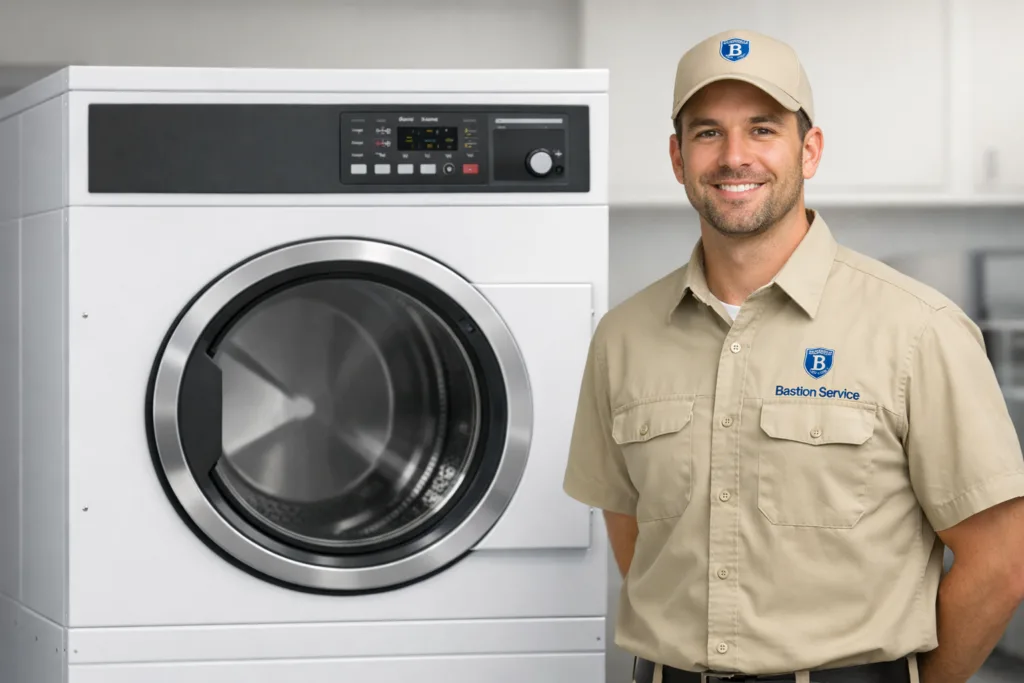




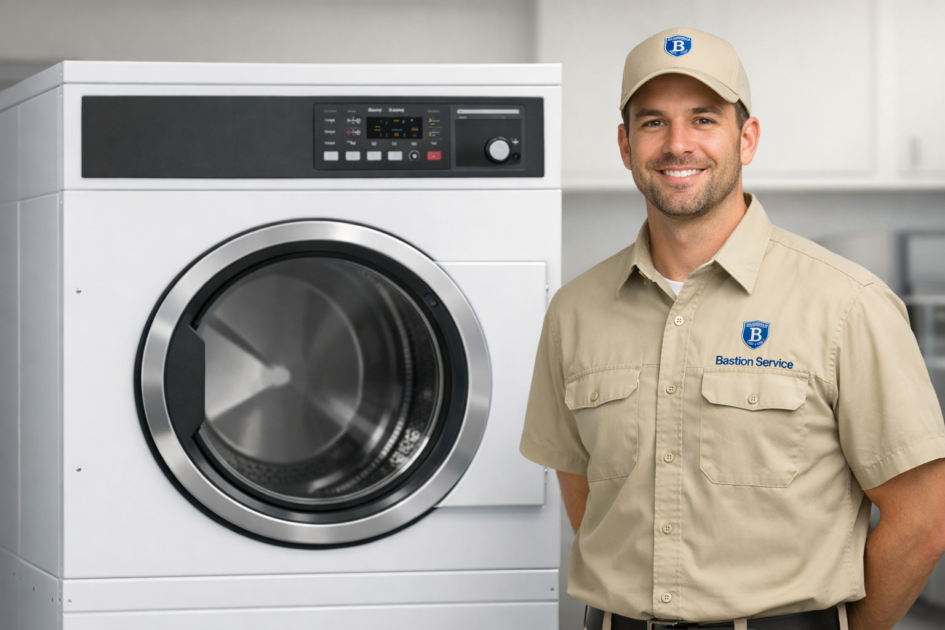
When a Speed Queen dryer begins running long, stopping mid-cycle, or leaving towels, uniforms, or linens damp, the result is lost time and disrupted workflow. For businesses in Rancho Park, the most effective next step is service based on the actual failure pattern, not guesswork. Bastion Service helps identify whether the issue is related to heat production, airflow, drum movement, controls, power, or safety shutoff conditions so repair scheduling and downtime decisions are based on what the machine is really doing.
Related commercial service paths in Rancho Park include Speed Queen Commercial Repair in Rancho Park, Commercial Dryer Repair in Rancho Park, and Speed Queen Washer Repair in Rancho Park.
Why a symptom-based diagnosis matters
Dryer problems often look similar from the outside. A unit that tumbles without drying can be dealing with restricted exhaust, a failed heating circuit, ignition trouble, sensor problems, or control issues. A machine that stops early may be overheating, losing motor strength, or reacting to a safety device. Because different faults create similar complaints, the service plan should begin with testing and inspection rather than assuming a single common part has failed.
That matters in business settings where laundry volume is tied to daily operations. Restaurants, hotels, laundromats, salons, fitness facilities, and other Rancho Park businesses often need to know not only what failed, but whether the dryer should stay offline until repair is completed. Catching the cause early can help prevent additional wear on motors, rollers, belts, heating components, and control systems.
Common Speed Queen dryer symptoms and what they often mean
No heat or weak heat
If the drum turns but items stay wet, the problem may involve the heating element on electric models, ignition-related components on gas models, thermostats, thermal cutoffs, wiring issues, or control failures. Weak heat can be especially misleading because the dryer may appear to be working while load times keep getting longer. In a busy laundry room, that kind of gradual decline can reduce throughput before staff realize there is a repair issue.
Long dry times
Long cycles often point to poor airflow, a partially blocked exhaust path, moisture-sensing problems, low heat output, or cycling issues that prevent the dryer from maintaining normal temperature. If loads that used to finish on time now need repeated runs, the machine is using more labor and energy while increasing wear on moving parts. This is one of the most common signs that service should be scheduled before a smaller problem turns into a shutdown.
Dryer shuts off before the cycle is done
Early shutdown can happen when the dryer overheats, the motor is struggling, a safety device trips, or the control is not completing the cycle properly. If the unit restarts only after cooling down, that usually points to a condition that should not be ignored. Repeatedly restarting the machine may keep operations moving temporarily, but it can also increase the chance of broader component damage.
Dryer will not start
A no-start complaint may come from power supply problems, door switch faults, failed start circuits, motor issues, control board problems, or thermal safety interruptions. If other symptoms showed up before the no-start condition, such as burning odor, noisy operation, or slow drying, those details can help narrow the cause faster during diagnosis.
Drum noise, vibration, or rough operation
Squealing, thumping, scraping, or rumbling usually suggests wear in rollers, idlers, belts, drum supports, the blower assembly, or the motor. Even if the dryer is still running, abnormal sound is often an early warning that a mechanical repair is needed. Continued use can increase strain and lead to more extensive damage inside the cabinet.
Burning smell or excessive cabinet heat
A hot odor or unusual surface heat should be taken seriously. Causes can include lint buildup, airflow restriction, friction from worn moving parts, overheating electrical connections, or a heating system fault. These are conditions where it is usually smarter to stop using the dryer and arrange service rather than trying to finish one more load.
Why is my Speed Queen dryer not heating or finishing the cycle?
This symptom usually comes down to one of a few categories: insufficient heat, poor airflow, failed sensing, overheating shutdown, or a control problem that interrupts the cycle. In real-world operation, more than one issue can be present at the same time. For example, a dryer may have a heat-related fault along with restricted venting, or a control issue along with inconsistent motor operation.
The reason this complaint deserves careful diagnosis is that staff often respond by rerunning the load. That may get laundry dry eventually, but it does not solve the underlying problem and can hide how severe the condition has become. If a Speed Queen dryer in Rancho Park is consistently failing to finish properly, service is usually the better option than continuing to compensate with extra cycles.
Airflow problems can affect more than drying time
Airflow is one of the most important parts of dryer performance. Even when the heating system is functioning, restricted exhaust can trap heat, lengthen cycle times, trigger safety shutdowns, and create temperature instability. In heavier-use settings, airflow problems may show up as repeated damp loads, hot exterior surfaces, or a machine that seems to work better on some cycles than others.
Because airflow issues can imitate heating failures, they are a common reason businesses misread the problem. Inspection of the dryer and its venting path is often necessary before deciding whether the repair is inside the machine, outside it, or both.
When continued operation is likely to make the problem worse
Some dryer issues can wait a short time for scheduling. Others should be addressed promptly. It is usually best to stop using the machine and arrange repair when you notice:
- Repeated shutdowns during active cycles
- No heat or overheating
- Burning odor
- Loud new mechanical noise
- Visible vibration or drum instability
- Loads taking much longer than normal to dry
- Controls that behave unpredictably or fail to complete cycles
These symptoms are more than minor inconveniences. In business use, they affect staffing, output, energy cost, and equipment reliability. They can also turn a limited repair into a broader one if the machine keeps running under stress.
Repair decisions for business laundry equipment
Many Speed Queen dryer problems are repairable when the core structure of the machine is still in good condition. Common serviceable faults include wear parts in the drum support system, belt and idler issues, heating and ignition components, thermostats, switches, sensors, relays, and some control-related failures. In those cases, the main question is usually how quickly normal operation can be restored.
Replacement becomes a more serious consideration when the dryer has repeated major breakdowns, multiple systems failing at once, severe internal wear, or repair costs that no longer make sense for the age and condition of the unit. For businesses in Rancho Park, the decision should be based on reliability, repair scope, and how the equipment fits current demand rather than on a single symptom alone.
How to prepare for a service visit
Before scheduling repair, it helps to note what the dryer is doing under normal workload. Useful details include whether the drum turns, whether heat is present at all, whether the machine stops early, whether the problem affects every load, and whether any unusual noise, odor, or error behavior appeared first. If the issue changes from one cycle to the next, that pattern is also important.
For a faster service process, businesses should also be ready to describe the type of items being dried, how often the dryer is used each day, and whether the problem developed gradually or started suddenly. Those details often help separate airflow, control, and mechanical issues more quickly.
Service focused on uptime in Rancho Park
When a Speed Queen dryer begins affecting production, the right repair approach is the one that connects symptoms to action: identify the fault, determine whether the unit should remain out of service, and schedule the next step based on risk and workload impact. For businesses in Rancho Park, that means treating slow drying, no heat, shutdowns, noise, and control problems as service issues tied directly to uptime. If the dryer is delaying operations or showing signs of unsafe or inconsistent performance, scheduling diagnosis and repair is the practical next move.